

LA → BELLINGHAM · RELOCATION GUIDE
From LA to Bellingham.
The honest math.
Equity unlock, no state income tax, and a lifestyle reset — with eyes open about the gray.
The call I get most often from Southern California starts the same way: “We survived the fires, our insurer dropped us, and we’re done.” LA-to-Bellingham isn’t the tech-equity move I see from the Bay Area — it’s driven by a different kind of exhaustion. After January 2025, when the Palisades and Eaton fires killed 31 people, destroyed nearly 17,000 structures, and triggered $25–30 billion in insured losses, a notable wave of LA-area buyers started seriously researching Pacific Northwest cities. Bellingham keeps coming up. I’ve sold real estate here for 11 years, and I want to give you the honest picture — what you gain, what you give up, and what the actual math looks like when you move from a median LA home into a Bellingham one.
The equity reset, in actual numbers

The LA metro median single-family sale price sits around $935,000 in mid-2026 (City of LA proper; metro-wide median is roughly $860,000). That’s your starting point. Sell a median LA home, pay 6% in agent commissions and closing costs, and you net approximately $879,000. A Bellingham single-family home at the current median of $710,000 — plus $12,000 in closing costs — runs $722,000. That leaves roughly $157,000 in your pocket on a median-to-median swap, before you’ve even touched a paycheck. If you’re coming from the Westside, Pasadena, or the South Bay at $1.2M–$2.5M, the cash remainder is $400,000–$1.7M.
And then the ongoing math kicks in. California income tax at 9.3–13.3% — gone. Washington has no state income tax. For a household earning $200,000 in LA, moving to Bellingham typically saves $15,000–$22,000 per year in state income tax alone. Over 20 years, compounding a $18,000 annual savings at a conservative 5% return: roughly $600,000 in additional wealth.
Property tax runs the other direction slightly: LA County’s effective rate is approximately 1.1–1.25% (base 1% plus Mello-Roos and bond levies). Whatcom County’s effective rate is approximately 0.85%. On a $935,000 LA home you’re paying roughly $10,300–$11,700/year in property tax. On a $650,000 Bellingham home, roughly $5,525/year. That’s another $5,000–$6,000 annual savings.
| LA | Bellingham | What’s different | |
|---|---|---|---|
| Median single-family price | ~$935,000 | ~$710,000 | $225K lower in Bellingham |
| Property tax effective rate | ~1.1–1.25% | ~0.85% | Saves ~$5,500/yr on median swap |
| State income tax (top marginal) | Up to 13.3% | 0% | Saves $15K–$50K+/yr depending on income |
| Sales tax (City of LA) | 9.75% | 8.8% | ~1% lower in Bellingham |
| Average commute | 137 hrs/yr lost to traffic | Under 20 min across town | Hours of your life back |
| Unleaded gas (avg) | ~$4.48/gal | ~$3.90/gal | Modest savings |
| Groceries vs national avg | ~9–12% above national avg | Near national avg | Meaningful monthly savings |
| Homeowner insurance | Crisis-level; many uninsurable | Available and affordable | Major relief for former CA owners |
| Wildfire risk | Significant + growing | Low (some BC smoke in summer) | Existential risk removed |
Cost of living, line by line
Moving from LA to Bellingham produces a real reset across almost every spending category, but not an unlimited one.
What gets cheaper: Housing is the headline number, but the downstream effects matter more than the sticker. A $650,000 Bellingham mortgage at current rates runs roughly $3,500–$3,800/month (assuming 20% down at ~6.75%). A comparable LA home at $935,000 is $5,100–$5,500/month. The $1,500–$1,700/month difference compounds into meaningful savings fast. Gas runs about 13% cheaper. Utilities — electricity and natural gas — run lower than LA’s average despite Bellingham’s heating requirement, because you’re not running AC through a California summer. Groceries at Fred Meyer or Haggen are roughly 10–15% cheaper than equivalent Whole Foods or Ralph’s stops in an LA neighborhood.
Auto insurance in Washington is meaningfully less expensive than California, particularly compared to LA-area rates that include uninsured-motorist risk, wildfire zone premiums, and litigation costs baked into your premium. The difference is typically $600–$1,200/year per vehicle.
Parking drops from a significant line item to nearly nothing. Restaurant meals at comparable quality run 25–40% less than LA equivalents. A nice dinner for two in Bellingham at a good restaurant runs $80–$110; the LA equivalent is $130–$200.
What stays similar or costs more: Quality childcare in Bellingham is genuinely scarce and expensive — $1,800–$2,400/month for infant care, comparable to LA rates and sometimes worse due to limited supply. Healthcare costs track nationally and don’t change meaningfully by state. If you’re an LA renter rather than owner, your Bellingham rent will be lower but you won’t have the equity unlock. Internet and cell service cost the same. Specialty goods — Japanese imports, certain ethnic groceries, specific LA boutique brands — either aren’t available or require Seattle trips.
The one adjustment LA transplants consistently underestimate: Bellingham is a smaller market. Some conveniences that feel basic in LA (24-hour urgent care, a wide range of specialty contractors, same-day delivery of obscure items) require more lead time or a Seattle trip.
The climate — the honest part

This is the section where I lose some LA clients, and that’s appropriate.
LA gets approximately 284 sunny days per year, with a July average high around 83°F and a January average low around 50°F. It rains roughly 15 inches per year, almost entirely between November and April. The climate is classified as borderline Mediterranean — mild winters, dry summers, nearly perpetual sunshine. It is one of the best urban climates on earth. You know this.
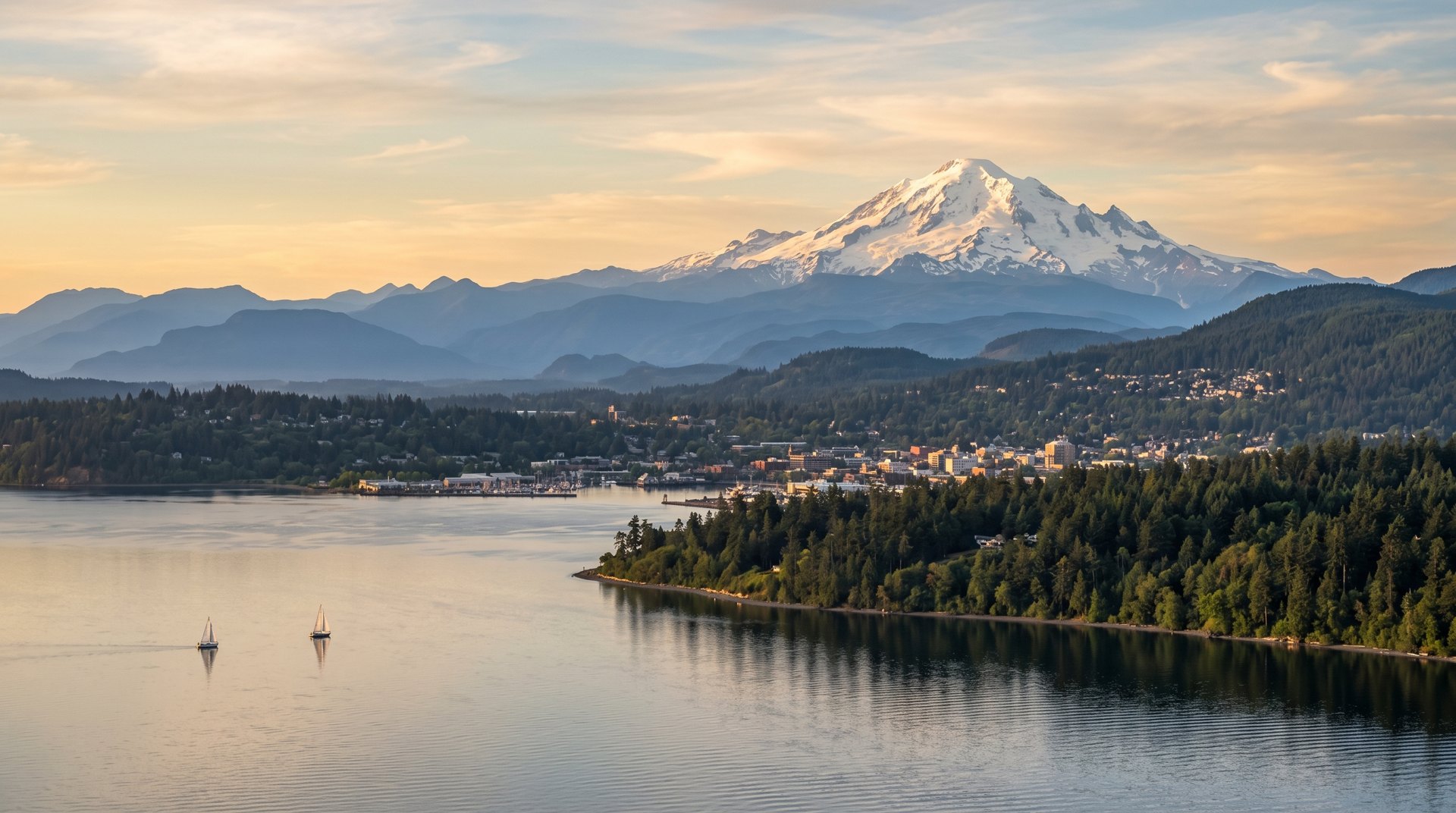
Bellingham’s summer is genuinely beautiful — July average high around 72°F, clear skies, long days, Bellingham Bay glittering, Mt. Baker visible from the water. From roughly mid-June through early October, Bellingham is the Pacific Northwest at its best. Those four months justify a lot.
November through February is different. Bellingham averages approximately 230 cloudy or gray days per year, concentrated in late fall and winter. Not constant rain — the annual rainfall is only about 36 inches, roughly the same as New York or Atlanta. But persistent overcast, flat gray light, and short days. January averages a low of about 35°F. You’re not getting snow in Bellingham proper most winters; you’re getting gray. Locals call it the “Bellingham gray.”
The honest comparison: you’re trading 284 sunny days for roughly 135–140. You’re gaining real seasons — actual fall foliage, first snow up on the mountain, genuine spring. You’re gaining a July evening where it’s 68°F and you need a light jacket, which LA never gives you. You’re gaining a climate trajectory that isn’t worsening. LA’s fire season is getting longer; its water scarcity is structural; its extreme heat events are increasing. Bellingham’s climate trajectory is relatively stable.
My practical recommendation: visit Bellingham in November before you commit. Not August. LA clients who visit in August fall in love, move up, and then hit November unprepared. The people who thrive here visit in November, decide they can handle it, and move on their own terms.
Why people leave LA
The honest push factors, as I hear them directly:
Wildfire and insurance exhaustion. January 2025 was the tipping point for many families. The Palisades and Eaton fires — 17,000 structures destroyed, $250 billion in estimated economic losses — came after years of escalating fire seasons. Many Pacific Palisades homeowners were already on the California FAIR Plan, paying higher premiums for less coverage, because major insurers had exited the state or specific zip codes. When your house survives but your neighborhood didn’t, and your insurer drops you anyway, and you read about the toxic compound levels in surviving homes — that’s when people call me.
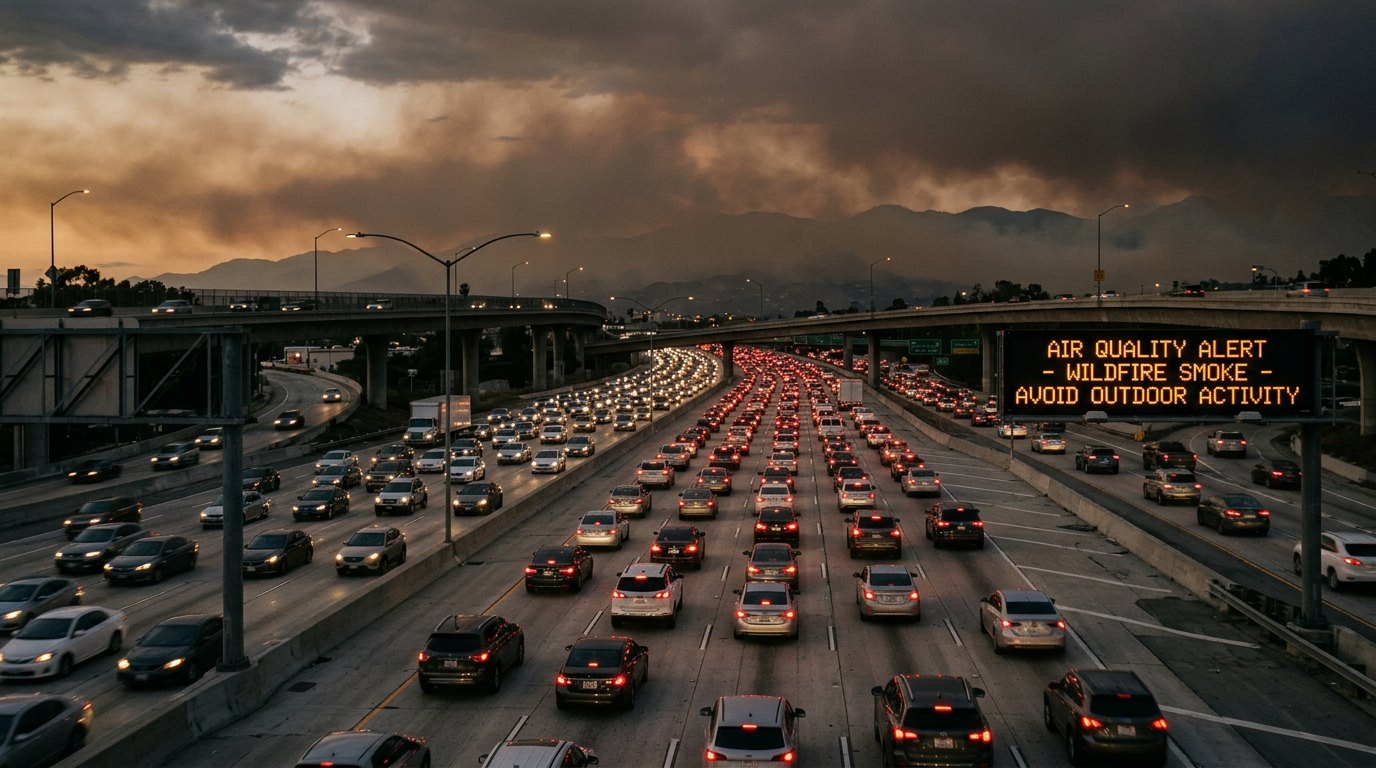
Traffic and lost time. Los Angeles drivers lost an average of 137 hours to traffic delays in 2024 — the most of any US city. That’s nearly six full days per year sitting in a car going nowhere. The 405 at 5 PM, the 10 through downtown, the 101 over the hill — these aren’t inconveniences, they’re structural theft of your time. Bellingham rush hour is a 12-minute drive that takes 18 minutes on a bad day.
Cost acceleration. LA housing prices appreciated roughly 3–5% in 2025 on top of already elevated prices. Combined with rising insurance premiums, utility rate hikes, and California’s tax structure, many LA households feel the financial pressure increasing with no structural ceiling in sight.
Density fatigue. LA sprawl means the nearest quality park, beach, or trail requires a car and a time budget. In Bellingham, Fairhaven Village, Boulevard Park on the waterfront, or the Interurban Trail are 10 minutes from most addresses.
Smoke and air quality. Even in years without catastrophic LA fires, the LA basin regularly exceeds federal air quality standards. LA’s AQI is routinely in unhealthy ranges during fire season. Bellingham’s air quality is generally excellent, with 2–3 weeks of summer smoke from BC or Eastern WA fires — a different scale of problem entirely.
Commute reality — can you still work?
The most common LA-to-Bellingham profile I see in 2025–2026: remote worker who locked in a position in 2020–2022, kept the LA-area salary, and no longer has to be in Los Angeles. That profile works perfectly for Bellingham. Your employer is in LA; you live in Bellingham. State income tax goes to zero. Life quality goes up dramatically.
For anyone requiring occasional or regular LA presence: the logistics are manageable but not trivial. LAX to BLI (Bellingham International) is approximately 2.5 hours in the air. There’s no direct LAX-BLI service; you typically connect through Seattle (SEA). A more practical routine for frequent travelers is flying LAX-SEA (2 hours, many daily flights on Alaska/Delta/Southwest), then driving 90 minutes north to Bellingham. Budget about 5–6 hours portal-to-portal from downtown LA to your Bellingham front door.
Bellingham’s own airport (BLI) has Alaska/Allegiant service to a handful of destinations — handy for Seattle hops or leisure travel, but not a major hub. SEA is your airport for most long-haul travel.
Driving from LA to Bellingham is 1,226 miles, approximately 18–19 hours. Most people drive it once on the move and fly thereafter.
Within Bellingham, commuting is a non-issue by LA standards. City end-to-end is about 20 minutes. Most neighborhoods are 10–15 minutes from downtown or any employment center. No freeway required.
For the minority of buyers who genuinely need in-person LA presence weekly: this move doesn’t work. Be honest with yourself before you start. For monthly or quarterly travel: very workable.
Buying a home here without flying up six times
I’ve closed many LA-to-Bellingham transactions where the buyers visited Bellingham exactly once before going under contract. The remote workflow is well-established because the distance demands it.
The standard process:
Discovery call (30–45 min, video). Before you book a flight, we talk through your budget, target neighborhoods, must-haves, and timeline. I send NWMLS listing alerts so you’re seeing live inventory in real time — not Zillow, which runs 1–3 days behind.
Video tours. For properties that make the shortlist, I walk through with FaceTime or Zoom and narrate what matters and what doesn’t. I’ll tell you the ceiling looks low on camera but is actually 9 feet, or that the “mountain view” is mostly obscured. You need someone on the ground who will tell you things the listing won’t.
The scouting trip (1–2 days). When you’re ready to make offers, fly up. See 8–12 homes over two days. Drive the neighborhoods in the morning, stay through the evening to see how they feel at dusk. Visit Fairhaven for a walk. Sit at a waterfront café. Get out of the car.
Offer mechanics. Washington State uses earnest money (typically 1–3% of purchase price, held in escrow). Inspection contingencies are standard and give you a clean exit if the inspection reveals problems. I use Chicago Title’s Bellingham office for escrow — they handle remote signings routinely.
Closing remotely. Title/escrow documents can be signed remotely via notary or RON (remote online notarization). Your LA attorneys or CPA can review the WA-specific docs if needed. I coordinate with your LA agent on the simultaneous sale timeline if you’re doing a concurrent transaction.
One LA-specific note: coordinate your CA sale and WA purchase carefully. Most LA-to-Bellingham buyers are using their equity unlock as the down payment. That means timing the close of your LA home to fund the Bellingham purchase. A bridge loan, HELOC, or contingency clause buys you flexibility; talk to your lender about options before you make offers.
Schools — the comparison families ask about
LAUSD serves 550,000+ students with significant resource and quality variation by zip code. School selection in LA is a full-time research project — magnets, charters, district boundaries, permit transfers. Families in good LAUSD schools do well; families outside them face real challenges.
Bellingham Public Schools serves roughly 11,000 students across 18 schools. The district is consistently rated above state average. Squalicum and Bellingham high schools both have solid AP programs and competitive athletics. Whatcom Community College’s Running Start program lets juniors and seniors take college courses free — a genuine option unavailable in most LA high school programs.
For families with strong private school commitments in LA: Bellingham’s private school landscape is thin. Options exist (Assumption, Whatcom Christian, Montessori programs) but nothing matching the depth of LA’s private school market. If your kids are in Harvard-Westlake or Flintridge Prep, the Bellingham equivalent doesn’t exist.
Western Washington University (17,000 students) anchors Bellingham with a college-town energy that LA lacks at the neighborhood level. It adds diversity, live music, affordable restaurants, and a steady supply of young professionals who stayed after graduating.
For families with elementary-age kids in average-to-good LAUSD schools: Bellingham offers a comparable or better outcome in a dramatically less stressful environment.
Five Bellingham neighborhoods LA buyers tend to land in

Fairhaven. This is the neighborhood that most consistently clicks for LA transplants, particularly those coming from Silver Lake, Echo Park, Los Feliz, or Pasadena. Fairhaven is walkable in a way almost nothing in LA is — a tight village grid with independent coffee shops, bookstores, restaurants, and pubs all within four blocks. Victorian homes on tree-lined streets. Bellingham Bay views from upper streets. Prices run $650,000–$950,000+ for single-family homes. It’s where I take every LA client first. Explore Fairhaven
Edgemoor. For buyers from the South Bay, Westside, or anyone who prioritizes view over walkability: Edgemoor sits on bluffs above Bellingham Bay with unobstructed water and island views. Custom homes, larger lots, quieter streets. The visual payoff — San Juan Islands in the foreground, Vancouver Island in the distance, Mt. Baker to the east — is genuinely striking. Prices $750,000–$1.5M+. Explore Edgemoor
South Hill. Mid-century and newer construction, good school access, views of the bay from upper streets, walkable to Whatcom Falls Park. Popular with families. More inventory and slightly lower price points than Fairhaven or Edgemoor, typically $550,000–$750,000. LA buyers who prioritized square footage and yard over urban walkability land here.
Sehome. Adjacent to WWU, with a mix of craftsman homes and newer construction. Walkable to campus, near the Sehome Arboretum trail system (220 acres of forested trails inside the city). Popular with buyers who want an academic-neighborhood feel — think Silver Lake or Echo Park but smaller and quieter. Prices generally $500,000–$750,000. Explore Sehome
Columbia. Newer construction, more affordability, good access to I-5 for commuters. Less character than Fairhaven or Sehome but strong value and solid schools. Popular with buyers who want a clean, functional neighborhood without the premium of the historic districts. $480,000–$680,000. A practical choice for buyers stretching their budget or prioritizing square footage.
The lifestyle shift — what changes
The adjustment that surprises LA transplants most isn’t the weather — it’s the pace. In LA, the baseline is urgency. Traffic means you leave early for everything. Reservations at good restaurants require two weeks. The gym is crowded at 6 AM. Events sell out. The city is operating at 100% capacity.
Bellingham operates differently. You leave five minutes before you need to be somewhere and usually make it. You walk into a good restaurant on a Friday and get seated. There’s room. The mountains are 90 minutes away and you don’t need to book a permit to hike most trails. The farmers market Saturday morning takes 45 minutes, not two hours.
Outdoor access is restructured completely. In LA, mountain access means Big Bear or San Gabriel (minimum 2–3 hours from most addresses with traffic). In Bellingham, Mt. Baker Ski Area is 90 minutes in winter. The North Cascades are 90 minutes in summer. You can paddle Bellingham Bay on a Tuesday evening after work. The access is immediate and habitual rather than occasional and logistical.
What you’ll miss most, based on what I hear from clients who moved up: the food scene, the cultural density, your people. Bellingham’s restaurant options are good but not LA-good. The concert venue is 2,500 seats, not 20,000. Your LA friends are not here. Building a social network in a smaller city takes intention. It happens — Bellingham is unusually welcoming to transplants given its college-town character — but it takes 6–18 months.
Frequently asked
Is the LA → Bellingham move tax-positive after carrying costs?
Yes, for most households. The state income tax flip (up to 13.3% CA → 0% WA) alone saves $15,000–$50,000/year at professional income levels. Combined with the equity unlock from selling an appreciated LA home and lower property tax on a cheaper Bellingham home, most LA-to-Bellingham buyers are meaningfully better off financially within 2–3 years. The main exception: households earning under $100,000 who are renters in LA — they don’t have the equity unlock and the income tax savings are smaller.
What’s the real winter like compared to LA?
LA’s January is overcast sometimes but averages 50°F for a low and is mostly dry and functional. Bellingham’s January averages 35°F for a low, is regularly rainy, and has roughly 8–10 days of real sun across the month. It’s not brutal cold — it’s persistent gray. The light at 4 PM in December is fully dark. Most people who grew up in gray climates handle it fine; most lifelong LA residents find it harder than expected. Visit in November.
Can I buy in Bellingham while still selling my LA home?
Yes, and it’s the most common structure I work with. The typical approach: list the LA home, use a sale contingency on the Bellingham offer (harder in a hot market) or arrange a bridge loan to buy Bellingham first, then close the LA home and pay off the bridge. Chicago Title handles remote closing on the Bellingham side. A cross-state CPA is valuable for the tax timing in your final CA year.
Will my LA salary hold if I go fully remote from Bellingham?
It depends entirely on your employer. Many LA-based tech, entertainment-adjacent, and finance employers set salaries by metro and may adjust downward if you formally change your residence to Bellingham. Others don’t adjust at all. Negotiate before you move, not after. The income tax savings are real regardless of whether your salary is adjusted — even a 10% salary cut at $200K still saves you money net of the tax flip.
What’s the catch?
A few real ones. (1) The gray is real — some people can’t adapt and move back. (2) Bellingham is predominantly white (roughly 79% per recent census) — LA’s diversity doesn’t exist here. (3) The entertainment industry doesn’t exist here — if you need to be in Hollywood rooms physically, you can’t live here. (4) Bellingham is 90 minutes from Seattle but Seattle is not LA — the cultural scale is smaller. (5) Childcare is expensive and scarce.
Is there a direct flight from LAX to Bellingham?
No. You connect through Seattle (SEA) — approximately a 2-hour LAX-SEA flight, then 90-minute drive to Bellingham. Or fly LAX-SEA and someone picks you up. For regular travel, most buyers just drive from SEA. Budget 5–6 hours total, door to door.
How is Bellingham for earthquake risk?
Real but different. Bellingham sits within the Cascadia Subduction Zone region — a major Cascadia earthquake would affect the entire Pacific Northwest, not just Bellingham. It’s not the constant background risk LA faces from the San Andreas and surrounding faults; it’s a lower-probability, higher-consequence risk. Local building codes require seismic compliance. Earthquake insurance is available and relatively affordable compared to CA.
Are there many LA transplants already in Bellingham?
Growing significantly. The January 2025 fires sent a wave of serious buyers north. Whatcom County’s real estate saw a notable uptick in California-originated buyer inquiries through spring 2025. There are enough LA transplants that the question “where are you from originally?” in certain Bellingham circles often gets answered with an LA neighborhood name.
Thinking about Bellingham?
Tell me where in LA you’re coming from, your budget, and how you work, and I’ll send two or three neighborhoods that fit plus what’s active. If you have a place to sell first, a home valuation is the place to start.