

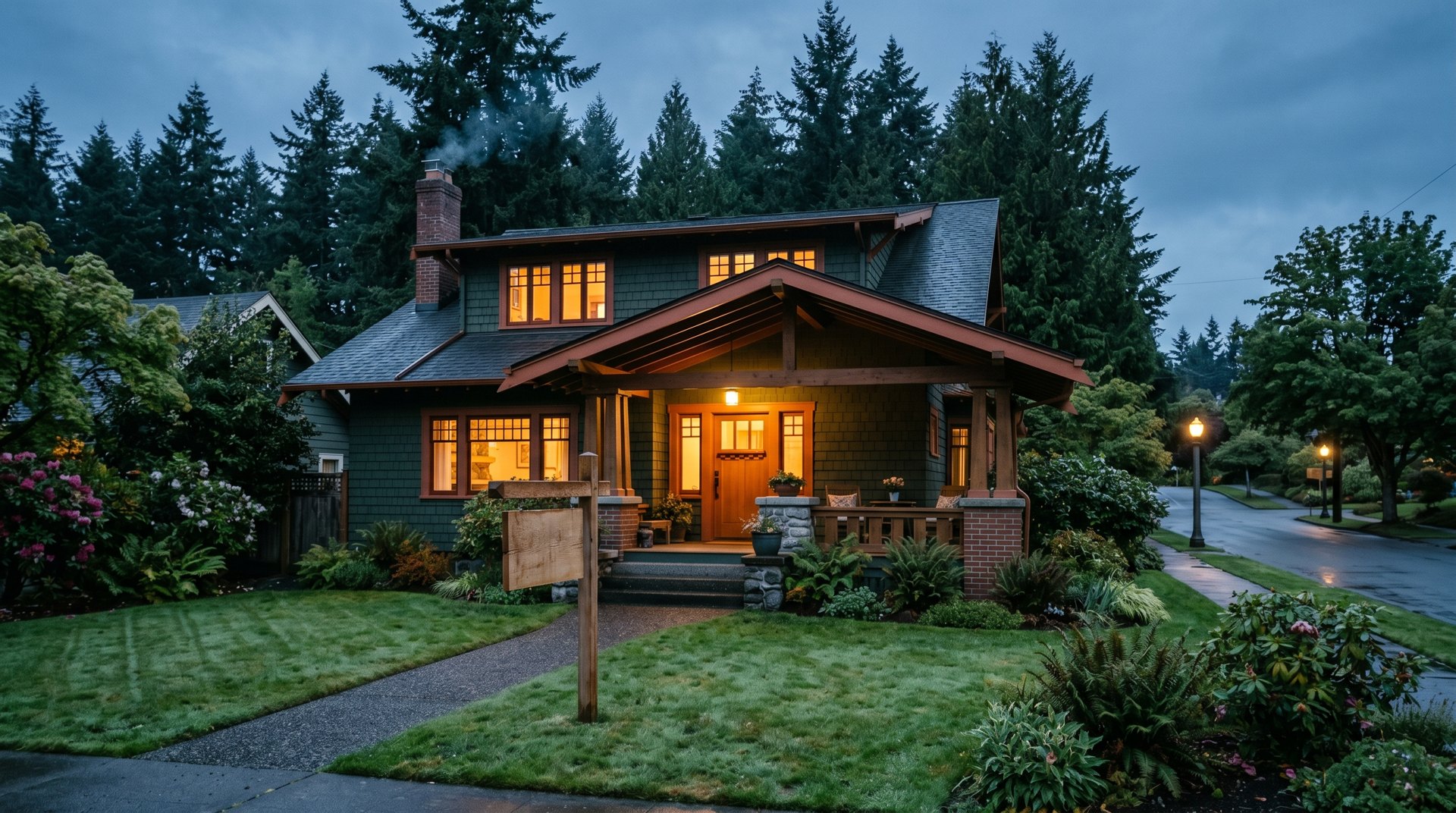
The seller’s guide
Selling Your Bellingham Home
Pricing, marketing, and negotiation — exactly what I do to get a home sold.
By Genaro Shaffer, Bellwether Real Estate — May 28, 2026
§ THE MARKETING IN MOTION
See how I market a Bellingham home.
A 90-second look at the marketing plan I bring to every listing — drone, twilight, video walkthroughs, the full kit. Not just the million-dollar ones.
Are you tired of generic real estate agents who treat your home like just another transaction?
That sentence is my opening line in every listing presentation, because for most sellers it lands. Most agents in this market do roughly the same thing: shoot decent photos with a hired photographer, pin a sign in the yard, push the listing onto the MLS, and wait. If that’s what you want, you have plenty of options.
This page is for the seller who wants more than that.
After 10 years of selling homes across Whatcom County, I built a marketing system that’s genuinely different from what most agents offer here. I’m a Certified Negotiation Expert, I shoot all my own photography and drone and cinematic video, and I list under an independent local brokerage — Bellwether Real Estate, one office, in Bellingham, no national franchise. Here’s exactly what that means for you.
The 60-Second Answer
To sell your Bellingham home in 2026 the right way, you need three things working together: accurate pricing, marketing that actually stands out in the MLS, and a negotiator who can navigate offer terms — not just price. The marketing piece is where most agents underdeliver. I shoot every listing’s photography, drone, and cinematic video personally — including signature sunset prints displayed during daytime showings. Most agents outsource that to a $200 third-party photographer. My average list-to-sale ratio reflects the difference. Below: the full 12-point plan, the real costs of selling, and a walk through every step from listing to closed.
Why It Matters Who Lists Your Home

Let me kill an objection I hear in almost every listing appointment first.
“If everyone lists on the MLS, my house gets the same exposure whether I go with a national chain or a local broker, right?”
Half right. Yes, every NWMLS-member agent puts your home into the same MLS feed. That feed pushes to Zillow, Redfin, hundreds of other syndication partners, every other agent’s IDX, and Bellwether’s own site. Exposure is identical.
But exposure is not the same as marketing. Here’s what changes between agents:
- The quality of the visuals in that MLS listing (your house competes against every other house at the same price point — the photos win or lose the showing request)
- The accuracy of the price (priced too high = stale listing = price reductions = lower final sale; priced too low = leaving money on the table)
- How the listing copy reads (most agents copy-paste boilerplate; great copy actually sells)
- How broker-to-broker communication is handled (this is where deals get made or fall apart — and it’s invisible to sellers if they’ve never seen the difference)
- The negotiation skill applied to every offer (a Certified Negotiation Expert turns “good offer” into “best offer” routinely)
- Whether problems get hidden, mentioned, or solved before the buyer’s inspection (this is the difference between a smooth close and a renegotiation)
When I tell sellers I went to a national chain first and left — because they wanted me to sell every house I showed a client — what I’m saying is that the brokerage you pick changes the incentives your broker runs on. A small local independent doesn’t have to push you toward a faster, lower outcome to hit a corporate quota. I want this transaction to be the best one for you, because that’s what brings the next listing in the door three years from now.
The 12-Point Marketing Plan (Exactly What Every Listing Gets)
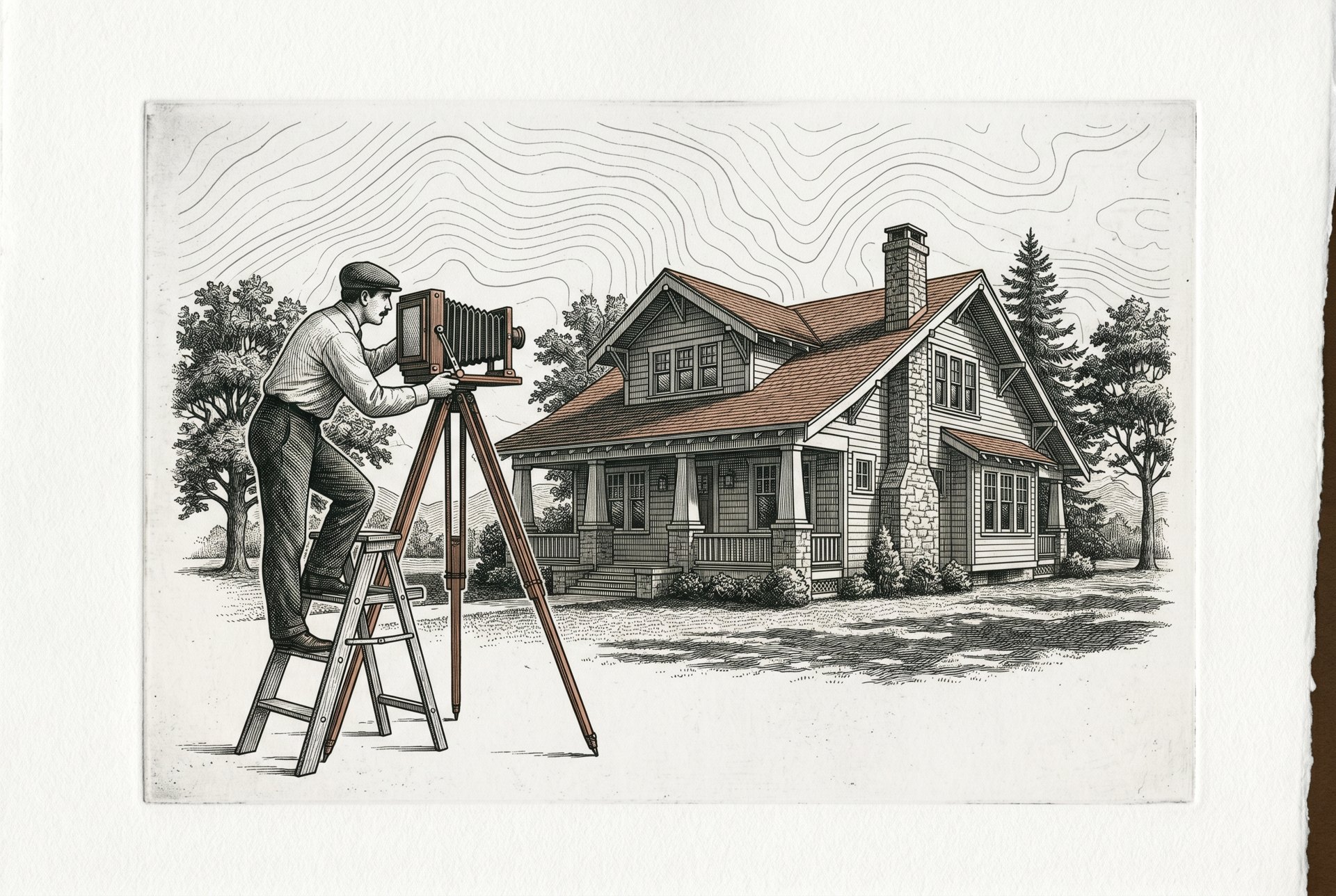
This is what’s included in every listing I take — not the “Diamond Plus Upgrade Tier.” Every listing.
1. Professional photography from an experienced photographer
I shoot every listing personally. I’ve been a working photographer alongside my real estate career, which means I’m bringing decade-of-decisions creative eye to the shoot — lens choice, time of day, sequencing for the listing carousel. Most agents send a $200 third-party shooter who’s at three other listings the same day. That’s the difference between competent photos and photos that sell.
2. Drone photos and video
Whatcom County is a county of views, water, mountains, acreage, neighborhoods cut into hillsides. Aerial coverage isn’t optional here — it’s the difference between buyers understanding the property’s setting or not. I’m a licensed drone operator and the drone footage is mine, not a contractor’s.
3. Cinematic movie showcasing the house
Stills tell buyers what your home looks like. A cinematic walkthrough tells them what it feels like. I produce a short cinematic film for every listing — drone exterior, smooth interior walkthrough, lifestyle moments — that gets embedded in the listing, posted on YouTube (where it’s searchable), and shared in targeted social campaigns.
4. Pre-listing strategy session
Before any of the above, I sit down with you for a 60–90 minute strategy session. We walk every room, talk through what stays / what packs / what pre-listing repairs make ROI sense and which don’t, set the pricing strategy, and plan the showing schedule. This is the work most agents skip.
5. Sign post with color flyers
Signage feels old-school but is still one of the highest-engagement channels for neighborhood-based buyers (people who already love your street and want to bring a family member). My signs go up promptly with color flyers in a weather-resistant box. Flyers get restocked weekly.
6. Sunset photos of the house printed large and displayed during daytime showings
This is my signature touch. Many of my listings include a golden-hour or sunset exterior shot, printed large (24×36 or larger), and displayed prominently inside during daytime showings. Buyers walking through at 11am on a Saturday get to see what the house looks like at 8pm in June. I cannot overstate how often I’ve watched a buyer connect emotionally with a home because of this one print.
7. Perfectly presented listing on thousands of websites globally
Through NWMLS syndication, your listing automatically appears on Zillow, Redfin, every other agent’s IDX, plus hundreds of international syndication partners. I make sure the source listing is the version we want everyone showing — accurate, well-written, complete fields, all photos optimized, video embedded, every property feature flagged.
8. Open houses on the weekend
I personally host open houses on the launch weekend of every listing, and additional weekends as the schedule justifies. Live open houses still drive a meaningful share of in-person traffic and offers, especially for first-time buyers who haven’t yet engaged a broker.
9. Frequent communication during the sale process
Most seller complaints about agents come down to this: “I never heard from them.” My commitment: a weekly written update minimum, more often when there’s activity. After any showing or call from a buyer’s agent, you hear from me within 24 hours.
10. Helpful notes around the house to educate buyers on details and benefits
I leave small printed cards in strategic spots around the home during showings — pointing out the high-end appliance package, the recent roof work, the cedar feature wall, the view orientation, the storage we built into the basement. Buyers process listings fast; these notes do the work of a salesperson while you’re not home.
11. Promotion to local brokers and through social media
Every listing gets a personal email blast to my Bellingham broker network on day one. Plus a targeted social campaign — Facebook, Instagram, sometimes YouTube ads — geo-fenced and demographically targeted to the most likely buyer profile for your specific home.
12. Brochure showcasing the house
A printed full-color brochure available at every showing and open house. Sounds old-fashioned. Works. Buyers walk out of three showings holding three flyers and one of them is yours — that piece of paper goes home and gets re-looked at over dinner.
What Most Agents Won’t Tell You About Pricing

Pricing is where most sales are won or lost — long before negotiation.
Three pricing mistakes I see constantly:
- Aspirational list price. “Let’s start high, we can always come down.” In practice, the highest level of buyer activity on a listing is in the first 10–14 days. List too high and you trade that prime activity window for crickets. By the time you reduce, the market has tagged your listing as stale.
- Algorithmic price (Zillow Zestimate). Zestimates use generic models that miss what makes your home actually different in this market this month. Treat them as starting point, not endpoint.
- Picking the highest broker estimate. Some brokers quote you the highest number in their CMA to win the listing. Then they spend three months explaining why we need to drop. A good broker shows you the math behind the price, not just the number.
How I price your home:
- Comparable sold listings within the last 90 days — same neighborhood, similar square footage, comparable condition, adjusted for differences
- Active competition — what else is currently listed in your price range, and how does yours stack up
- Pending sales — these signal current buyer sentiment more accurately than 90-day-old solds
- Days-on-market trends for your specific segment — are 3-bed/2-bath homes between $600K and $700K selling in 5 days or 35 days?
- Seasonal adjustment — spring listings price differently than November listings
- Property-specific premium or discount — view, lot, condition, layout, school boundary, water feature, ADU potential, etc.
You leave my pricing session with a number you can defend in your own head, and a clear sense of the buyer activity to expect at that price.
The math behind this is consistent across hundreds of Whatcom County transactions: homes priced sharply — at or just below the recent comp median — see 3–5x more first-week activity than homes priced 5–10% above market. Multiple-offer situations follow. Homes priced aspirationally usually take a price reduction within 30–45 days and sell for less than a sharply-priced comparable would have netted, because by the time the price drops the listing has been tagged as stale and the most motivated buyers have already moved on. Pricing strategy isn’t about what your home is worth in the abstract. It’s about manufacturing the buyer behavior that produces the best outcome at closing.
The Real Cost of Selling a Home in Bellingham
Sellers consistently underestimate transaction costs. Here’s the honest breakdown.
Standard cost categories on a typical Bellingham sale:
| Category | Typical Cost | Notes |
|---|---|---|
| Real estate commission | 5–6% of sale price | Negotiable; covers both listing + buyer’s brokers |
| Washington REET (Real Estate Excise Tax) | 1.1% to 3.0% of sale price | Graduated brackets — see below |
| Title insurance + escrow fees | $1,500–$3,000 | Seller pays owner’s title policy |
| Excise tax filing fee | ~$30 | Statutory |
| Recording fees | ~$200 | Statutory |
| Pre-listing repairs / prep | $0–$10,000+ | Varies wildly |
| Pre-listing inspection (optional) | $400–$700 | Often pays for itself in saved renegotiation |
| Staging (optional) | $1,500–$5,000 | Only if needed; many homes don’t need it |
| Capital gains tax | $0 to varies | Federal; primary-residence exclusion often applies |
| Moving costs | $1,000–$10,000 | Distance + volume |
Washington REET brackets (for Bellingham, in 2026):
| Sale Price | State REET | Plus Local (~0.5%) | Combined |
|---|---|---|---|
| Up to $525,000 | 1.1% | 0.5% | ~1.6% |
| $525,001 – $1,525,000 | 1.28% | 0.5% | ~1.78% |
| $1,525,001 – $3,025,000 | 2.75% | 0.5% | ~3.25% |
| Above $3,025,000 | 3.0% | 0.5% | ~3.5% |
For a $700,000 Bellingham home: roughly $42,000 in commission + $12,500 in REET + $4,000 in title/escrow/closing fees + $0–$10,000 in repairs/prep. Net to seller from a $700K gross is typically $640K–$650K before any mortgage payoff. Run your own numbers with the REET and net-proceeds calculator.
This is why pricing too low feels expensive — every $10,000 of additional sale price drops $9,000+ directly to your net.
The Timeline — From “I’m Thinking About Selling” to Cash in Hand
A typical Bellingham sale runs about 60–90 days from first conversation to closed transaction. Here’s how that breaks down:
Weeks -8 to -4: Strategy phase (this is the work that determines outcome)
- Initial conversation (often a 30-min call or coffee)
- Full home walkthrough + strategy session
- Pricing analysis
- Prep recommendations (what to repair, what to leave, what to declutter)
- Pre-listing inspection if we agree it makes sense
- Hire any contractors needed for prep
Weeks -2 to 0: Production phase
- Final cleaning + staging if applicable
- Photography session (typically 1 morning + 1 evening for sunset shoot)
- Drone session
- Cinematic video shoot + editing
- Listing copy written
- Sign installed
- Flyers + brochures printed
- Social campaign assets prepared
Week 0: Launch
- MLS goes live (typically Thursday morning, peak browsing day)
- Email blast to broker network
- Social campaign launched
- First open house scheduled for the upcoming weekend
- Sign goes up + flyers stocked
Weeks 1–4: Active marketing
- Showings scheduled and tracked
- Open houses every weekend
- Weekly seller update with showing count, feedback themes, offer status, market signal
- Adjustments to pricing or marketing if signal warrants
Offers + negotiation phase (variable)
- Often clusters around weekend 1 or weekend 2 if priced well
- Could run 4–12 weeks for higher-priced or harder-positioned homes
- Each offer evaluated on price, terms, financing strength, contingencies
- Counter strategy designed using CNE methodology
- Multiple-offer situations: structured review date, transparent terms communication
Mutual acceptance to closing (typically 30–45 days)
- Inspection period (3–10 days)
- Inspection-related negotiation (often the second hardest conversation, after price)
- Appraisal period (varies — financed buyers)
- Title work + escrow + lender underwriting
- Final walkthrough
- Signing day
- Funding + recording (1–2 days post-signing)
- Keys handed over
Pre-Listing: What to Fix and What to Skip
This is the most consistent question I get. The short answer: fix the things that buyers can see in 30 seconds and that cost less than $1,000. Skip the things that cost a lot to fix but won’t change perception in a showing.
Worth fixing (high ROI):
- Light bulbs — every fixture, matching color temperature, all working
- Faded or scuffed paint on the most-visible walls
- Outlet covers / switch plates that are damaged or yellowed
- Caulk lines (kitchens, baths) that are stained or pulling away
- Door hardware that doesn’t latch cleanly
- Lawn mowed + edged, garden beds weeded
- Pressure-washing the driveway, front walk, exterior siding
- Window cleaning (interior AND exterior)
- Strategic decluttering — closets, garage, basement should look 60% full, not 100%
- Deep clean (professional) — everything from baseboards to bathrooms to vents
Selectively worth fixing:
- Carpet replacement IF the existing carpet is obviously worn at thresholds and heavy-traffic paths
- Counter resurfacing IF surfaces are obviously dated or damaged
- Furnace / HVAC service + receipts to show buyers (cheap, builds confidence)
- Roof certification IF the roof is 10+ years old (often pays for itself in offer confidence)
Often skip:
- Major kitchen or bathroom remodels — almost never recover their cost in sale price
- Foundation cosmetic patching — buyers will inspect anyway
- Replacing windows — almost never recouped
- Major landscaping projects — focus on tidiness over installation
- Anything you’d choose for yourself if you were staying — you’re not staying
The underlying principle: buyers pay for clean and bright, not new and fancy. A $2,000 deep clean + paint touch-up + landscape tidy + strategic declutter changes how a buyer feels walking through the front door. A $30,000 kitchen remodel changes how the listing photos look but rarely lifts the sale price by $30,000 — and almost never enough to also recoup the mortgage interest, the project headaches, and the months you didn’t have your kitchen. Buyers who pay top dollar are responding to condition signal (this home has been cared for), not update count. Spend your prep budget where the signal-per-dollar is strongest.
Negotiation — Where a CNE Earns Their Fee

I’m a Certified Negotiation Expert (CNE), which means I’ve completed advanced training specifically on real estate negotiation methodology. Most real estate licensing doesn’t cover negotiation in any depth. The CNE program does. What that translates to in practice:
On offer review:
- Every offer evaluated against the full picture, not just price
- Financing strength assessed (cash > conventional 20% down > conventional > FHA > VA, generally speaking)
- Contingencies counted — inspection length, appraisal language, financing contingency
- Earnest money strength
- Cover letter relevance (does the buyer know our specific home?)
- Form 17 fully signed = nice touch indicating buyer engagement
- Sellers’-choice terms accepted vs. counter-proposed (closing timeline, escrow office, repair limits)
On multiple offers:
- Structured review date OR open-window strategy depending on inventory dynamics
- Transparent communication to all buyer agents about how decisions will be made
- Final-and-best vs. negotiate-with-the-best — strategy chosen for your specific situation
- Backup-offer cultivation in case the first transaction falls through
On inspection response:
- The second negotiation in every transaction
- Distinguishing real issues from buyer-fishing-for-credits
- Counter-strategies that protect your bottom line without nuking the deal
- When to fix vs. when to credit vs. when to hold the line
On appraisal gap:
- Pre-listing market analysis sets appraisal expectations
- Strategy for sub-appraisal contingency language at offer stage
- Tactical options if a low appraisal hits mid-transaction
Your broker’s job is to take everything that’s negotiable and turn each one into a small advantage for you. Over a transaction, those advantages add up to real money.
Common Seller Mistakes (And How to Avoid Them)
After 10 years, the same mistakes show up again and again. Avoiding any one of these can save you $10,000+.
- Listing before the home is ready. First two weeks of activity are gold. Burning them on a half-prepared house is the single most expensive mistake.
- Overpricing because of emotional value. Your home is worth what the market will pay this month, not what you’ve put into it over 12 years.
- Hiding known issues. WA’s Form 17 (Seller Disclosure) is required and legally binding. Buyers inspect anyway. Hidden issues come out in inspection or post-closing, often expensively.
- Refusing pre-listing inspection. $400 spent before listing often saves $5,000–$10,000 in inspection-period renegotiation.
- Reacting emotionally to lowball offers. Counter, don’t reject. Even a “bad” offer is the start of a conversation; rejecting outright closes the door.
- Picking the broker who promises the highest list price. Often the worst price-fits-market answer. Pick the broker who can defend the price they recommend with data.
- Not staging or photographing for the buyer demographic. A 1970s rancher photographed for a millennial first-time buyer looks different than the same house photographed for a downsizing retiree. Demographic-aware photography matters.
- Refusing showings at inconvenient times. Every refused showing is a missed buyer. Build a flexible showing window into your listing plan.
- Talking to buyer agents directly during showings. Anything you say can become leverage against you. Let your broker represent.
- Letting the home stay listed too long without strategy adjustment. A listing that’s 45 days in with low activity needs a real conversation about price, photos, or positioning. Don’t just wait.
What’s Your Home Actually Worth?
Get a no-pressure home valuation in under 60 seconds: What’s My Home Worth?
This is an instant estimate based on recent comparable sales, square footage, and location — not a Zestimate. For a real CMA (Comparative Market Analysis) with a full walk-through, neighborhood comp pull, condition adjustment, and pricing strategy session, book a no-obligation 30-minute consultation.
Frequently Asked Questions
What does it cost to sell a home in Bellingham? Typical total selling costs run 7%–10% of the sale price, including commission (5–6%), Washington REET (1.6–3.5% depending on price), title/escrow fees ($1,500–$3,000), and optional prep costs. For a $700,000 sale, total costs typically land between $50,000 and $70,000 before any mortgage payoff.
How long does it take to sell a home in Bellingham? From first conversation to closed transaction, most sales take 60–90 days. About 4–8 weeks of preparation + active marketing, plus a 30–45 day closing period after mutual acceptance. A well-priced, well-marketed home in a strong segment can close faster.
Should I sell my home myself (FSBO) in Bellingham? FSBO is possible, but the math rarely works in this market. National data shows FSBO homes typically sell for 5–15% less than broker-listed homes, often more than offsetting the saved commission. WA’s transaction complexity (Form 17 disclosure, REET, title work, financing contingencies) also creates legal exposure that broker representation typically prevents. If you do go FSBO, at minimum have a real estate attorney review your documents.
Do I need to stage my home to sell it? Most Bellingham homes don’t need professional staging. A deep clean, strategic decluttering, and the right photography are usually sufficient. Higher-priced homes (over $1.2M) often benefit from partial staging, especially if vacant.
Should I get a pre-listing inspection? Often yes. A $400–$700 pre-listing inspection lets you address surprise issues before they become buyer negotiation points. The most common saver: catching a hot-water-heater or roof issue early and fixing it cleanly, rather than facing a $5,000+ credit request mid-deal.
Can you sell my home if I’m out of state? Yes. About a third of my seller clients in recent years have already moved before listing. I handle showings, communication, document signing (electronically), repair coordination, and final walkthrough on your behalf.
What’s the difference between list price and sale price in Bellingham right now? Currently averaging close to 100% — meaning well-priced homes sell at or very near asking. In the most competitive segments (turn-key 3-bed/2-bath under $700K), homes often sell at 102–105% of list. In slower segments (higher-priced rural or unique properties), homes typically negotiate 95–98% of list. [Genaro: verify current ratio against NWMLS data before publish.]
Can I sell my home with a tenant in place? Yes, but it complicates the transaction. WA tenant rights laws require specific notice for showings, lease assumptions need to be documented, and you’ll typically have a smaller buyer pool (investors only, or buyers who can wait through lease term). We’d talk through the specifics in your strategy session.
What’s seller financing and is it an option for my home? Seller financing means you, as the seller, act as the lender — accepting payments from the buyer over time rather than full cash at closing. It can be a powerful tool for higher-priced homes, unique properties, or in higher-interest-rate environments. Tax implications are significant and case-by-case. Read more in my seller financing guide. Or model a deal with the seller-financing calculator.
What happens if my home doesn’t sell? First, we adjust strategy long before that point. Weekly seller updates flag activity issues immediately, so we’re not waiting 60 days to react. If a listing genuinely isn’t moving, options include: price adjustment, photography refresh, marketing campaign change, brief pull-and-relist with strategic timing, or pivot to a rental strategy. No good broker lets a listing die quietly.
Why Bellwether, Why Local Independent
A lot of sellers ask why they should list with an independent brokerage instead of a national chain like Coldwell Banker, Keller Williams, Compass, or RE/MAX. Honest answer:
Bellwether Real Estate is one office, in Bellingham. Not a regional flagship of a national franchise. Not a satellite office. One office, here.
What that means for you:
- No national franchise fees — Bellwether’s fee structure is set by Bellwether, not by a corporate parent
- No corporate marketing template — your listing’s marketing is designed for your home, not for the brand standards
- Decisions made locally — if something unusual comes up in your transaction, the answer doesn’t have to escalate through a regional manager in a city you’ve never visited
- A community-rooted brokerage — when Bellwether’s success depends on Bellingham’s reputation, that aligns with your incentives as a Bellingham seller
The trade-off: less national brand recognition. In practice, buyers don’t choose which homes to view based on the listing brokerage’s name. They choose based on the house, the photos, and the price. Brokerage name is invisible in MLS search.
Bellwether’s structure made the decision easy. Independent ownership means I can take the listing approach that fits your home, not a franchise’s standardized version. One office in Bellingham means the people involved in any transaction question are people who live and work in the same town as your home — not a corporate manager three states away. Locally owned, family-run, the kind of brokerage where the broker of record actually answers the phone when there’s something to sort out. The math on franchise-versus-independent is the same math on national-chain-versus-local anything: when the work happens locally and the accountability stays local, you get a better outcome.
What’s Next
If you’re at the “I’m thinking about it” stage, the easiest first step is the 30-minute strategy call. No pressure, no listing presentation slide deck, no obligation. Just a real conversation about your situation, your timeline, and what selling actually looks like for your specific home.
I’ll show you:
- A real-time estimate of your home’s likely sale price range
- What the comparable sold and active listings look like right now
- A timing recommendation based on current market data
- What pre-listing prep would and wouldn’t make ROI sense for your home
- The full marketing plan applied to your specific home
If we’re a fit, we move forward. If we’re not, you’ve still got better information than you walked in with.
Schedule that call at whatcomhouse.com/contact or call/text directly: (360) 389-6616.
Don’t go with generic — go with Genaro.
I’d rather take fewer listings and do each one right than rack up volume by being average. That’s the trade I’ve made for 10 years, and the sellers I work with consistently tell me it’s the right one. If your home is worth more than a generic marketing template — and most are — I’d love to talk.
— Genaro
About the Author
Genaro Shaffer — Licensed Real Estate Broker (WA #27119) with Bellwether Real Estate, a locally family-owned Bellingham brokerage. 11+ years in Whatcom County · 67+ transactions · 5.0 stars on Zillow. Former mortgage broker. Certified Negotiation Expert — quiet, prepared, calm at the negotiating table. Seller-financing specialist. FAA-licensed drone pilot · award-winning photographer · cinematographer — every listing photo, drone shot, and cinematic walkthrough is mine, not contracted out.
📞 (360) 389-6616 · ✉️ genaro@bellwetherrealestate.com · 📍 Bellwether Real Estate,, Bellingham WA 98225
Powered by Bellwether Real Estate · Member NWMLS · Equal Housing Opportunity
LinkedIn · NWMLS Profile · Instagram · YouTube
Last updated May 28, 2026. Listing market data refreshed monthly. Bookmark and check back.