
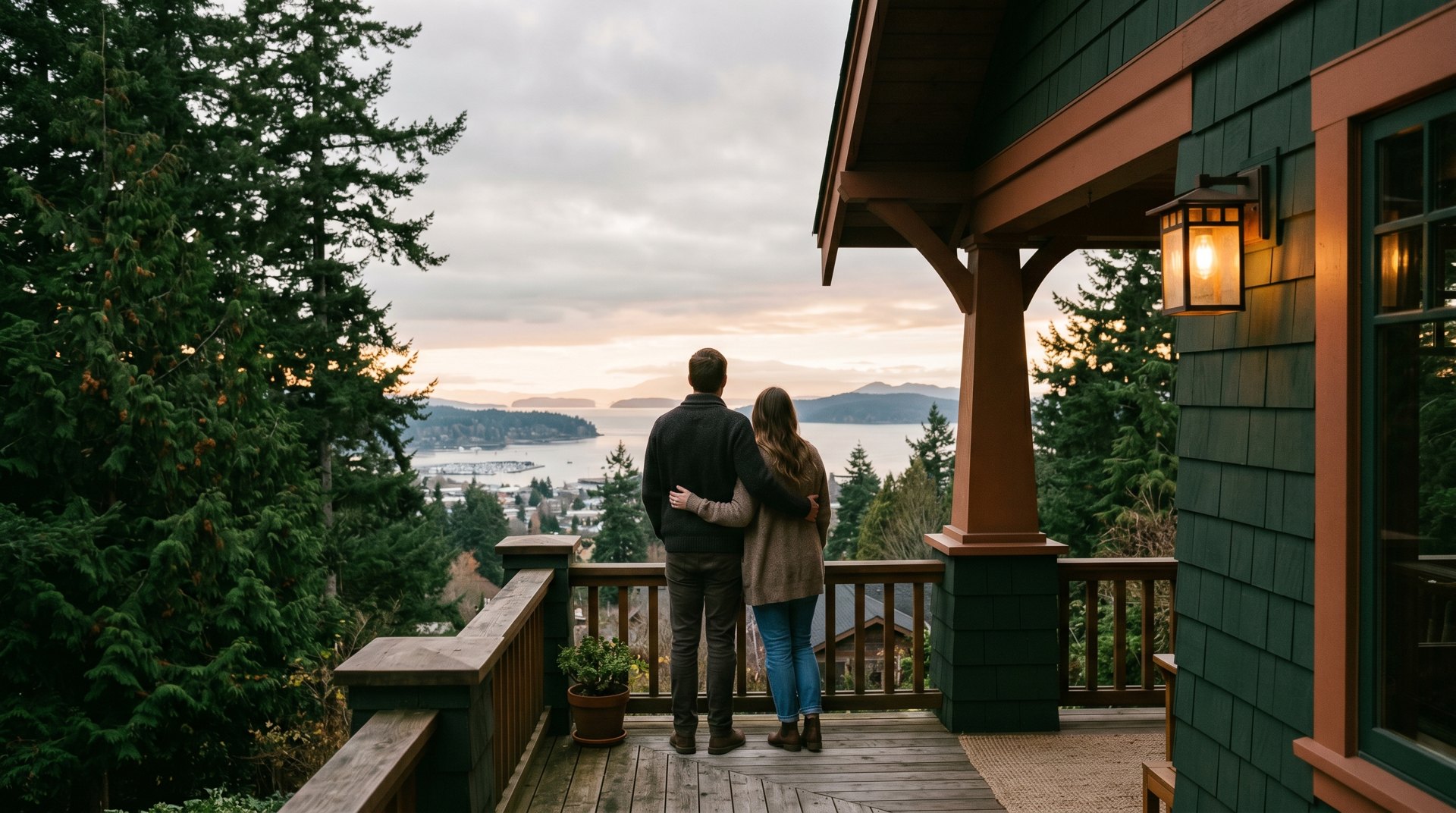
The buyer’s guide
Buying a Home in Bellingham
The process, the real costs, and the mistakes I see — from a broker who closes here.
By Genaro Shaffer, Bellwether Real Estate — Updated May 2026
Buying a home in Bellingham, Washington is mostly the same as buying a home anywhere — you find one you want, you write an offer, you negotiate, you inspect, you close. The mechanics aren’t exotic.
But there are 6-8 Bellingham-specific things that actually matter — Washington state forms, NWMLS market dynamics, the local lender landscape, school boundary surprises, flood plain and wildfire WUI considerations, the seller-financing path I specialize in for buyers who don’t fit a bank’s box. Those are what this page covers in depth.
If you’re buying somewhere else, most of the high-level process here still applies. If you’re buying in Whatcom County, this is the field guide.
The 60-second answer
Buying a home in Bellingham takes about 45–60 days from offer acceptance to closing for most transactions, costs roughly 2–3% of the purchase price in closing costs plus your down payment, and requires successful navigation of three negotiations: the initial offer + price, the inspection-period response, and (sometimes) the appraisal gap. Washington uses specific NWMLS forms (each defined in the real estate glossary); Form 17 is the seller disclosure you’ll see early. WA has a Real Estate Excise Tax (REET) on sales — paid by sellers, not buyers, but it affects negotiation dynamics. School boundaries don’t follow streets you’d expect; verify before falling in love. Self-employed and complex-income buyers should know that seller financing is a real path when bank underwriting doesn’t fit.
If that’s enough — call (360) 389-6616 to start. Otherwise, the rest of this page is the deeper version.
What the Bellingham market is doing right now
Numbers move monthly, so I keep the live set on the market report. The June 2026 picture in one breath: the Bellingham city median is around $710K, Whatcom County’s median is essentially flat year over year at $625K, active inventory is up roughly 15% from last spring, and well-priced homes still move inside two weekends. Translation for buyers: you finally have real choice again, but the good houses have not gotten patient. Be underwritten, be decisive, and let the slower pace work for you on inspection and terms rather than on price alone.
The paperwork, demystified: short plain-English guides to every document you will meet — Form 17, the inspection contingency, escalation clauses, earnest money, pre-approval vs pre-qualification, and closing costs.
Your roadmap home
The home-buying journey, step by step
From the first daydream to the keys in your hand. Tap any step to see what happens, what to do, and the exact tool for it. Check things off as you go — your progress saves on this device.
First-time buyer? You may qualify for down payment assistance. See the Washington and Bellingham programs that help cover your down payment.Just getting started
A friendly general guide to buying in Whatcom County, not legal or financial advice. Every transaction is different — let us tailor it to yours.
Start your journey with GenaroThe full process, step by step
Phase 1: Pre-shopping (Weeks 1–4)
Step 1: Define your buying picture. Before you look at a single listing, get clear on the basics:
- Budget (purchase price + cash to close + monthly carrying cost)
- Geography (which Whatcom area + acceptable commute)
- Property type (single-family, condo, townhome, multifamily, acreage)
- Bedrooms / bathrooms / square footage minimums
- Lot type (yard, view, water access, acreage, raw land)
- Style preference (Craftsman, Victorian, Mid-century, Modern, Ranch — Bellingham has all of these)
- Deal-breakers (busy street? flood plain? HOA? no garage?)
- Timeline (ready now? 90 days? this year?)
The buyers who get this clear first end up looking at half as many homes and writing better offers.
Step 2: Get pre-approved with a local lender. Critical: pre-approval ≠ prequalification. Pre-approval means a lender has fully reviewed your income, assets, and credit and committed to a loan amount in writing. Prequalification is a quick estimate. In a competitive Bellingham market, prequalified offers get beaten by pre-approved offers every time.

Local lender beats online lender. This is true across markets and is especially true in Whatcom County. A few reasons:
- Local lenders close deals here every week. They know which appraisers move fast, which title companies move fast, which inspection findings matter to NWMLS buyers.
- Local lenders pick up the phone when there's a problem. Online lenders route you through a queue.
- Local lender names appear in MLS feed; sellers prefer offers backed by lenders they recognize.
- Local lenders can do seller financing, construction loans, portfolio loans for self-employed buyers, and other structured options that online lenders typically can't.
If you're a W-2 employee with simple finances and 20% down, any reputable lender can handle your transaction. If your finances are non-standard (self-employed, recent W-2 change, partial commission income, complex investments, multiple businesses) — talk to a local lender first.
Local lender recommendations →
If a traditional lender says no — read Seller Financing. It's my specialty for exactly this situation.
Step 3: Hire a buyer's broker. You want someone who:
- Works in Whatcom County daily (knows local nuances)
- Has NWMLS expertise (the forms, the rules, the local market patterns)
- Will negotiate hard for you, not just relay information
- Returns texts within hours, not days
- Has experience with the specific transaction type you need (out-of-state, seller financing, investment property, etc.)
If you're buying with me, the buyer-agency relationship is documented via a standard NWMLS Buyer Agency Agreement (Form 41). I represent your interests exclusively in the transaction.
Phase 2: Searching (Weeks 4–12, variable)
Step 4: Set up listing alerts. I'll configure NWMLS alerts to your specific criteria. You get daily emails with new listings matching your filters. We refine as you see what catches your eye.
Step 5: Showings. For local buyers: I show homes in person, typically 2-6 per visit. For out-of-state buyers: virtual tours via FaceTime/Zoom until you're ready for an in-person scouting trip.
Step 6: Multi-time visits before offering. For any home you're seriously considering, do a second visit at a different time of day. Friday at 9pm is different from Tuesday at 11am. Sundown is different from sunrise. The neighborhood you saw on Saturday morning may not be the neighborhood you'd actually live in Tuesday at midnight.
Step 7: Due diligence before writing an offer. Before we write, I want you to know:
- The school boundary (verified with Bellingham Public Schools or the relevant district)
- Whether the home is in a flood plain (Whatcom County GIS — free public data)
- Whether the home is in a wildfire WUI proximity (WA DNR — free public data)
- The neighborhood's typical sale-to-list ratio + days on market
- Recent comparable sales (last 90 days)
- The seller's Form 17 disclosures (defects they've acknowledged)
- The HOA reserves status if applicable (this is huge for condos)
- Any easements on title (driveway access, utility, riparian)
I do most of this before our second showing. If there's anything important you should know, you should know it before you fall in love.
Phase 3: Offer + negotiation (Days 1-7 from finding "the one")
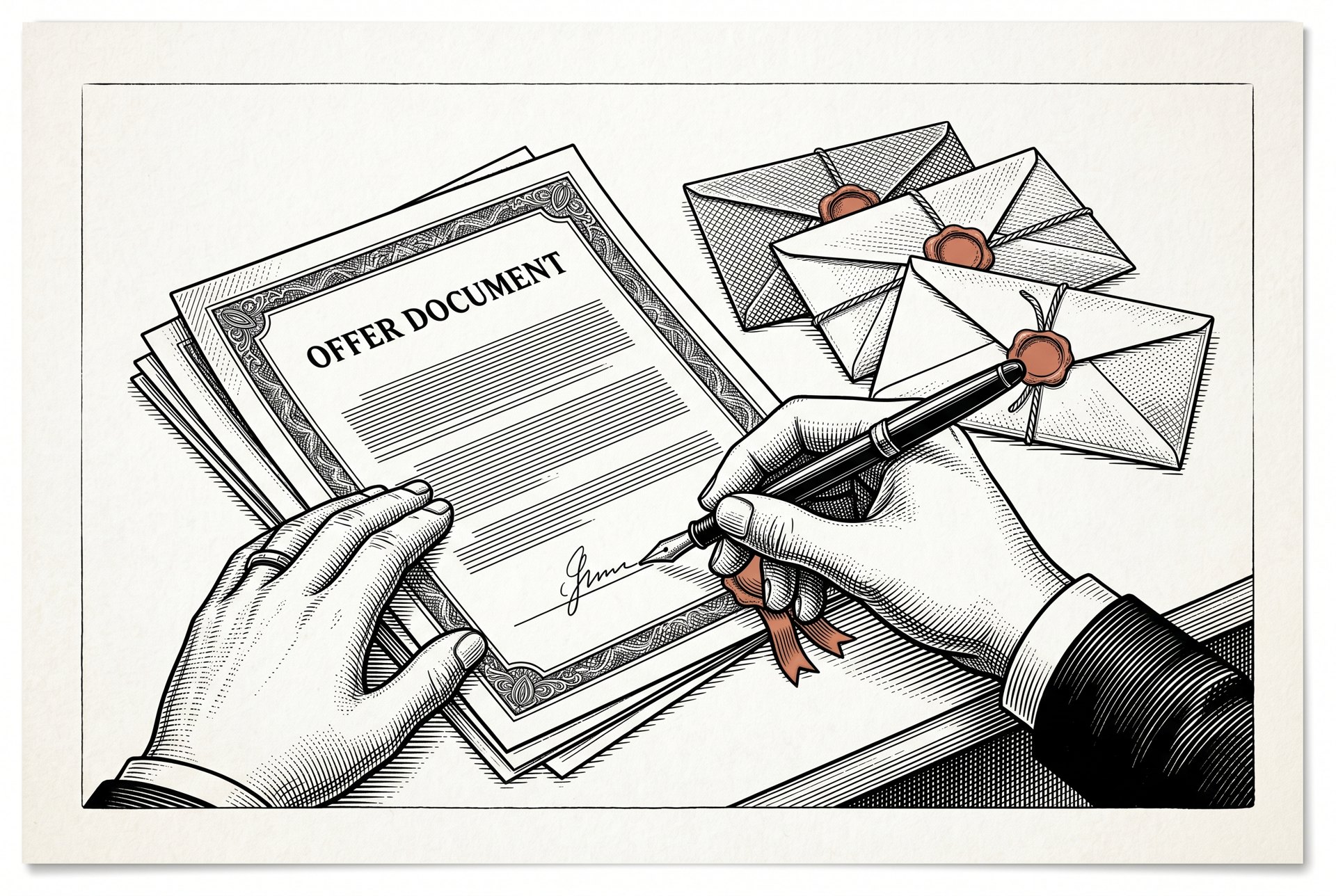
Step 8: Construct the offer. Each element of the offer is a negotiation lever:
- Price. Anchor based on recent comps, not list price. List price is the seller's opening; ours should reflect comp-supported value.
- Earnest money. Higher = stronger signal. $5K-$20K typical for Bellingham; up to 2% of price for luxury.
- Financing strength. Cash > Conventional 20% down > Conventional > FHA > VA, generally speaking, from a seller's perspective.
- Inspection contingency. Standard is 10 days. Shorter (5 days) is a stronger offer. "Informational" or "pass-fail" framing signals good faith without legal exposure. No inspection is the strongest possible offer but should only be done with full understanding of risk.
- Financing contingency. Standard 21 days. Shorter is stronger.
- Appraisal contingency. Optional waiving (or "gap" coverage) makes the offer stronger in competitive markets.
- Closing date flexibility. Letting the seller choose closing date is a "free" negotiation lever.
- Possession / occupancy. Some sellers need rent-back; offering 30-day post-closing rent-back can win an offer at the same price.
- Cover letter. Specific-to-the-house cover letters work when genuinely connected to the property. Generic emotional appeals are noise.
- Form 17 signature. Signing Form 17 in all three signature spots before submitting demonstrates engagement.
For a deeper dive: Bellingham Offer Strategy →
Step 9: Submission + response. The offer goes to the listing agent. Three possible responses:
- Acceptance — congratulations, you're under contract
- Counter — seller changes terms; we respond, possibly counter back; this can iterate
- Rejection — rare unless the offer was wildly off-market
In multiple-offer situations:
- We may not know we're in one until after the seller's review date
- Best practice: write your offer assuming there's competition
- Strategy varies: escalation clauses (pay $X over highest competing offer up to ceiling Y), "highest and best" sealed-bid round, or simply your best opening
The CNE (Certified Negotiation Expert) training I have is specifically about making the calm, prepared offer win in these situations. Most multi-offer wins don't come from outbidding — they come from making the seller feel confident the deal will actually close.
Phase 4: Inspection + due diligence (Days 1-10 of escrow)
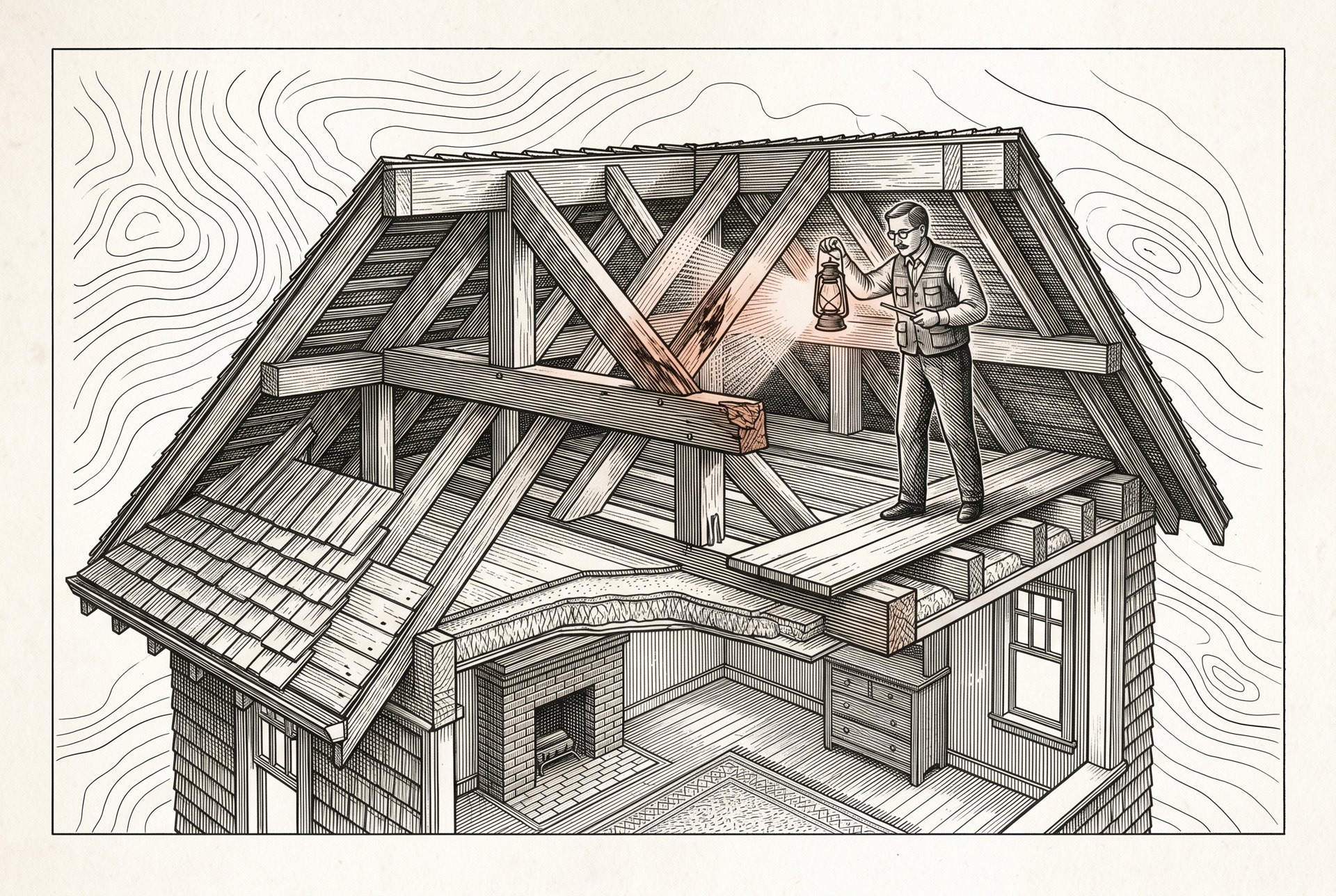
Step 10: Home inspection. Hire a Whatcom County inspector. I'll recommend three to choose from. Cost: $400-700 for a typical home; more for larger / older homes or with specialty items (pool, septic, well, oil tank).
Common Bellingham inspection findings:
- Oil tanks (older homes; soil contamination liability)
- Knob-and-tube wiring (insurance concern)
- Aluminum wiring (insurance concern)
- Asbestos siding or floor tiles (typical in older homes; not necessarily a problem if not damaged)
- Foundation settlement / cracks
- Roof age (10+ years = consider replacement timing)
- Drainage issues (PNW rainfall + improperly graded yards)
- Septic systems (if rural; require separate inspection)
- Wells (if rural; require separate test for flow rate + bacteria)
- Crawl space ventilation + moisture
- Outdated electrical panels (Federal Pacific, Zinsco — insurance issue)
Step 11: Inspection response. This is the second negotiation in every transaction. Options:
- Accept the home as-is
- Request repairs (seller fixes specific items pre-closing)
- Request credits (seller credits you cash at closing to cover repairs)
- Renegotiate price
- Walk away (within contingency period)
The CNE skill here is real money — distinguishing between fishing-for-credits requests and actual material findings, structuring counters that protect your downside without nuking the deal.
Step 12: Title + escrow. Title company orders a title commitment showing all liens, easements, and ownership history. Review the title commitment carefully — easements can affect property use (driveway access, utility, riparian, shared road maintenance). I review every title commitment for my buyers.
Phase 5: Financing + closing (Days 10-45 of escrow)
Step 13: Appraisal. Lender orders an appraisal. The appraisal must come in at or above purchase price (or at least with manageable gap) for the loan to fund. Three outcomes:
- At or above purchase price — proceed normally
- Below purchase price — buyer + seller negotiate: seller drops price, buyer brings cash to cover gap, or deal terminates (depending on contingency language)
- Significantly below — usually triggers renegotiation or termination
Step 14: Final loan approval. Lender finalizes underwriting. They may request additional documents (recent pay stubs, updated bank statements, explanation of large deposits). Respond quickly — every delay extends the closing timeline.
Step 15: Final walkthrough. The day before or day of closing, we walk the home one more time to verify:
- Negotiated repairs are completed
- Home is in the condition agreed upon
- Personal property to be left (washer/dryer, fridge, etc.) is in place
- Personal property not part of deal is removed
- No new damage since inspection
Step 16: Closing. Sign documents at the title/escrow company office (or via mobile notary if remote). Wire your closing funds in advance (do this via your local bank for fraud protection — never via email instructions from someone you haven't called to verify).
Closing typically takes 30-60 minutes. Funding happens within 24 hours of signing for most transactions. Keys handed over.
You're a Whatcom County homeowner.
The real cost of buying
Common cost categories:
| Category | Typical cost | Who pays |
|---|---|---|
| Down payment | 0%–25% of purchase price | Buyer |
| Loan origination fee | 0.5%–1% of loan | |
| Buyer | Appraisal | |
| $500–$700 | Buyer (paid to lender) | |
| Inspection | $400–$700 | Buyer |
| Septic / well inspection (rural) | $200–$500 each | |
| Buyer (often) | Title insurance (lender's) | |
| ~0.5% of loan | Buyer (negotiable) | |
| Title insurance (owner's) | ~0.5% of price | Seller (negotiable) |
| Escrow / settlement fees | $1,000–$2,500 | |
| Split typically | Recording fees | |
| $200–$400 | Buyer | |
| Wire transfer fees | $25–$50 | Buyer |
| Homeowner's insurance | $1,500–$3,500/yr first year, paid at closing | |
| Buyer | Property tax pro-ration | |
| Variable | Buyer (paid forward) | |
| HOA dues + estoppel fees (if applicable) | $250–$500 + monthly dues | Buyer |
| Real Estate Excise Tax (WA REET) | 1.6%–3.5% of price |
Typical buyer closing costs: 2–3% of purchase price on top of down payment. For a $700,000 Bellingham home: ~$14,000–$21,000 in closing costs. Estimate yours with the closing-cost calculator, and size up the loan with the mortgage and affordability calculators.
Down payment assistance programs available in WA:
- WA House Key Opportunity (down payment assistance for qualifying buyers)
- WSHFC programs (Washington State Housing Finance Commission)
- FHA loans (3.5% down)
- VA loans (0% down for eligible veterans)
- USDA loans (0% down for rural-eligible properties)
WA Down Payment Assistance Programs →
Seller financing for buyers who don't fit a bank's box
This is my specialty. If a bank has told you "no" — or you're the type of buyer they'll say no to — there's almost always another path.
Buyer profiles where seller financing makes sense:
- Self-employed with complex tax returns
- Small business owner with recent business changes
- Recent W-2 change (job change, promotion, layoff, return to work after a gap)
- Recent immigrant / no US credit history
- Recovering from past credit event (foreclosure, bankruptcy 2+ years ago)
- Strong income but unconventional income type (commission, contractor, sales bonuses)
- Investor buying with cash from a recent sale but no current income
How it works: the seller (not a bank) acts as the lender, accepting payments from you over time rather than full cash at closing. Terms are negotiated — interest rate, down payment, length, balloon clauses, prepayment terms, etc.
Why sellers say yes: tax advantages (spreading capital gains across years), higher net to seller (often 1-2% interest premium vs market mortgage rates), enables transaction that wouldn't otherwise happen.
The deeper guide: Seller Financing →
If you're not sure whether seller financing applies to your situation, the easiest answer is to call: (360) 389-6616. 15 minutes on the phone will tell us if it's a fit.
New construction or resale?
Bellingham gives you both lanes: pre-war character in the core neighborhoods, and new construction in Cordata, King Mountain, and the Ferndale-Lynden corridor. New buys you warranties, modern systems, and energy code; resale buys you established trees, walkable blocks, and usually more lot. The processes differ more than people expect — builder contracts are not NWMLS forms, and the model-home agent works for the builder. If new is on your list, read the new-construction guide; I also track the county permit feed weekly, which means I often know what is being framed before it is listed.
Pick the neighborhood before the house
Most buyer regret I have seen in 11 years is neighborhood regret wearing a house costume. Spend an evening with the neighborhood guides — all 22 Bellingham neighborhoods, each with honest pros, cons, and price reality. Waterfront-curious? Start with the waterfront guide. Project-curious? The fixer-upper guide covers where the real ones hide and what they cost to tame.
Common buyer mistakes I see (and how to avoid them)
After 11 years, the same patterns recur. Avoiding even one of these can save real money.
- Falling in love with a home before doing due diligence. Always check school boundary, flood plain, wildfire WUI, easements, HOA reserves, comparable sales — before writing an offer, not after.
- Overpaying because of emotional escalation. In multi-offer situations, set a ceiling before you start and don't move it under pressure.
- Skipping the inspection. Saving $500 to lose $50,000 to an undisclosed foundation issue is not a deal.
- Filling out an online lender application after a Google search. Spam for 12 months, weaker offer, slower close. Find local.
- Waiving inspection without understanding what's being given up. Sometimes the right move. Often not. Always a conversation, never a default.
- Not reviewing the title commitment carefully. Easements you don't notice can affect property use forever.
- Underestimating ongoing costs. Property tax + insurance + HOA + maintenance + utilities = real money beyond the mortgage payment. Plan for ~1-2% of home value per year in maintenance alone.
- Lowballing aggressively in a competitive market. A $50K-low offer in a multi-offer Bellingham market is wasted paper. Either compete or move on.
- Talking to the listing agent directly. Always communicate through your buyer's broker. Anything you say directly can become leverage.
- Missing financing or inspection contingency deadlines. Each is hard — miss and you lose contingency protection. Calendar them precisely.
Frequently asked
How much do I need for a down payment in Bellingham? Depends on loan type. Conventional minimum 3% (with PMI), conventional 20% to avoid PMI, FHA 3.5%, VA 0%, USDA 0%. For a $700K home: 3% = $21K, 5% = $35K, 10% = $70K, 20% = $140K. WA House Key + WSHFC programs may cover up to $15K of down payment for qualifying buyers.
How long does it take to buy a home in Bellingham? About 45-60 days from offer acceptance to closing. The search phase varies wildly — some buyers find their home in week one, others take 6+ months. Total realistic timeline from first contact to keys in hand: 2-6 months for most buyers.
Should I waive the inspection contingency? Sometimes yes, often no — depends on the home, the market, and your risk tolerance. We talk about this on every multi-offer deal. Waiving inspection on a 1970s home with unknown systems is reckless. Waiving inspection on a 2023 new build with full builder warranty + pre-inspection report is reasonable. Never waive without understanding what you're giving up.
What's the difference between pre-approval and pre-qualification? Pre-qualification is a quick estimate based on what you told the lender; not binding. Pre-approval is a full underwriting review of your finances; lender commits in writing. Sellers prefer pre-approval; competitive markets require it.
Can I buy a home in Bellingham from out of state? Yes. About 30% of my buyer clients haven't visited Bellingham more than once or twice before we close. Full long-distance process described in Moving to Bellingham.
Do I need a buyer's broker? In Washington, yes — buyer agency creates a legal fiduciary relationship that protects you in negotiation and disclosure. Buyer's brokers are typically compensated by the seller (via the listing) at no direct cost to the buyer.
What if I'm self-employed and the bank says no? Call me. Seller financing is a real path that bank-only agents don't talk about. Read Seller Financing for details.
What's WA REET? Washington Real Estate Excise Tax — a state + local transfer tax paid by the seller at closing. Graduated rates from 1.6% to 3.5% depending on price. Doesn't directly affect the buyer's cash outflow but affects negotiation dynamics (sellers are aware they're paying it and may negotiate price differently).
What's the typical inspection contingency length in Bellingham? 10 days is standard. 5 days is competitive. Shorter contingencies are stronger offers but harder to inspect thoroughly. Compromise: 10 days listed with "I'll respond within 5" tactical commitment.
Should I ask the seller for a home warranty? Possible negotiation item. ~$500-700 cost; covers some systems for one year. Useful for older homes; less useful for new construction. Most sellers will grant if asked.
Talk to Genaro
If you're at "I'm thinking about buying" stage, the easiest first step is the 30-minute discovery call. No pressure, no pitch — just a real conversation about your situation, your timeline, and what's actually realistic.
📞 (360) 389-6616 — call or text ✉️ genaro@bellwetherrealestate.com — email 📩 Contact form — send a note
For specifics on the seller-financing path: read Seller Financing.
For long-distance buyers: read Moving to Bellingham.
For neighborhood-by-neighborhood decisions: see Bellingham Neighborhoods Guide.
Don't go generic. Go with Genaro.
Genaro Shaffer · Licensed WA Real Estate Broker #27119 · Bellwether Real Estate · 11+ years in Whatcom County · 67+ closed transactions · 5.0 stars on Zillow · Former mortgage broker · Certified Negotiation Expert · Seller-financing specialist 📞 (360) 389-6616 · ✉️ genaro@bellwetherrealestate.com Powered by Bellwether Real Estate · Member NWMLS · Equal Housing Opportunity
First-time buyer? See the First-Time Homebuyer & Down Payment Assistance Guide — up to $40,000 in local help, plus a free eligibility estimator.