

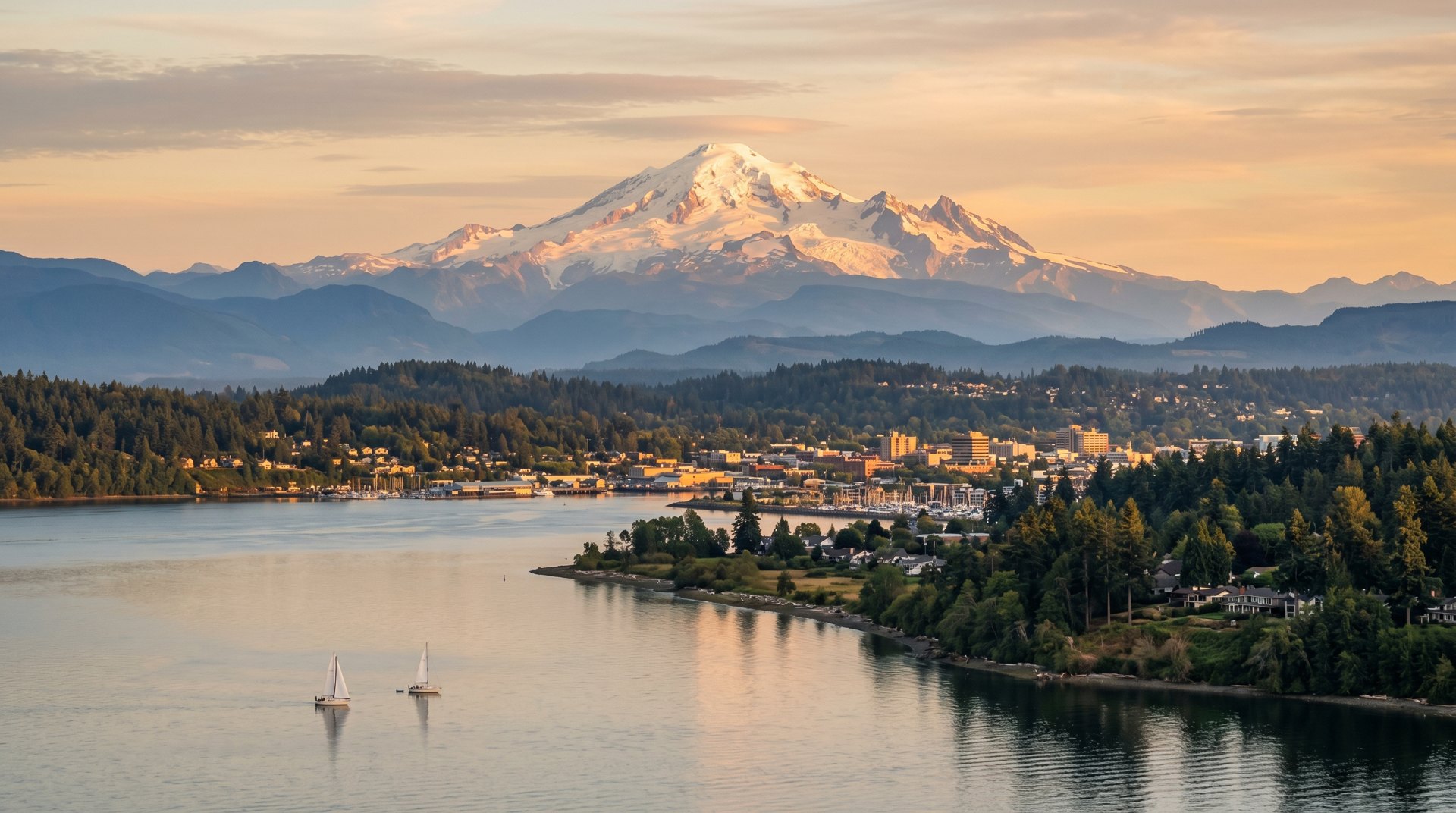
BC → BELLINGHAM · RELOCATION GUIDE
From the Lower Mainland to Bellingham.
The honest cross-border math.
Your Vancouver equity, the USD exchange rate, FIRPTA, and what fifty miles south actually buys.
The BC-to-Bellingham conversation is genuinely different from every other relocation I handle. You are not moving state to state — you are crossing an international border, converting currencies, dealing with FIRPTA withholding on a future US property sale, and navigating Canadian tax reporting requirements on foreign property. The clients who ask me about this move are usually Vancouver or Lower Mainland homeowners who are stunned by what their equity buys fifty miles south, retirees who want their CPP and RRSP dollars to go further, or cross-border families tired of watching most of their income disappear to BC’s combined federal-provincial tax rates. I have worked with enough of these buyers to know the real questions — and I am going to answer them straight.
The equity reset, in actual numbers
The Metro Vancouver Real Estate Board reported a benchmark price of CAD $1,100,700 for all residential properties in May 2026, down 6.2% year-over-year. Detached houses benchmarked at CAD $1,847,900. At the June 2026 exchange rate of 1 CAD = 0.722 USD (Bank of Canada / US Federal Reserve), that benchmark detached house converts to roughly USD $1,335,000. The Bellingham median single-family home in spring 2026 was running about USD $710,000.
So for the archetypal Lower Mainland detached-home seller — say a Surrey or Burnaby homeowner who bought ten years ago — the math after BC selling costs and currency conversion often produces a Bellingham purchase with $300,000–$700,000 left over. For Vancouver West Side or West Vancouver sellers, the equity unlock can exceed $1 million. That is the conversation.
Here is the worked example for a mid-tier scenario. A Burnaby detached home benchmarks around CAD $1,600,000 (East Vancouver/Burnaby tier). Subtract 4% selling costs: ~CAD $1,536,000 net proceeds. Convert at 0.722: ~USD $1,109,000 net in US dollars. Buy a Bellingham single-family home for USD $650,000 with closing costs of roughly $12,000. Leftover cash: ~$447,000 — enough to pay off a mortgage, fund retirement, or invest.
The Fraser Valley buyer in Abbotsford or Mission sees a more modest picture. A typical Abbotsford detached home might fetch CAD $950,000 — net proceeds after selling costs around CAD $912,000, or ~USD $659,000. After a $650,000 Bellingham purchase, you are essentially doing a lateral trade on house size with minimal leftover. That buyer is usually moving for lifestyle reasons, not equity arbitrage.
| Metro Vancouver (Lower Mainland) | Bellingham WA | What changes | |
|---|---|---|---|
| Median/benchmark home | CAD $1,100,700 all-res; CAD $1,847,900 detached | USD ~$650,000 SF | 30–50% cheaper depending on Vancouver tier |
| Property tax | ~0.31% of assessed value (City of Vancouver, 2025) | ~0.85% effective (Whatcom County) | Vancouver tax bill is very low; Whatcom bill higher per dollar of value — but lower home values mean similar or lower annual dollar amounts |
| State/provincial income tax (top marginal) | 20.5% BC + 33% federal = 53.5% combined top rate | 0% WA state income tax + federal only | Significant for high earners; modest for retirees drawing CPP/OAS under treaty |
| Sales tax | 12% (5% GST + 7% PST) | 8.8% Bellingham | Lower in WA |
| BC Property Transfer Tax (buyer pays) | 1% first $200K, 2% $200K–$2M, 3% over $2M; +20% extra for foreign buyers in GVA | WA REET 1.6–3.5% (seller pays) | Different who pays; WA is buyer-friendly |
| Average annual rainfall | ~90 inches (Vancouver City) | ~39 inches | Bellingham is significantly drier |
| Sunny days per year | ~143 | ~157 | Comparable — both gray; Bellingham slightly more sun |
| Typical commute (downtown core) | 45–90 min Metro Vancouver by car or SkyTrain | 10–20 min by car in Bellingham | Small-city commute is dramatically easier |
| Regular unleaded gas | ~CAD $1.85–$2.10/L (Metro Vancouver pump price) | ~USD $3.80–$4.20/gal Bellingham | Gas is cheaper in WA at equivalent fill-up cost |
One important correction about BC property taxes: Vancouver’s effective rate of roughly 0.31% is among the lowest in North America — but that is because assessed values are so high that the city doesn’t need a high mill rate to generate revenue. On a $1.8M Vancouver detached home you’d pay roughly $5,600 per year in property tax. On a $650,000 Bellingham home at Whatcom’s ~0.85% effective rate, you’d pay roughly $5,525. The annual dollar amounts are similar; you just own a less expensive house.
Cost of living, line by line
What gets cheaper when you move to Bellingham:
Gas is the one everyone notices immediately. Metro Vancouver pump prices for regular unleaded routinely hit CAD $1.85–$2.10 per litre in 2024–2025, which translates to roughly USD $5.00–$5.60 per gallon at current exchange. Bellingham prices run USD $3.80–$4.20 per gallon. If you drive a lot — and you will in Bellingham, because it’s a driving city — the savings are meaningful.
Sales tax drops from 12% combined GST+PST to 8.8% in Bellingham. Not dramatic, but it adds up on large purchases.
Housing costs are the obvious one and they are covered in the equity section. The gap is real and large.
For retirees specifically: WA has no state income tax. Canadian residents drawing CPP, OAS, or RRIF distributions are generally covered by the US-Canada tax treaty — the IRS typically defers to Canadian tax authority on Canadian-source retirement income for Canadian tax residents. If you eventually become a US tax resident, the WA state income tax savings are substantial compared to BC’s 20.5% top marginal rate.
What does not get cheaper — or gets more expensive:
Healthcare is the big one. BC MSP covers virtually nothing in the US. Short visits: travel insurance. Extended stays: you need proper US-side health coverage. The US healthcare system runs on insurance and out-of-pocket costs that will shock most Canadians. I am honest about this with every BC buyer. If you are considering a full relocation and intend to become a US resident, budget for this carefully before you move.
Groceries are roughly comparable. The USD/CAD exchange rate currently makes Bellingham groceries slightly more expensive in CAD terms for a BC resident maintaining Canadian dollar income. Cross-border grocery runs are common for Whatcom County residents going to Costco or Trader Joe’s, and Canadian visitors do the reverse.
Internet and mobile service are comparable or slightly more expensive in the US. Canada’s carrier pricing is notoriously bad, but WA prices are not dramatically better.
The exchange rate variable: Everything above assumes you are converting income to USD. If you maintain a CAD-denominated income stream and own a USD asset, currency movements matter. In 2020 CAD was at 0.77 USD; in early 2025 it briefly dropped to 0.69. The June 2026 rate of 0.722 is roughly mid-range for the last five years. Use a currency specialist (OFX, Knightsbridge FX, Wise) rather than your bank — you can typically recover 1–2% on large conversions.
The climate — the honest part
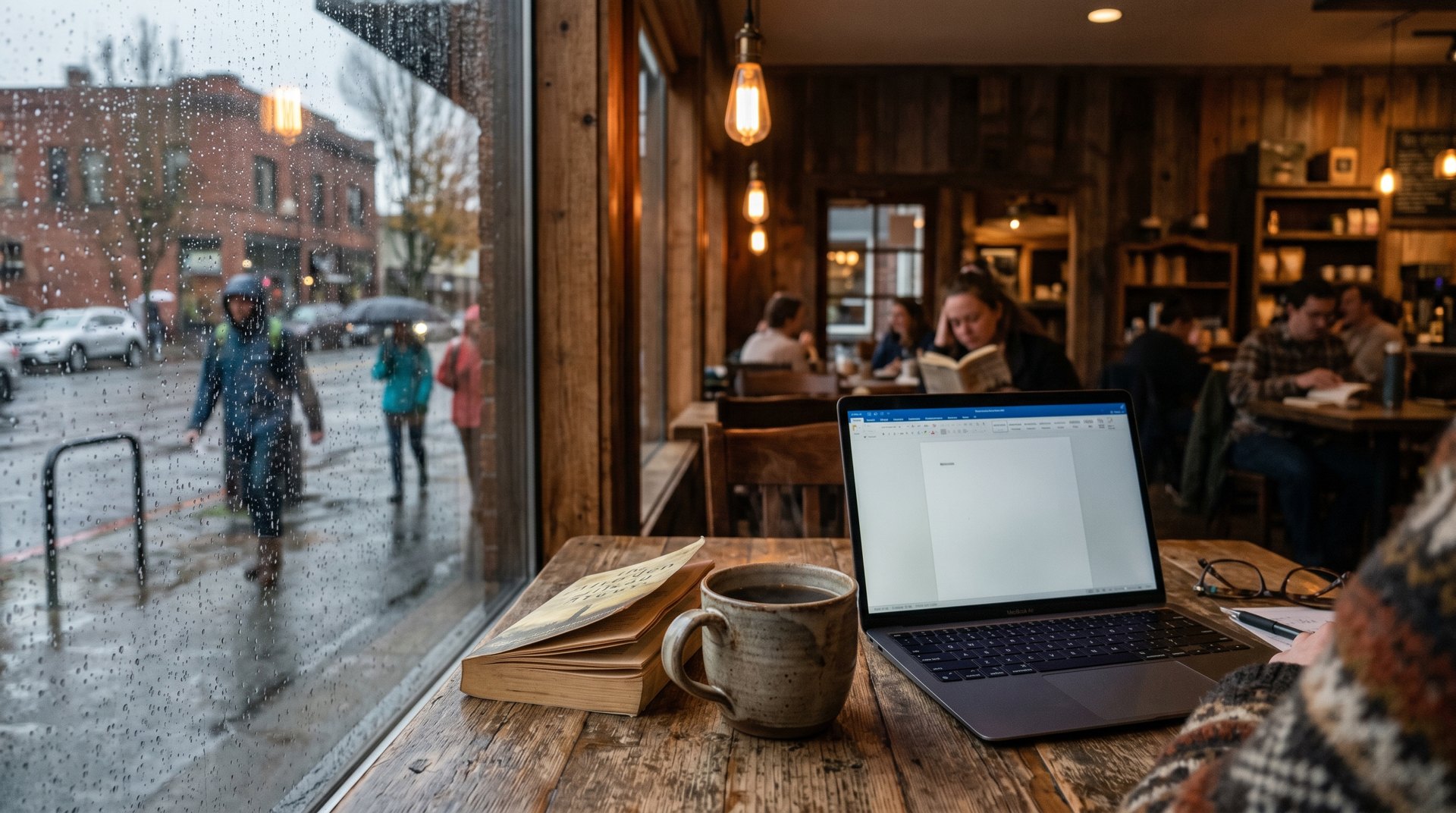
I tell every client from outside the Pacific Northwest the same thing: visit in November before you commit. Not July — November.
Bellingham gets approximately 39 inches of rain annually spread across about 155–160 days with measurable precipitation. Many of those are gray drizzle days rather than hard rain, but the effect is the same: October through April, the sky is overcast more days than not. Weather data puts Bellingham at roughly 230 cloudy or gray days per year. The January low averages around 33–35°F (1–2°C). It does not snow heavily in the city, but it can, and Mt. Baker — visible on clear days from much of Bellingham — gets some of the heaviest snowfall anywhere in North America.
Here is what surprises most BC buyers: Bellingham is not dramatically different from Metro Vancouver in terms of raw rainfall. Vancouver City receives roughly 90 inches annually — more than twice Bellingham’s 39 inches. Bellingham is actually drier. Bellingham also averages about 157 sunny days per year versus Vancouver’s approximately 143. The two climates are genuinely similar in character: oceanic, cool-humid, wet winters, relatively mild summer. Anyone from the Lower Mainland who thinks moving to Bellingham means escaping gray winters will be only slightly less gray.
What Bellingham has over Vancouver is the summer payoff. July and August are consistently the best months: temperatures average around 72°F (22°C) in July, low humidity, long evenings, Bellingham Bay glowing at 9 PM. The North Cascades are forty-five minutes east. Mt. Baker ski area is an hour. Chuckanut Drive winding south along the bay takes thirty minutes. The farmers’ markets run through October. This is genuinely excellent summer living.
The fall-winter picture is gray drizzle, short days, and the same indoor-outdoor rhythm Vancouverites already know. The biggest climate-shock risk is not actually Bellingham buyers from the Lower Mainland — it is buyers from drier climates (Calgary, the Interior) who discover Pacific Northwest gray for the first time.
One climate advantage relative to the broader Pacific Northwest: Bellingham sits slightly north of the Willamette Valley smoke corridor that blankets Portland and Seattle during bad wildfire summers. The smoke still arrives — Interior BC fires routinely send haze south — but Bellingham tends to see fewer consecutive red-air days than mid-Oregon. Still: BC summers have seen dramatic wildfire smoke events in 2023 and 2024, and Bellingham is not immune.
Why people leave the Lower Mainland
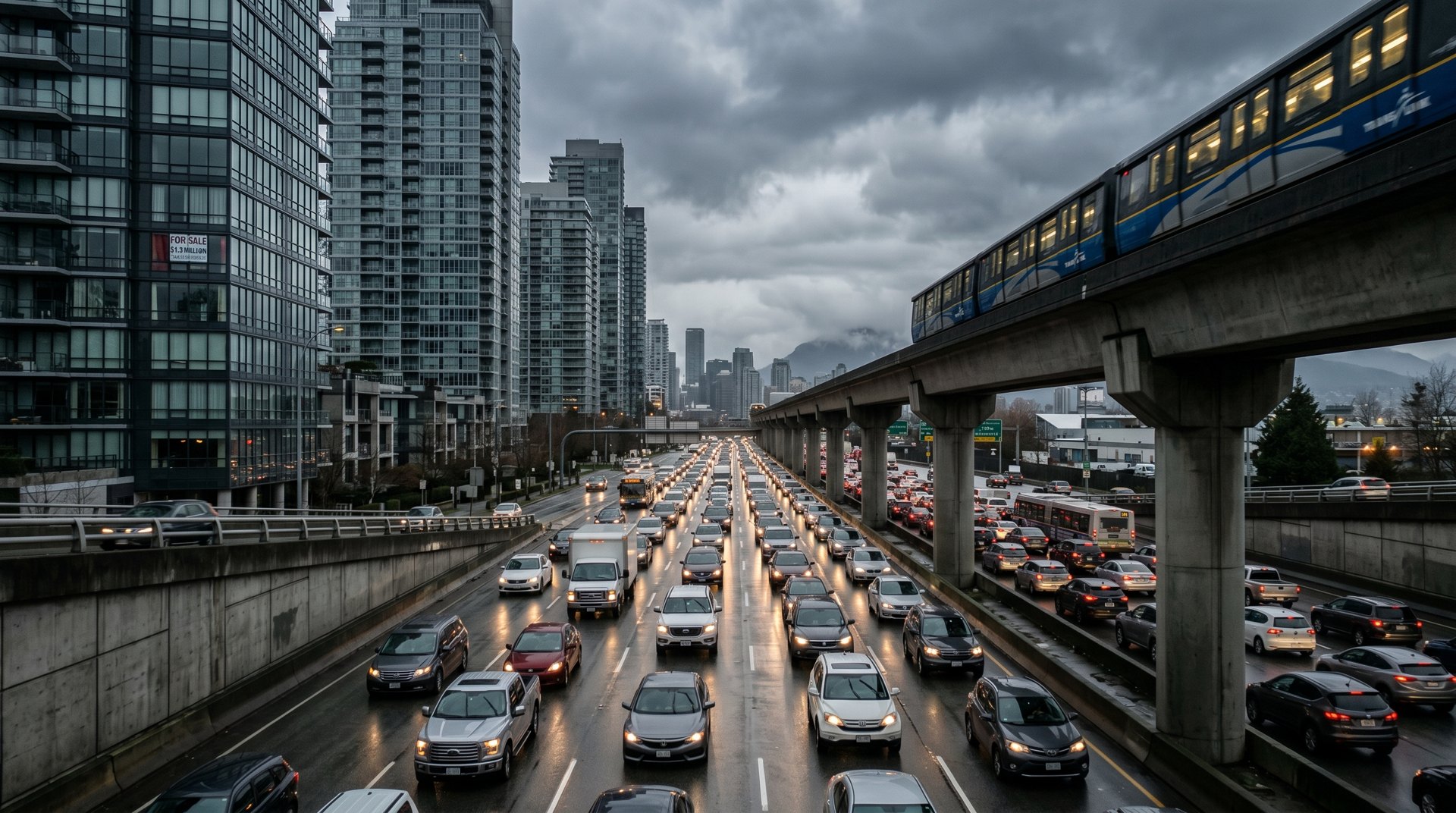
The housing cost conversation dominates, but it is rarely the only thing.
The price-per-square-foot wall. By 2025–2026, a detached home in Vancouver, Burnaby, or North Vancouver benchmarks at CAD $1.4M–$2.5M+. Richmond, Surrey, and Coquitlam are CAD $1.0M–$1.4M+ for detached. Even two-bedroom condos in Vancouver are hitting CAD $800K–$1.3M. Families who want a yard, a garage, and a third bedroom watch the math and realize it requires a dual-income professional salary just to reach the bottom of the detached market. Bellingham’s USD $710K median for a single-family home is a different kind of access.
The combined tax rate. A BC professional earning CAD $300K faces a combined federal-provincial marginal rate of approximately 53.5% on income above about $260K. WA has no state income tax. The federal burden still applies, but the provincial layer disappears for US residents. For the right earner the annual difference is tens of thousands of dollars.
The BC Speculation and Vacancy Tax (SVT). For 2026, the SVT rate for foreign owners and untaxed worldwide earners is 3% of assessed value annually — rising to 4% by 2027. Even Canadian citizens with a secondary vacation property in Metro Vancouver now face 1% of assessed value annually if the property is not their principal residence. On a CAD $1.5M secondary home that is CAD $15,000 per year, every year, regardless of rental income. Many BC buyers I talk to are motivated partly by the desire to own a second property without paying a recurring vacancy tax.
The density and traffic. Metro Vancouver traffic — particularly the bridges, the Highway 1 corridor, and the approach to downtown — is genuinely bad by North American mid-size city standards. Bellingham at 98,000 people drives differently. There is no equivalent of the George Massey Tunnel backup or the Ironworkers Memorial Bridge at 5 PM.
The political and economic uncertainty. Some buyers describe a version of hedging — wanting a US-side asset and US-side infrastructure (bank account, credit history, property) as a long-term option. This accelerated during the pandemic and has continued as both US and Canadian political environments have shifted.
Commute reality — can you still work?
If you are working remotely, Bellingham has no commute problem. Internet connectivity is good — fiber is available across most of the city and fiber build-out is ongoing. Co-working spaces are sparse by Vancouver standards (Bellingham is a small city) but exist. If you are on a Pacific time schedule with a Vancouver employer, nothing changes in your working day.
If you are commuting back to Vancouver for work, the math is harder. Door-to-door from Bellingham to downtown Vancouver is typically 1:15–2:00 hours on a good day (border included). On a bad Friday afternoon or a busy summer Sunday, the Peace Arch crossing alone can be 1.5–2 hours, and your total trip hits 2.5–3 hours. NEXUS ($120 USD per adult, 5-year validity) is essential for frequent crossers — it cuts the dedicated-lane wait to 5–15 minutes regardless of regular-lane backups. Anyone doing this commute even monthly should have NEXUS. Without it, the border is genuinely punishing on peak-time days.
The realistic commute scenarios: – Two or three days a week to Vancouver: Manageable with NEXUS and off-peak departure times. Doable for many people. Tiring over months. – Five days a week to Vancouver: Not practical for most. You would need to stay over most nights, which defeats the Bellingham lifestyle. – Occasional Vancouver visits: Easy. Cross-border day trips are routine for Bellingham residents.
For air travel, Bellingham International (BLI) has Allegiant and Alaska routes. For major destinations, Seattle-Tacoma International (SEA) is 90 minutes south. Vancouver International (YVR) is 90 minutes north (with border). Most buyers I work with who need regular US domestic flights find BLI convenient for leisure routes and SEA for everything else.
Buying a home here without flying up six times
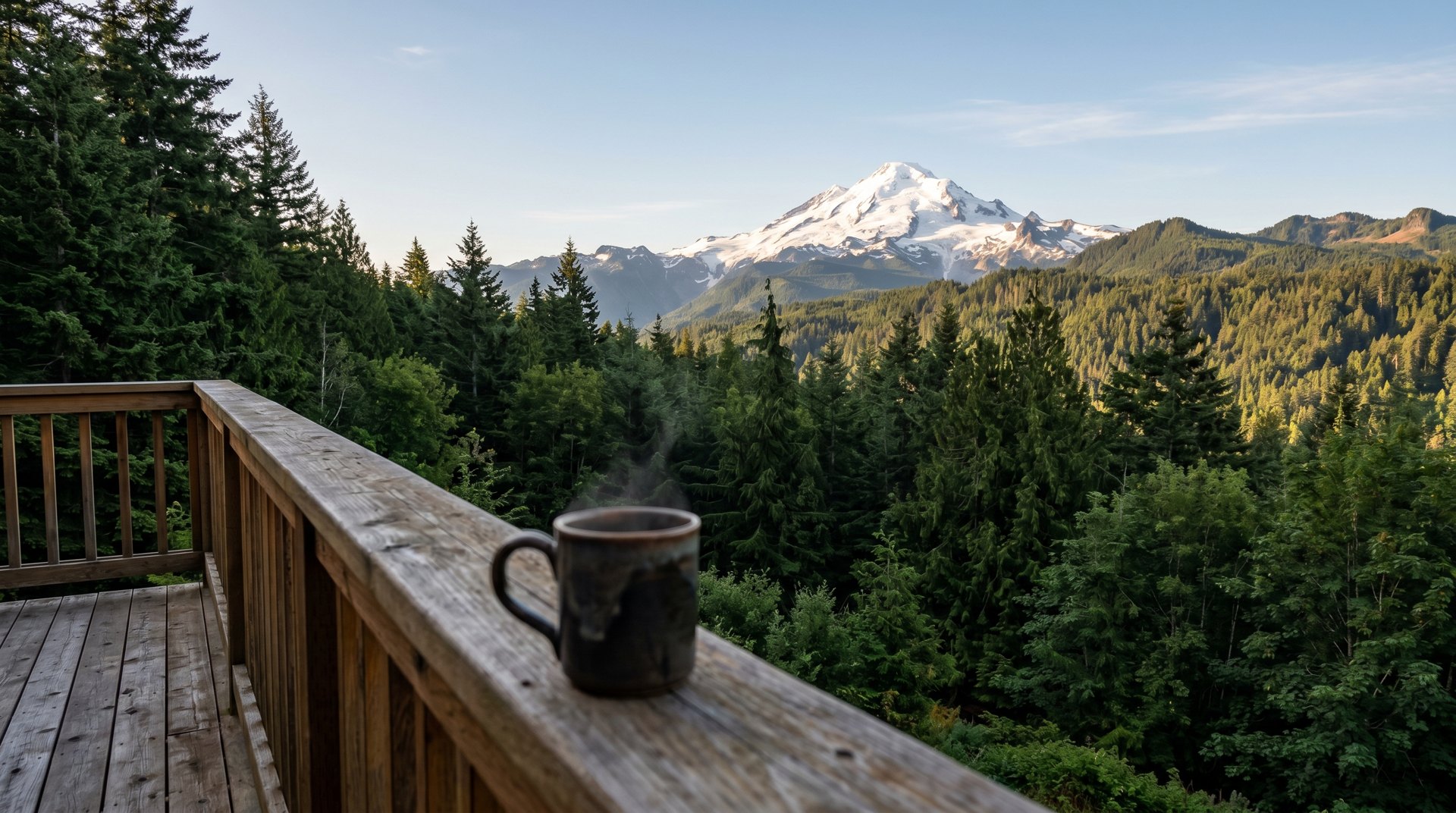
The BC buyer has an advantage no other out-of-state buyer has: you are ninety minutes away. Most of my BC clients cross for one solid scouting day — I build a five-to-eight showing itinerary, we drive the neighborhoods they are considering, they get a real feel for the city. Some do a second visit for their inspection trip. A few have closed on a home they visited twice, having done everything else virtually.
Virtual process: I send video walkthroughs for every listing before you cross. Most significant Bellingham properties now support 3D tours. I do pre-showings on your behalf and give you an unfiltered assessment before you schedule a trip. If something has deferred maintenance, an odd layout, or a street I’d steer you away from — I tell you that on the call.
The 1–2 day inspection trip: Washington state buyers have a standard inspection contingency period, typically 10 days. Most inspections run 2–3 hours on-site. I schedule the inspection for your travel window — you arrive, see the house again, attend the inspection, and have time for a drive around neighborhoods. Home inspectors I trust: they do written reports same-day or next-day and will walk you through findings on a video call if you’re back across the border.
Earnest money and offers: Washington uses a standard Purchase and Sale Agreement. Earnest money is typically 1–3% of purchase price, wired to escrow. DocuSign handles all signatures — no in-person signing required for the offer process.
Title and escrow: I use Chicago Title’s Leah Richardson at the Bellingham office. She has worked with cross-border buyers and understands the additional documentation requirements. She will coordinate FIRPTA compliance at closing (if applicable to your situation) and handle the standard closing disclosure process.
Coordinating with your BC sale: The timing challenge is real. BC real estate completions typically run 30–90 days. Washington transactions run 30–45 days. If you are selling BC and buying Bellingham sequentially, I build the contingency into the WA offer where possible. Bridge financing or a brief rental in Bellingham between BC close and WA purchase is also workable. This is a logistics conversation we have early.
ITIN and banking setup: I will help you think through the infrastructure before we close. ITIN (IRS Individual Taxpayer Identification Number) application via Form W-7 — needed for US tax filing. US-side bank account — I have introductions at Banner Bank and a couple of local Bellingham credit unions that do cross-border account openings. These are worth setting up before or concurrent with the purchase.
Schools — the comparison families ask about
Bellingham is served primarily by the Bellingham School District, with options including public, private, and charter choices. Families from Metro Vancouver who are accustomed to strong public school options in catchments like Crofton House, Point Grey Secondary, or the Vancouver magnet program network will find Bellingham’s public schools solid but smaller in scale — this is a city of 98,000, not 600,000.
Sehome High School and Bellingham High are the two main public secondary schools. Both are well-regarded for a mid-size WA city. For families wanting more, the Ferndale School District (10 minutes north, toward the border) is a popular option — Ferndale has newer facilities and a strong athletic program. Lynden School District (20 minutes northeast) is another option families choose for its community character.
Western Washington University (WWU) is in Bellingham, which matters to families: it keeps a young professional population in the city, provides arts and culture programming, and is a genuine four-year research university. WWU enrollment runs about 15,000 students. The university’s location on Sehome Hill gives the city an energy that distinguishes it from a purely suburban Whatcom County experience.
For K–12 specifically: Bellingham does not have the international-baccalaureate density or private-school variety of Metro Vancouver. If your family is accustomed to a specific educational trajectory, research the options before committing. That said, WWU has graduate programs in education, business, and several sciences. For STEM-focused families, Western is a reasonable regional choice.
Five Bellingham neighborhoods BC buyers tend to land in
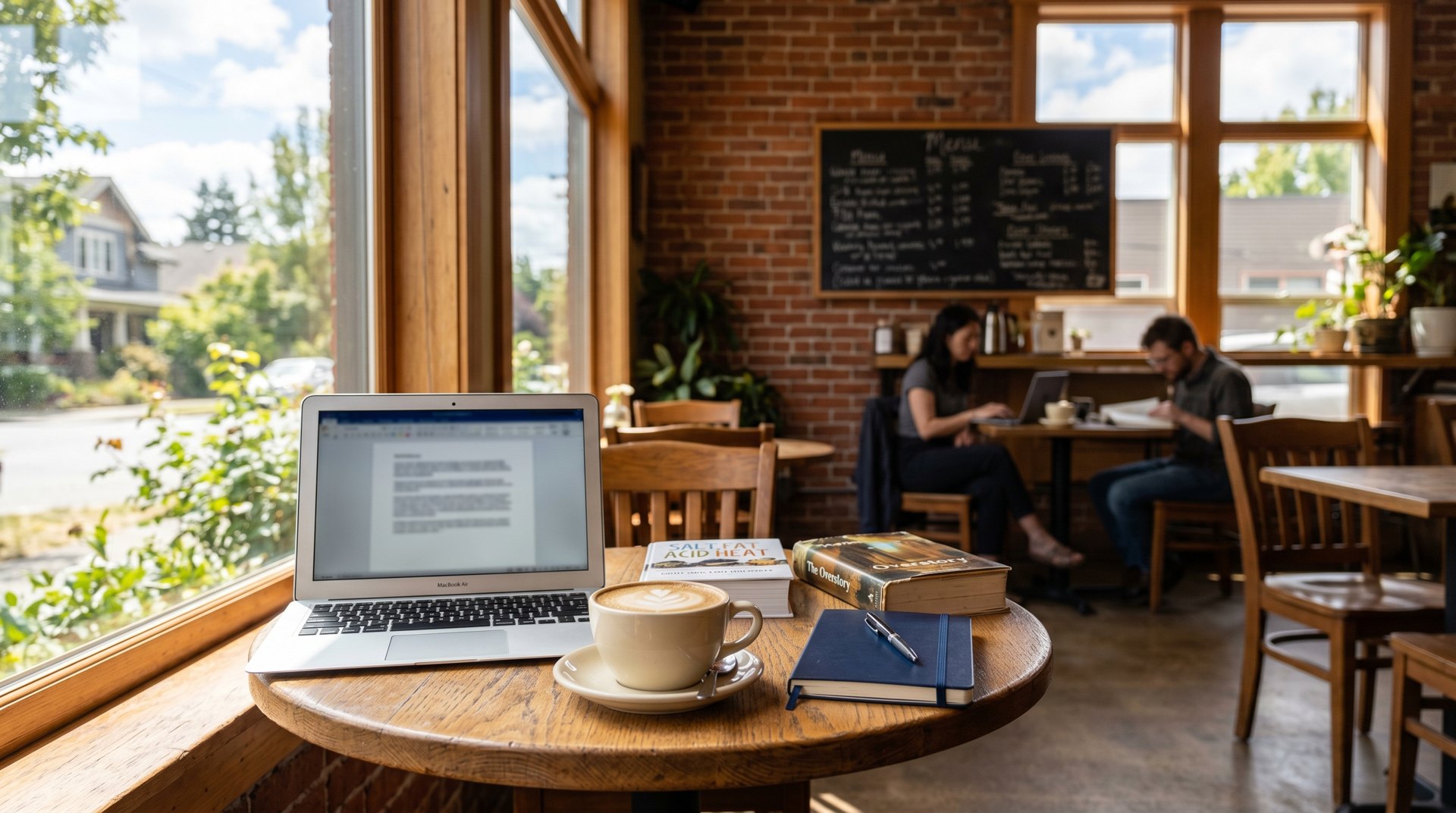
Fairhaven. The historic village district at the south end of Bellingham is the first neighborhood I show most BC buyers — and many do not look further. Fairhaven has a walkable main street with independent restaurants, a bookshop, a roastery, and direct access to the Chuckanut trail network and Bellingham Bay. Architecture is Victorian and craftsman. Prices run USD $750,000–$1.4M+ for single-family homes. BC buyers with Vancouver or North Shore tastes land here. See /neighborhoods/fairhaven/
Edgemoor. Established neighborhood of large lots, mature trees, and mid-century to craftsman homes on the west side of the city. Walkable to Boulevard Park on the bay. Quieter than Fairhaven, more residential. Homes run USD $800,000–$1.6M. Appeals to buyers who want privacy, space, and the bay within walking distance. See /neighborhoods/edgemoor/
South Hill. Family-focused, newer construction mixed with established 1980s–2000s homes, good public school access, proximity to Bellingham’s big-box commercial corridor if that matters. Price range USD $600,000–$900,000. For the BC buyer who wants a yard, a two-car garage, and straightforward suburban convenience without Fairhaven walkability premiums. See /neighborhoods/south-hill/
Sehome. Adjacent to Western Washington University, this neighborhood has the college-town energy — walkable blocks, mixed housing, proximity to WWU’s Sehome Hill Arboretum (170 acres of forested trails). Homes range from 1920s bungalows to newer infill. Price range USD $550,000–$850,000. Appeals to buyers who value urban-ish walkability and proximity to WWU programming. See /neighborhoods/sehome/
Barkley. Commercial-adjacent neighborhood on the east side, good transit corridors to I-5, newer construction including some townhomes and smaller SFR. The value play in Bellingham — USD $550,000–$750,000 typically. For the BC buyer who is cash-tight after the currency conversion and wants a low-maintenance home close to amenities. See /neighborhoods/barkley/
The lifestyle shift — what changes
The most common thing BC buyers say after six months in Bellingham is that they forgot how much time they spent in their car in Vancouver — not moving, just sitting on the Ironworkers Bridge or the Hwy 1 interchange. Bellingham does not have that version of traffic. A 15-minute drive covers most of the city. The lived difference in daily stress is larger than people expect.
Bellingham is a genuine outdoor-culture city. Hiking trails on Chuckanut Ridge are ten minutes from downtown. Birch Bay State Park and Semiahmoo are forty minutes. Mt. Baker ski area is an hour. The Salish Sea — San Juan Islands ferry access from Bellingham Bay — is part of the fabric here in a way that Vancouver’s urban density makes harder to access. The pace slows. This is not rhetoric; it is what I hear back from buyers a year in.
The trade-offs are real: less restaurant variety than Vancouver, fewer professional cultural institutions, a smaller professional-services ecosystem. The arts scene exists — Bellingham has a surprisingly strong live-music and gallery culture for a city this size — but it is not the Vancouver Art Gallery and the Opera. Grocery stores are good: Haggen, Fred Meyer, Trader Joe’s, Costco accessible. But the specific ethnic food markets and multicultural restaurant diversity of Richmond or the Main Street corridor in Vancouver are simply not replicated at this scale.
The border is a feature and a friction point at the same time. It keeps Vancouver accessible — ninety-minute day trips remain easy. And it reminds you, at every crossing, that you have moved to a different country.
Frequently asked
Is the BC-to-Bellingham move tax-positive after all costs are considered?
For most BC households, yes — but the picture depends on your income profile. WA’s zero state income tax is the largest variable for high earners: a household paying BC’s top combined marginal rate of 53.5% versus WA’s 0% state rate saves tens of thousands annually if that income continues. For retirees drawing CPP, OAS, and RRSP/RRIF, the US-Canada tax treaty generally prevents double taxation, and WA’s state income tax absence is a straightforward gain. The offset is US healthcare cost if you become a US resident. Do the math with a cross-border CPA before assuming the tax flip is automatic.
What is FIRPTA and does it apply to me when I eventually sell?
FIRPTA is the Foreign Investment in Real Property Tax Act. If you are a Canadian tax resident (not a US tax resident or citizen) when you sell a US property, the buyer’s escrow agent must withhold 15% of the gross sale price and remit it to the IRS. This is withholding, not final tax — you then file a US return (1040-NR) to claim your actual capital gains liability and recover the overage. On a $650K home sold for $800K, the buyer withholds $120,000 at closing. If your actual tax on the $150K gain is roughly $30,000, you receive a $90,000 refund after filing. Mitigation option: apply for a withholding certificate (Form 8288-B) before closing to reduce the withheld amount to the estimated actual tax. This requires lead time — discuss with your cross-border CPA before listing.
What is the real winter like compared to Metro Vancouver?
Comparable. Both cities sit in the Pacific Northwest oceanic climate band. Bellingham is actually drier — 39 inches of annual rain versus Vancouver’s 90 inches — but similarly gray October through March. Expect roughly 230 overcast days per year. Bellingham does not see the persistent freezing rain that parts of the Lower Mainland get in cold snaps, and heavy snow in the city is uncommon but happens. The main winter difference for many BC buyers is that Bellingham’s smaller scale means you are never far from an open trail, a bakery, or the waterfront even on a gray day — the city does not feel as sealed off as Metro Vancouver can in deep winter.
Can I buy a Bellingham home while keeping my BC property and residency?
Yes, and this is the most common pattern I see. There is no US immigration requirement to own US property. You remain a Canadian tax resident, file Canadian returns including the T1135 foreign asset disclosure (required if total foreign property exceeds CAD $100K), pay Whatcom County property taxes, and cross the border as a visitor. The main ongoing cost to plan for is BC’s Speculation and Vacancy Tax: for 2026, Canadian citizens owning a non-principal-residence property in Metro Vancouver pay 1% of assessed value annually; foreign owners pay 3%. This applies to your BC property, not the Bellingham one — but if you own a Vancouver-area secondary property while living in Bellingham full-time, the SVT can be significant.
How hard is cross-border financing for a Canadian buyer?
Harder than domestic financing but achievable. Cash purchase is simplest. If financing, expect to need 30–40% down, a US ITIN, documented cross-border income verification, and potentially a rate premium of 0.25–0.75% above what a US-resident borrower sees. Canadian banks with US subsidiaries (TD Bank US, BMO Harris, RBC Bank) have cross-border programs. Some local Bellingham lenders have worked with international buyers before. I have a short list of lenders who will actually return your call.
What is the border crossing reality for a Bellingham homeowner?
With NEXUS ($120 USD per adult, 5-year validity), the dedicated lane at Peace Arch or Pacific Highway typically runs 5–15 minutes regardless of regular-lane backups. Without NEXUS, peak crossing times — Friday afternoon, Sunday evening, long weekends, summer — can reach 1.5–3 hours. Off-peak weekday crossings are 10–20 minutes even without NEXUS. If you plan to cross regularly, NEXUS is not optional; it is the cost of doing business at this border.
What happens to Canadian retirement accounts if I become a US resident?
This is the most complex financial question in a full-relocation scenario. RRSP and RRIF can generally be maintained under the US-Canada tax treaty, though you need to file a US election to defer taxation on growth inside the plan until withdrawal. TFSA loses its tax-exempt status from the IRS perspective — any income inside a TFSA becomes taxable to a US resident. CPP and OAS are covered by treaty provisions preventing double taxation. The deemed disposition rule — Canada taxes you on capital gains across all Canadian assets at fair market value when you cease Canadian residency — can create a significant one-time tax bill. None of this is a reason not to move; it is a reason to have a cross-border CPA engaged 12–18 months before your residency transition, not after.
What is the catch — what does Bellingham not have that Vancouver does?
Honestly: scale, diversity, and cultural infrastructure. Bellingham is a city of 98,000 people. Metro Vancouver is 2.5 million. The restaurant variety, the multicultural neighborhood fabric, the professional arts institutions, the specialized healthcare facilities, the density of professional services — Vancouver has them and Bellingham does not at equivalent scale. Bellingham has good bones and good people and an outdoor culture that is genuinely excellent. It is not a smaller version of Vancouver; it is a fundamentally different size of place. That trade-off is right for many buyers and wrong for others. I would rather tell you that upfront than have you move here and resent it six months in.
Thinking about Bellingham?
Tell me where in BC you’re coming from, your budget, and how you work, and I’ll send two or three neighborhoods that fit plus what’s active. If you have a place to sell first, a home valuation is the place to start.