


BOSTON → BELLINGHAM · RELOCATION GUIDE
From Boston to Bellingham.
The honest math.
Seven-figure equity, no state income tax, milder winters than you’d expect, and the full financial picture from a broker who runs this move.
The Boston-to-Bellingham call comes in a few times a month, and it has a rhythm of its own. The people on the other end are usually not leaving because they dislike Boston — most of them love it and feel a little guilty about going. They’re leaving because of three things stacked on top of each other: a housing market where the Greater Boston single-family median has crossed a million dollars, a winter that has gotten genuinely punishing, and a 5% state income tax (9% over about a million) that Washington simply doesn’t have. I’m Genaro Shaffer, a licensed broker here in Bellingham — 11+ years, 67+ closings. Here is the full, unvarnished picture for buyers coming from Boston, Cambridge, Somerville, the North Shore, the South Shore, or the MetroWest suburbs.
The equity reset, in actual numbers

Let’s start with the part that makes this move work, because for Boston sellers the math is unusually favorable. You are sitting in one of the most expensive housing markets in the country, and Bellingham — expensive by Washington standards — is still a meaningful step down in price. That gap is your relocation fund.
What Boston-area homes are selling for right now (2025–2026):
The numbers depend heavily on which geography you mean, so I’ll give you the honest spread. The Greater Boston Association of Realtors put the inner-core single-family median at $1,032,500 in April 2026 — the metro crossed the million-dollar line for the first time in summer 2025 and has stayed there. Redfin’s figure for the City of Boston, all home types blended, runs closer to $840,000. Middlesex County (Cambridge, Somerville, Newton, the western suburbs) sits around $815,000 as of early 2026. The Massachusetts statewide single-family median, per the Warren Group’s full-year 2025 report, was $638,000 — but that number is dragged down by the cheaper western and central parts of the state you’re probably not selling in.
For a typical Boston-area seller, I’ll use a working sale figure of $900,000. After roughly 6% in transaction costs (broker fees, closing costs) plus the Massachusetts excise stamp of about 0.456%, you net somewhere around $842,000.
The Bellingham side: our median single-family home runs about $650,000–$700,000 depending on the data cut (Redfin’s Q1 2026 figure was around $639K; a Cascadia Daily News report in early 2026 cited $750K on a different methodology). I’ll use $675,000 with closing costs around 1.5% (~$10K).
The worked equity example:
A Boston seller who nets ~$842,000 can buy a $675,000 Bellingham home outright in cash and still have roughly $157,000 left over — or, far more sensibly, put 30–40% down, take a modest mortgage at a comfortable payment, and bank $300,000+ for retirement, a remodel, or simply breathing room. This is the rare relocation where the equity doesn’t just transfer — it frees up. A seller coming out of a $1.2M Cambridge or Newton house has even more room; you could buy at the top of the Bellingham market (a waterfront-view Edgemoor or Fairhaven home in the $900K–$1.1M range) and still pull six figures off the table.
That’s before we get to the income tax, which is the second engine of this move.
The comparison table:
| Boston / Eastern MA | Bellingham WA | What changes | |
|---|---|---|---|
| Median single-family home | ~$840K–$1.03M (metro) | ~$650K–$700K | ↓ major price step-down |
| Property tax (effective) | ~1.0%–1.1% | ~0.71%–0.85% | ↓ lower rate + lower value |
| State income tax | 5% flat (9% over ~$1.1M) | 0% | ↓↓ eliminated entirely |
| Sales tax (combined) | 6.25% flat, no local add-on | ~8.8%–9.4% | ↑ higher in WA |
| Gas (per gallon avg) | ~$4.00–$4.10 | ~$4.00–$4.40 | ≈ roughly the same |
| Residential electricity | ~30¢/kWh (2x national) | ~10–11¢/kWh | ↓↓ far cheaper |
| Cost-of-living index | ~150 (50% above national) | near national avg | ↓ meaningfully lower |
| Annual snowfall | ~49 inches | ~10 inches (often less) | ↓↓ far less snow |
| Annual rainfall | ~44 inches | ~36 inches | ↓ actually drier |
| Summer high (July avg) | ~82°F + humid | ~71°F + dry | ↓ cooler, no humidity |
| Winter low (January avg) | ~22°F | ~32°F | ↑ milder winters |
The income-tax math, year over year:
This is the line Boston buyers underestimate. Massachusetts charges a flat 5% on income, and as of the “Fair Share” surtax, an extra 4% on income above about $1.08 million (2025) or $1.11 million (2026). For a household with $250,000 in taxable income, that 5% is roughly $12,500 a year going to Massachusetts that Washington never asks for. Over ten years that’s $125,000 in nominal dollars — and if you’d otherwise invest it, considerably more. Stack the income-tax savings on top of a lower property-tax bill and a lower cost-of-living index, and the recurring annual savings for a Boston household relocating here is substantial and compounds for as long as you live in Washington.
Cost of living, line by line
Boston buyers usually assume the West Coast will be more expensive across the board. For the Pacific Northwest that assumption is mostly wrong, and Bellingham specifically comes out ahead on the things that matter month to month. Here’s the honest breakdown.
What gets cheaper:
Income tax — covered above, but it’s the headline. Five percent of your income, gone. For a high earner near the surtax threshold, the savings are dramatic.
Electricity — Massachusetts has among the highest residential electricity rates in the lower 48, around 30 cents per kWh, roughly double the national average; the typical MA household electric bill runs $173–$179 a month. Bellingham is served by Puget Sound Energy off an abundant Pacific Northwest hydroelectric grid, with residential rates closer to 10–11 cents per kWh. Your power bill can fall by half or more, and you won’t be running air conditioning in summer to begin with.
Cost of living overall — Boston’s cost-of-living index sits around 150 (about 50% above the U.S. average) by most measures. Bellingham runs near the national average. Groceries in Boston run a few points above national; here they’re roughly at par.
Housing — already covered, but it bears repeating: the price step-down from eastern Massachusetts to Bellingham is the foundation of the whole move.
What gets more expensive:
Sales tax — Massachusetts charges a flat 6.25% with no local add-on, and exempts groceries and clothing under $175. Bellingham’s combined rate is about 8.8%, and some of Whatcom County reaches higher. You’ll notice it on big purchases. It’s a real difference, though it’s offset many times over by the income-tax elimination.
Gas — roughly a wash. Massachusetts gas was around $4.09/gallon in spring 2026; Bellingham runs $4.00–$4.40. Don’t expect relief at the pump, but don’t expect a shock either.
Real estate excise tax (REET) — Washington charges sellers a graduated excise tax (roughly 1.1%–3.0%) when you eventually sell. Massachusetts has its own deed excise stamp (~0.456%), so you’re trading a small transfer tax for a larger one — a cost that only matters at your exit, years from now.
The climate — the honest part, and the surprising part

Here’s where I get to correct a misconception, because it runs in your favor. Bellingham has a national reputation as a rainy, gray place. Boston is imagined as having “real seasons.” Both of those are half-true, and the numbers tell a story most people get backwards.
On precipitation, Bellingham is actually drier. Boston averages about 44 inches of rain a year; Bellingham averages about 36 inches. And on snow it isn’t close: Boston’s current NOAA normal is roughly 49 inches of snow a year, while Bellingham gets about 10 inches in a typical year, and often much less. You are moving from a snowier, wetter winter to a milder, drier one. The 2014–2015 Boston winter that dumped 110.6 inches — “Snowmageddon,” the snowiest season in city history — has no equivalent here. We don’t get nor’easters. We don’t get the February storm that buries your car to the door handles for a week.
So what is the honest catch with Bellingham’s climate? It’s not the amount of rain — it’s the gray. Our rain is light and persistent rather than dramatic, spread across nine or ten months of the year, and it comes with cloud cover. We average roughly 230 overcast or gray days annually. The sky here in November, December, and January is often a flat pewter color for days at a time. There’s no foot of snow to shovel, but there’s also no crisp blue-sky January afternoon the way Boston gets between storms. Seasonal affective disorder is real in the Pacific Northwest; a vitamin D regimen and a full-spectrum lamp are standard equipment, not a punchline.
The temperature trade is squarely in your favor. Boston summers average an 82°F July high with genuine humidity — the muggy, dew-point-in-the-60s stretch you know well. Bellingham summers run about 71°F and dry. Locals complain when it hits 85. Most homes here don’t have or need air conditioning. And our winters are warmer than Boston’s: a 32°F January low here versus 22°F there. No deep freeze, no wind chill that bites through three layers, no ice dams forming on your roof.
My honest recommendation: come visit in November or January before you commit, not July. Summer sells itself anywhere. The real question is whether the gray works for you. I’ve had Boston buyers walk Fairhaven in a January drizzle, eat at one of the good restaurants, and tell me it felt like relief after years of shoveling. Others go quiet on the drive back to Sea-Tac. The point is to find out which one you are before you list the house in Massachusetts.
Why people leave Boston
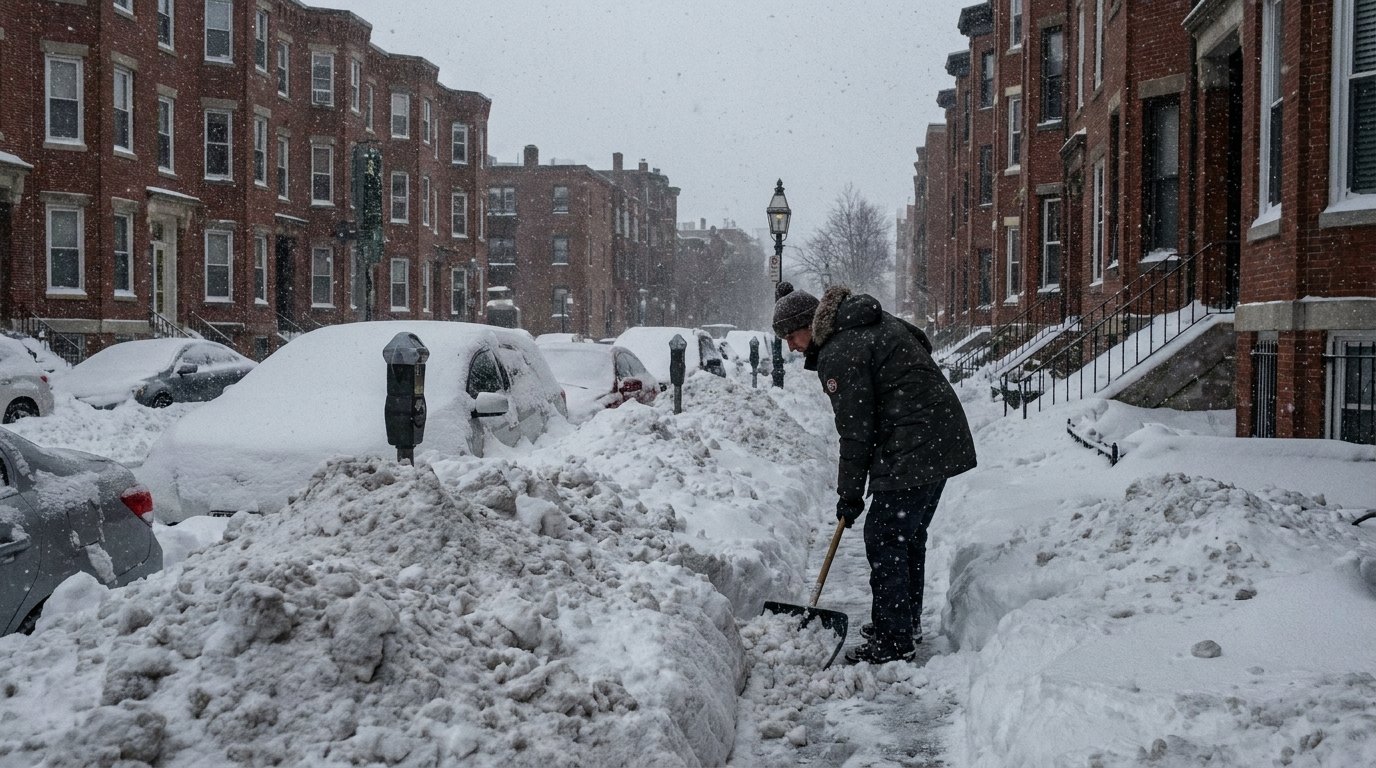
The Boston push factors are real and specific, and I’ll name them fairly. Nobody I work with hates Boston. They’re worn down by a few things that have compounded over the last several years.
The cost of staying. A Greater Boston single-family median over a million dollars prices out a generation of would-be move-up buyers. The “starter home” has effectively vanished — by 2025 only a handful of Greater Boston municipalities still had sub-$500K single-family medians, down from dozens a decade earlier. Even households doing well feel like they’re running to stand still. Add the 5% income tax (9% near the top) and the highest-in-the-region electricity bills, and the math of staying gets harder every year.
The winters. I just spent a whole section on this, but it deserves restating as a push factor. Boston winters are genuinely hard: a nor’easter or two every year, roughly four feet of snow on average, ice, wind chill, and the relentless logistics of digging out, the “space saver” parking wars, the slush. The winter of 2014–2015 broke people. Many of my Boston buyers describe the move partly as escaping the shovel.
The traffic and density. Boston ranks among the worst U.S. cities for congestion — drivers there lost about 83 hours to traffic in 2025, fifth-worst in the country, at a cost of roughly $1,500 a head. The city is one of the densest in America, around 13,800 people per square mile, behind only New York and San Francisco among major cities. That density is part of Boston’s charm and part of its exhaustion. Parking is a blood sport. Bellingham’s worst traffic day costs you fifteen minutes.
The grind. Underneath all of it is a pace and a pressure that people are ready to trade down from. Boston is intense. Bellingham is not. For a lot of buyers, that’s the whole point.
Commute reality — can you still work?
Most Boston-to-Bellingham buyers I work with are remote or semi-remote, and that’s the pattern that makes this move practical from 3,000 miles away.
Remote work from Bellingham: Eastern Time to Pacific Time is a three-hour gap, and it cuts in your favor more than you’d think. A 9-to-5 Boston schedule becomes 6 AM to 2 PM here — early, but it hands you long, bright afternoons for the trail or the water. If your team is East Coast, you’re online before they’ve finished their first meeting and done by mid-afternoon. Plenty of my transplants keep their Boston job, their Boston salary, and their Boston colleagues, and simply work three time zones west.
Flying back to Boston: Boston Logan (BOS) to Seattle-Tacoma (SEA) is a well-served nonstop route — Alaska, Delta, and JetBlue all fly it, around 6 hours 25 minutes in the air, with roughly 60 nonstops a week. SEA is about 90 miles south of Bellingham, a 1.5–2 hour drive up I-5. If you’re flying east for family or work a few times a year, the SEA routing is straightforward. Bellingham International (BLI) is our small local airport — good for cheap direct flights to Vegas, Phoenix, and a few California and Hawaii destinations on Alaska and Allegiant, but not your Boston connection.
The cross-country drive, for reference, is about 3,116 miles and 48 hours of driving — realistically a five-to-six-day trip. Most buyers ship the car and fly.
For the non-remote buyer: Bellingham’s local economy is anchored by healthcare (PeaceHealth is the largest employer), Western Washington University, retail, and the maritime trades. It’s a smaller professional market than Boston’s life-sciences, finance, education, and tech machine. If you need to land a local job and you’re not in healthcare, education, or the trades, that’s a real constraint — the salary compression is real, though the lower cost of living absorbs a good part of it. Seattle is 90 miles south for hybrid roles, and Vancouver, BC is 50 miles north.
Buying a home here without flying up six times
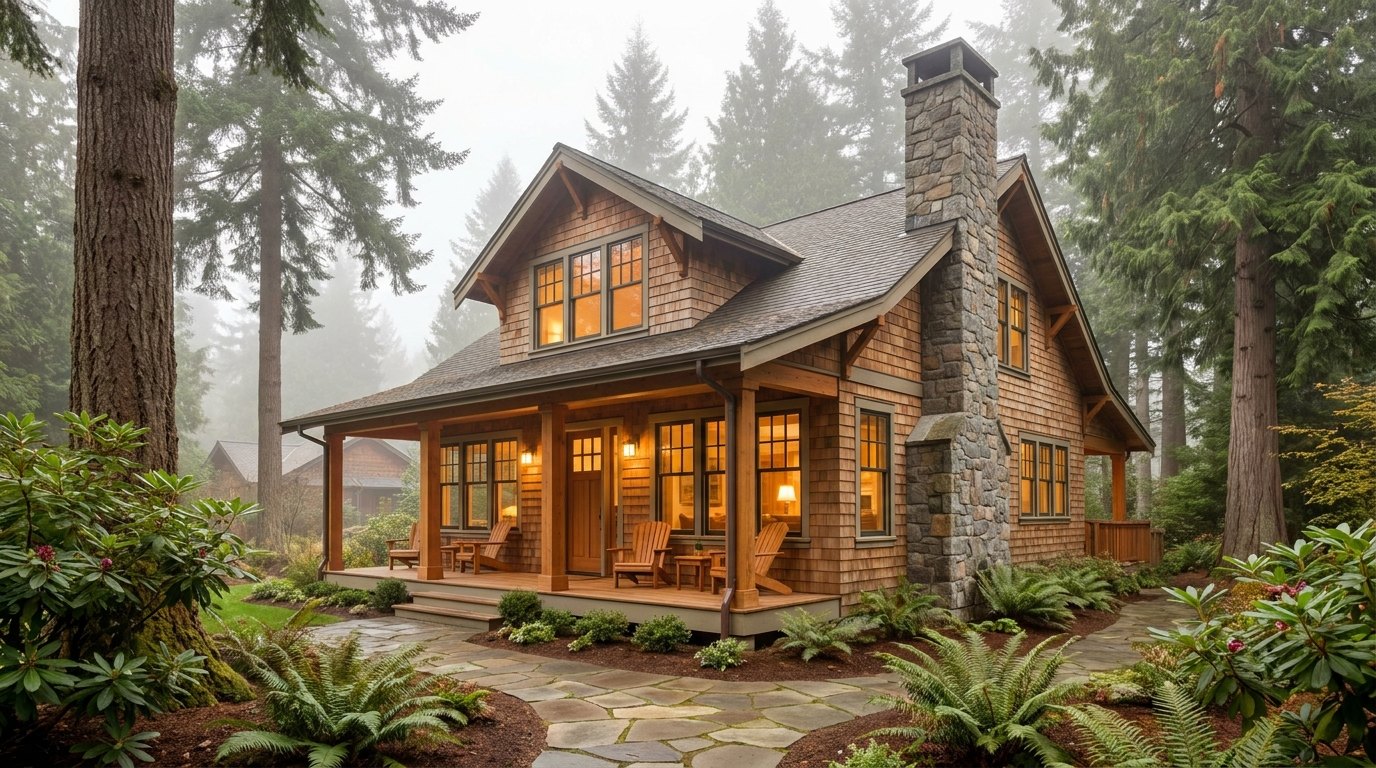
About a third of my out-of-state buyers close on a home they’ve seen once in person, and some never visit before closing at all. From Boston, with a six-and-a-half-hour flight each way, that efficiency matters. Here’s how I run it.
The remote-buyer workflow: We start with a 30-minute video call — your timeline, budget, dealbreakers, what you’re leaving behind. I set up NWMLS listing alerts filtered to your criteria so you get daily digests of new listings and price changes. When something looks right, I do a FaceTime or Zoom walkthrough: every room, every closet, into the attic, an honest narration of condition. If you’re seriously interested I send you my own read on the street, the lot, the light, the neighbors — the things photos hide.
When you’re ready to see your short list in person, the typical Boston buyer does a focused three-day trip: fly into SEA Thursday, drive up, tour 6–8 homes Friday and Saturday, fly home Sunday. That’s enough to make a real decision.
Washington purchase mechanics: Earnest money here typically runs 1%–3% of the price — on a $675,000 home, that’s roughly $6,750–$20,000 held by the escrow/title company (I work with Chicago Title in Bellingham). The inspection contingency is standard and has teeth: if the inspection turns up problems you don’t accept, you get your earnest money back. The inspection period is usually about 10 business days. Closing remotely is routine — DocuSign handles most of the paperwork, and a mobile notary can come to you anywhere in Massachusetts for the final signature.
Coordinating the Boston sale: Most buyers want their Massachusetts home sold before or simultaneous with the Bellingham purchase, and given your equity that usually works cleanly. If timing is tight, a bridge loan or HELOC against your Boston equity can fund the Bellingham purchase while the Massachusetts sale closes. I can connect you with Bellingham-area lenders who handle this pattern routinely.
Schools — the comparison families ask about
Massachusetts has some of the strongest public schools in the country, and Boston families ask, fairly, whether the schools here are real. The answer is yes — different in scale and culture, strong in quality.
Bellingham Public Schools serves the city, about 11,000 students, with a culture built around outdoor education, project-based learning, and smaller class sizes than a big Massachusetts suburban district. AP and IB tracks exist at Bellingham High and Squalicum High. The orientation is less standardized-test-driven than the MCAS-shaped culture you know — a welcome shift for some families, an adjustment for others.
Smaller Whatcom County districts each have a flavor: Ferndale is strong and growing; Lynden has a distinct small-town, agricultural, Dutch-heritage character that draws families wanting something quieter and more traditional; Mount Baker serves the rural foothills near the ski area.
Western Washington University is a genuine asset for families with college-bound kids — top-tier liberal arts and sciences with standout environmental programs, right in town. Washington residents qualify for the Washington College Grant and in-state tuition after 12 months of residency, which compares favorably to paying out-of-state rates or full freight at a New England private.
Five Bellingham neighborhoods Boston buyers tend to land in
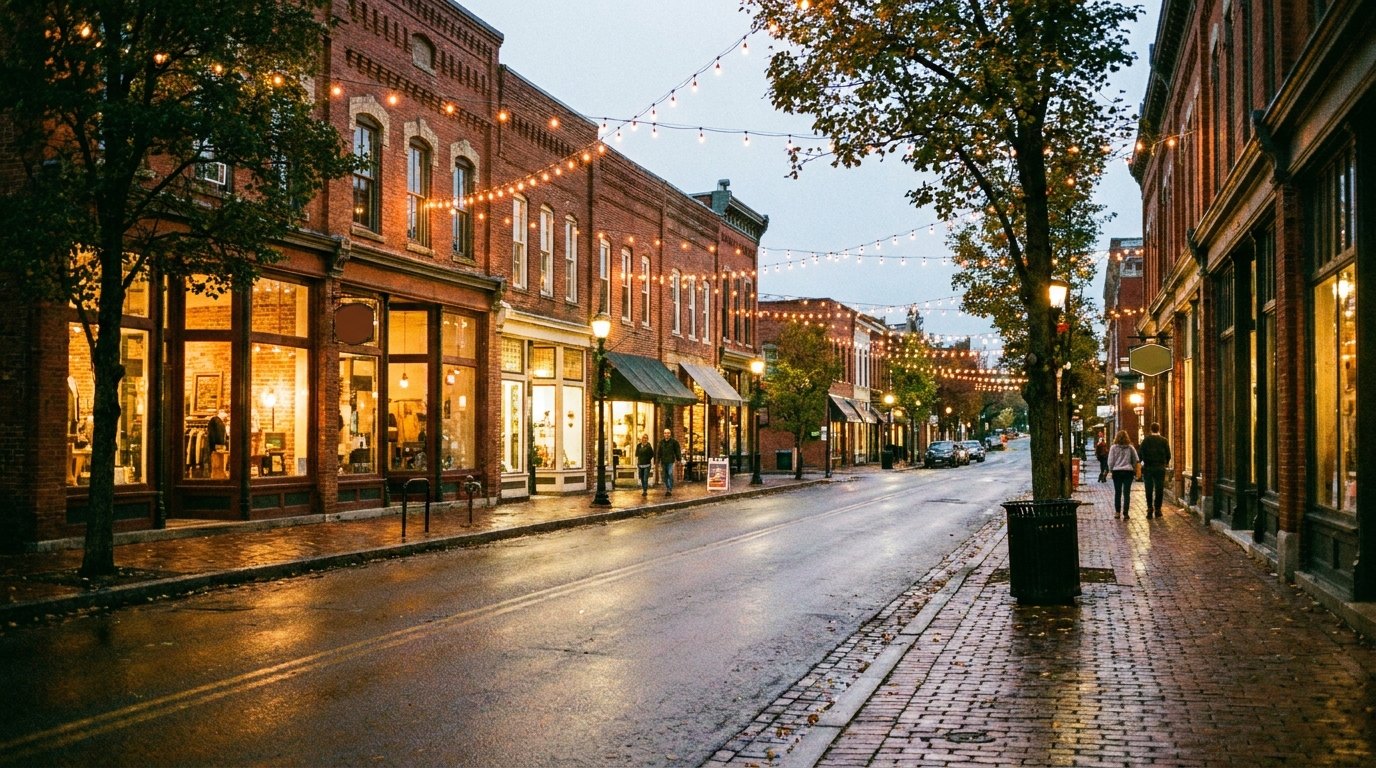
Boston buyers usually want one of two things: the walkable, characterful village feel they had in Cambridge, Somerville, or the South End — or a quieter, leafier neighborhood with a real yard and room to breathe after years of triple-deckers and street parking. Bellingham can do both.
Fairhaven. The historic village at Bellingham’s south end — Victorian brick buildings, an independent bookstore, coffee shops, a wine bar, the ferry terminal to the San Juans. Walkable, with tight lots and charming streets. Homes run $700K–$1.1M+ for character houses. Boston buyers who loved the South End or Beacon Hill feel at home fast. Links to /neighborhoods/fairhaven/.
Edgemoor. Northwest Bellingham above the bay — established mid-century homes, large lots, mature tree canopy, quiet streets, birding culture. More private than Fairhaven, more space than anywhere in the city. $700K–$1.1M. The natural landing spot for a Newton, Brookline, or Lexington buyer trading up in lot size. Links to /neighborhoods/edgemoor/.
South Hill. South of downtown, a mix of price points and housing styles, walkable to Fairhaven and close to Whatcom Falls Park. $500K–$700K. The entry point into Bellingham proper without the full Fairhaven premium — good for buyers who want walkability and character at a more reachable number. Links to /neighborhoods/south-hill/.
Sehome. Near the WWU campus — a mix of walkability and residential calm, strong school proximity, bike-to-downtown access. $580K–$750K. Younger professional families and academics gravitate here. Links to /neighborhoods/sehome/.
Barkley. Northeast Bellingham, more suburban — newer construction mixed with 1990s homes, good schools, the Barkley Village shopping center five minutes away. $550K–$750K. Boston buyers coming out of MetroWest suburbs like Natick, Framingham, or Wellesley recognize the pattern: quiet streets, attached garage, groceries close. Links to /neighborhoods/barkley/.
If you’re picturing acreage, Bellingham proper won’t deliver it, but the county will — homes around Ferndale, Lynden, or Birch Bay offer larger lots and rural character within 20–30 minutes of city services.
The lifestyle shift — what changes
The first thing Boston transplants notice is the absence of friction. No nor’easter to plan your week around. No alternate-side parking. No 83 hours a year lost to traffic — getting across Bellingham takes ten or fifteen minutes on the worst day. The grind you’ve absorbed as background noise for years just… stops.
The outdoor access is the other revelation, and it’s genuinely different from anything in eastern Massachusetts. You’re 15 minutes from a trailhead at Galbraith Mountain or Chuckanut, 20 minutes from the bay for paddling or sailing, 25 minutes from Lake Whatcom for swimming, 90 minutes from Mt. Baker’s ski area, and 30 minutes south of the Anacortes ferry to the San Juans. People here structure their actual weeks around this, not just their vacations.
The social texture takes adjustment. Boston is famously direct — blunt, a little prickly, warm underneath once you’re in. The Pacific Northwest runs polite-but-reserved on first contact; the “Seattle Freeze” exists here at lower intensity. It opens up after six months with neighbors, a league, a few regulars at a coffee shop, but the first weeks can feel quiet if you’re used to the texture of a dense East Coast city. The food trade is real too: Bellingham can’t replicate Boston’s seafood institutions, its North End, or its bar culture, but it offers serious coffee, excellent oysters and Dungeness crab, a strong craft-beer scene (Kulshan, Boundary Bay, Chuckanut), and farm-to-table cooking. Let it be its own thing.
Frequently asked
Is the Boston to Bellingham move financially worth it after all the carrying costs?
For most buyers, decisively yes. You step down in home price, eliminate a 5% state income tax, cut your electricity bill roughly in half, and lower your overall cost of living from about 50% above the national average to near it. You’ll pay a bit more in sales tax and roughly the same for gas, and you’ll owe Washington’s real estate excise tax when you eventually sell. But the recurring annual savings — income tax plus property tax plus utilities plus general cost of living — are large and compound for as long as you live here. The one-time moving and transaction costs are real, but the carry-cost math favors Bellingham strongly from year one.
What’s the real winter like compared to Boston — isn’t the Pacific Northwest rainier?
This is the surprise: Bellingham is actually drier and far less snowy than Boston. We get about 36 inches of rain a year to Boston’s 44, and roughly 10 inches of snow to Boston’s 49. No nor’easters, no Snowmageddon, no shoveling out your car. Our January low (~32°F) is milder than Boston’s (~22°F). The genuine trade-off is the gray: our rain is light and persistent and comes with heavy cloud cover, so winters here are overcast rather than crisp. You’re swapping snow and bitter cold for damp and gray. Come visit in January before you decide which you prefer.
Can I buy a Bellingham home without flying back and forth from Boston repeatedly?
Yes — about a third of my out-of-state buyers do essentially that. The process uses video walkthroughs on every serious candidate, one focused two-to-three-day scouting trip to see your finalists, and DocuSign for the paperwork. Closing can be fully remote with a mobile notary who comes to you in Massachusetts. Given the six-and-a-half-hour flight each way, this efficiency is the whole point, and it works.
How does the income tax actually compare — is it really 0% in Washington?
Yes. Washington has no state income tax at all. Massachusetts charges a flat 5% on income, plus an additional 4% surtax on income above roughly $1.08 million (2025) or $1.11 million (2026) — a 9% top rate. For a household at $250,000 of taxable income, that’s about $12,500 a year staying in your pocket in Washington. Washington funds itself partly through a higher combined sales tax (~8.8% in Bellingham vs. Massachusetts’s flat 6.25%), but for most earners the income-tax elimination dwarfs the sales-tax difference.
Does Bellingham feel like a real city, or is it a small town after Boston?
It’s a real small city of about 100,000, with a hospital system, a university, a working waterfront, a downtown, and a restaurant scene — but it is unmistakably smaller and slower than Boston. Western Washington University (about 16,000–17,000 students) gives it a younger skew, live music, and energy without dominating its character. If you’re coming from the density and intensity of Boston, the adjustment is real: fewer options, fewer people, a quieter rhythm. For most of my Boston buyers that’s exactly what they were looking for, but it’s an honest trade and worth being clear-eyed about.
What’s the catch?
Three honest ones. First, the gray — November through March is persistently overcast, and Bostonians used to blue-sky days between storms feel it. Second, the job market is smaller; if you’re not remote and not in healthcare, education, or the trades, professional options are thinner than Boston’s. Third, you’ll miss things — the seafood institutions, the North End, the sports culture at full volume, the bluntness you’re used to. What you get in exchange is seven-figure equity that frees up, no state income tax, milder and far less snowy winters, half the electricity bill, no traffic, and trailheads and saltwater fifteen minutes from your door. For most Boston buyers I work with, that trade is an easy yes — but only you can weigh it.
How much does the move itself cost from Boston?
Full-service interstate movers run roughly $9,000–$22,000 depending on load size — Boston to Bellingham is about 3,116 miles, a premium cross-country haul. Container moves (PODS, U-Pack) run $4,000–$9,000 with two-to-four weeks transit. Most buyers ship the car on a transport carrier ($1,100–$1,800) and fly rather than drive the 48-hour route.
Thinking about Bellingham?
Tell me where in Boston you’re coming from, your budget, and how you work, and I’ll send two or three neighborhoods that fit plus what’s active. If you have a place to sell first, a home valuation is the place to start.