

FLORIDA → BELLINGHAM · RELOCATION GUIDE
From Florida to Bellingham.
The honest math.
Insurance you can afford, summers you can live in, and no hurricane season — the full financial picture from a broker who’s done this move.
The Florida-to-Bellingham conversation has changed in the last three years, and it almost never starts where people expect. Floridians already know they don’t pay state income tax — so do we, here in Washington. That talking point isn’t the pull. What’s actually moving people is the insurance bill that doubled, the third roof claim in five years, the summers that have stopped being “hot” and started being “indoors from June to October,” and a slow realization that the thing they moved to Florida for — the outdoors, the lifestyle — has gotten harder to actually use. I’m Genaro Shaffer, a licensed broker here in Bellingham. Here’s the full, honest picture for buyers coming from Miami, Tampa, Orlando, Jacksonville, or anywhere on the Florida peninsula.
The equity reset, in actual numbers

Let me start by clearing the income-tax thing off the table, because it’s the first thing people raise and it doesn’t apply. Florida has no state income tax. Washington has no state income tax. Moving here saves you exactly nothing on that line, and any relocation site that tells you otherwise is recycling a script written for a California buyer. Your move is not a tax play. It’s a climate play, a lifestyle play, and — increasingly — an insurance play. That last one is where the real money lives.
Here’s the part that surprises Florida buyers: your property tax rate barely changes either. Florida’s effective property tax runs around 0.74%–0.82% statewide; Whatcom County’s median effective rate sits around 0.74%, with the city of Bellingham closer to 0.90%–0.92% once you add local levies. So on the tax line, this is close to a wash — maybe slightly higher inside Bellingham city limits, roughly even county-wide. I’m telling you that up front because I don’t want you arriving expecting a property-tax windfall that isn’t there.
The windfall is homeowners insurance. Florida is now the most expensive state in the country to insure a home — the average annual premium reached roughly $7,562 in 2026 data, and plenty of coastal homeowners pay well north of that. Washington’s statewide average is around $1,533 a year. That is not a rounding error. That is a $6,000-a-year swing, every year you own, and it is the single biggest line-item difference in this entire move.
What Florida homes are selling for right now (mid-2026):
| Florida market | Median sale price (2026) | Net to seller (after ~7% costs) |
|---|---|---|
| Miami | ~$652,000 | ~$606,000 |
| Tampa | ~$443,000 | ~$412,000 |
| Orlando | ~$410,000 | ~$381,000 |
| Jacksonville | ~$300,000 | ~$279,000 |
| Florida statewide median | ~$415,000 | ~$386,000 |
Sources: Redfin metro data, mid-2026; Florida Realtors year-end 2025 statewide median.
Bellingham’s median single-family home is approximately $645,000–$700,000 depending on the data cut (Redfin’s 98225 zip ran ~$645K in early 2026; some NWMLS cuts run lower, some local reporting puts the median nearer $700K). I’ll use $675,000 as the working figure with closing costs around 1.5% (~$10K).
The worked equity example:
A Miami seller netting ~$606K is within striking distance of a $675K Bellingham home — a ~$170K down payment (25%) with reserves, or a comfortable buy at the $550K–$625K tier with cash left over. A Tampa seller netting ~$412K is looking at a roughly $263K gap to the median, which means either a larger mortgage or a buy in Bellingham’s $425K–$500K range (it exists — older homes, smaller lots, real). An Orlando or Jacksonville seller nets $279K–$381K, enough for a healthy down payment on a $475K–$550K Bellingham home. The purchase math is tighter than people assume, because Florida home prices have caught up to a lot of the country.
But here’s what changes the calculus: stack the insurance savings on top. Six thousand dollars a year, every year, is the equivalent of carrying roughly $90,000–$110,000 less mortgage at current rates. The Florida buyer who feels “priced up” on the sticker is often cash-flow even or ahead once the insurance line is honest.
The comparison table:
| Florida (major metro) | Bellingham WA | What changes | |
|---|---|---|---|
| Median home price | $410K–$652K (metro dep.) | ~$675K | Comparable to higher |
| Property tax (effective) | ~0.74%–0.82% | ~0.74%–0.92% | About even |
| Home insurance (avg/yr) | ~$7,562 | ~$1,533 | ↓↓ ~$6,000/yr saved |
| State income tax | 0% | 0% | No change |
| Sales tax (combined) | ~7.0% | ~8.8% | ↑ modestly higher |
| Gas (per gallon avg) | ~$2.75–$3.20 | ~$3.85–$4.20 | ↑ higher in WA |
| Summer high (avg) | 90–95°F + 70–90% humidity | ~72°F, dry | ↓↓ far more livable |
| Hurricane risk | Annual, Jun–Nov | None | ↓↓ eliminated |
| Annual rainfall | ~54″ (summer storms) | ~36″ (cool drizzle) | Different pattern |
| Sunny days/yr | ~230–260 | ~155–175 | ↓ significantly fewer |
The 10-year insurance math:
Florida average premium: ~$7,562/year. Bellingham average: ~$1,533/year. Annual difference: ~$6,029. Over 10 years of ownership, holding rates flat, that’s roughly $60,000 kept in your pocket — and Florida premiums have historically climbed faster than Washington’s, so the real gap likely widens. That money doesn’t show up on closing day. It shows up every single year, on the renewal you don’t dread anymore.
Cost of living, line by line
Florida buyers usually expect the Pacific Northwest to be punishingly expensive. Some of it is. A lot of it isn’t, and the headline number — insurance — runs hard in your favor. Here’s the honest breakdown.
What gets cheaper:
Home insurance — covered above, but it’s the whole ballgame. If you’re coming from a coastal or inland-flood-exposed Florida county where you’ve watched your premium double, been non-renewed, or been forced onto Citizens, the relief here is real and immediate. Whatcom County has no hurricane exposure, modest wildfire risk on the dry east side (not in the city), and an insurance market that functions normally.
Cooling costs — Florida homes run central AC essentially year-round, and summer electric bills reflect it. Most Bellingham homes don’t even have AC. You’ll want a heat pump or a window unit for the 1–2 warm weeks in August, but your annual cooling spend drops toward zero.
Hurricane-prep everything — no more impact windows, no more re-roofing on the insurer’s schedule, no more plywood in the garage, no more evacuating. Those are real recurring costs and real recurring stress that simply end.
What gets more expensive:
Gas — Washington has some of the highest pump prices in the country, recently in the $3.85–$4.20 range, versus Florida around $2.75–$3.20. You’ll feel it at the pump, though you’ll likely drive far fewer miles here.
Sales tax — Bellingham’s combined rate is about 8.8%; Florida averages around 7%. The difference is real but small day-to-day.
Groceries — Florida runs a bit above the national average on food; Bellingham runs near or slightly above as well. Call it roughly even, with some imported and specialty items pricier here.
Eating out — Washington’s higher minimum wage shows up in check totals. Mid-tier dining costs a little more than comparable Florida spots.
Real estate excise tax (REET) — Washington sellers pay a graduated REET (1.1%–3.0%) when they sell. Florida’s documentary stamp tax is lighter. This matters on your eventual exit, not your entry.
The climate — the honest part

This is the heart of the move, and I’m going to be straight with you in both directions, because Floridians who romanticize the Pacific Northwest and then arrive in January can get a hard surprise.
Florida’s climate is two seasons: warm-and-humid, and hot-and-oppressive. Summer highs sit in the low-to-mid 90s with humidity routinely between 70% and 90%, which makes a 93°F afternoon feel like 105°F. From June through September, outdoor activity in much of the state means early mornings or air conditioning — the heat index genuinely limits how you live. Add ~54 inches of annual rain delivered mostly as violent afternoon thunderstorms, and then add the part nobody markets: hurricane season, June 1 to November 30, every year. Ian (2022) caused over $112 billion in damage. Helene and Milton (2024) hit within two weeks of each other; Milton alone ran $34 billion and spawned a record tornado outbreak. That’s not a once-in-a-generation event anymore. It’s a recurring line on the calendar.
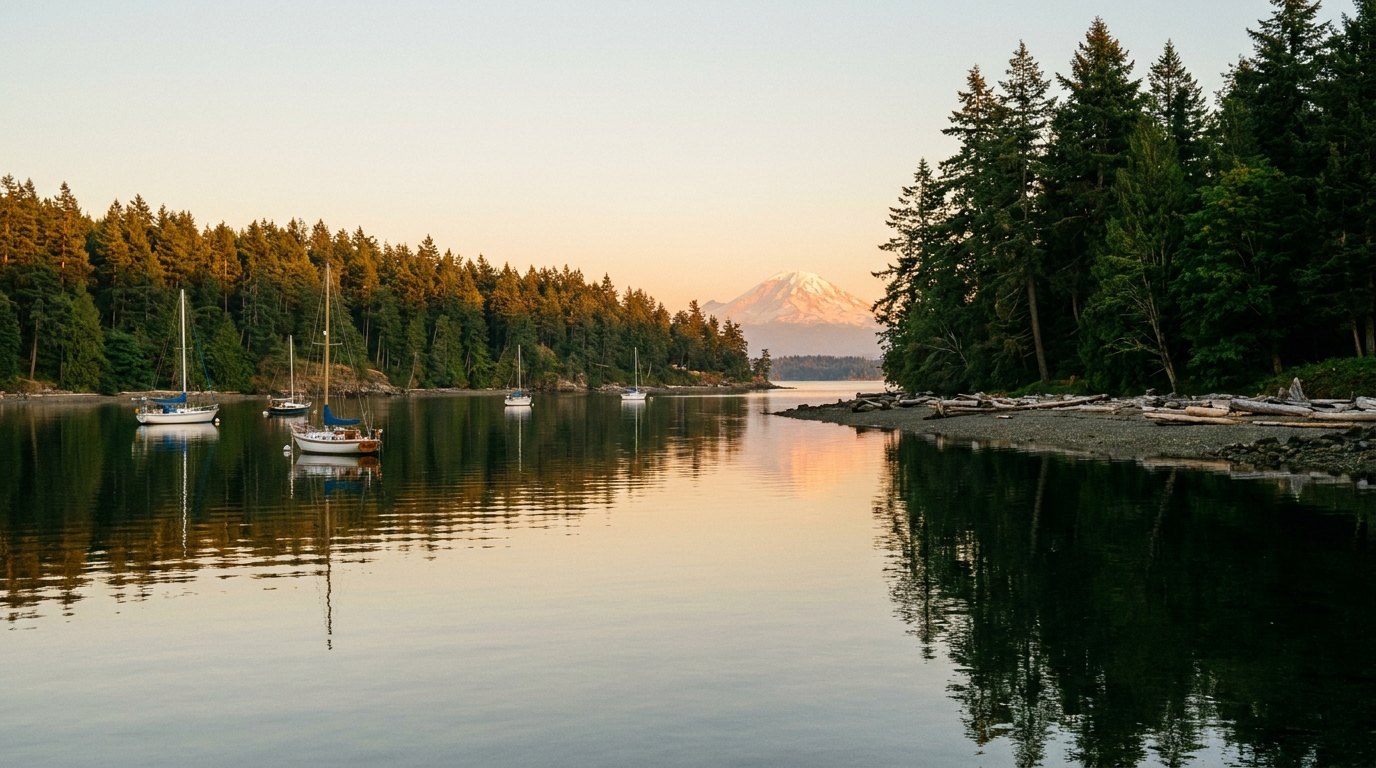
Bellingham summers are the payoff, and they’re genuinely special. July and August highs average around 72°F with low humidity. Locals grumble when it hits 85°F. You hike Galbraith, paddle the bay, bike Chuckanut, and sit outside until 9 PM because the light lasts and the air is dry. There are no hurricanes. There is no heat index keeping your kids indoors. The summer you came to Florida for — and largely lost to the heat — you actually get to live here.
The honest Bellingham winter: this is the catch, and it’s a real one. From November through February, we are gray. Bellingham sees overcast skies most days — roughly 230 cloudy or partly-cloudy days a year, and only about 155–175 genuinely sunny days. Rain here is the opposite of Florida’s: light, cool, persistent drizzle spread across nine or ten months rather than dumped in summer downpours. Temperatures rarely drop below the high 20s; ice and snow in the city are events, not seasons. But the light is the adjustment. Floridians are used to sunshine even in winter. Here, December can go a week without a clear sky. Seasonal affective disorder is real in the PNW; a vitamin D regimen and a daylight lamp are normal tools, not jokes.
My honest recommendation: come visit in November or January before you list your Florida house. Summer sells itself — anyone falls in love with Bellingham in July. The real test is whether you can walk around Fairhaven in a 45°F drizzle, duck into a café, and still feel like you’re home. I’ve had Florida buyers do exactly that and text me “this is it.” I’ve had others go quiet on the drive back to Sea-Tac. Find out which one you are first.
Why people leave Florida
I work with Florida clients who genuinely love their state, so I’m not here to run it down. But something specific is pushing people out right now, and it’s worth naming plainly.
The insurance crisis. This is the number-one reason I hear, and it’s concrete. Average premiums hit ~$7,562/year — highest in the nation. A 2024 Redfin survey found roughly 70% of Florida homeowners had seen rising costs or coverage changes, including being dropped. Carriers withdrew from the state; Citizens, the insurer of last resort, swelled to hundreds of thousands of policies. Even with recent stabilization, the bill is brutal and the uncertainty is exhausting. For retirees on fixed incomes especially, a premium that doubled has quietly become the deciding factor.
The heat, and what it took away. Florida summers have gotten longer and more punishing. People moved there for the outdoor life — the beach, the boat, the golf, the patio — and increasingly find that from June through September it’s too hot and humid to use any of it comfortably. The lifestyle they paid for contracted into an air-conditioned house. That loss is real and it’s emotional.
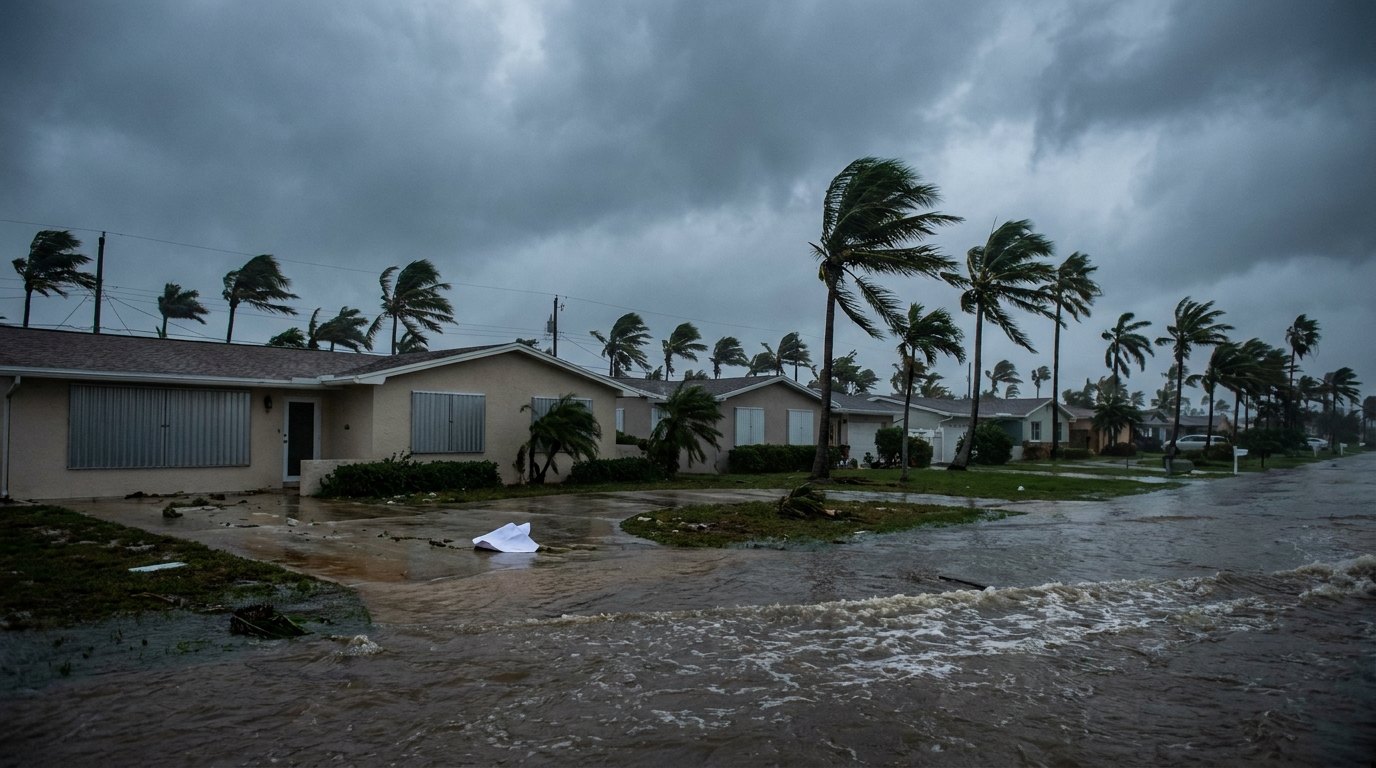
Hurricanes, and the grind of them. It’s not just the catastrophic storms — it’s the annual ritual. The watching, the prepping, the boarding up, the evacuating, the insurance fights afterward, the re-roofing. Three damaging seasons in a row (Ian, then Helene and Milton) wore a lot of people down. Some of my buyers aren’t fleeing one storm; they’re done with the season itself.
Sprawl, traffic, and density. Much of Florida has grown faster than its roads. Orlando and the I-4 corridor, South Florida, the Tampa Bay sprawl — the traffic and the relentless development wear on people who remember when it felt smaller. The crowds at the very places they moved to enjoy have gotten heavier.
Cost creep. Florida is no longer the bargain it was. Regional prices have climbed roughly 5.8% a year recently, rents jumped ~85% over the decade, and between that and insurance, the “affordable paradise” pitch has frayed.
Commute reality — can you still work?
Most of my Florida-to-Bellingham buyers are remote, semi-remote, or retired. That’s the dominant pattern and it works well. Here’s the logistics.
Remote work from Bellingham: Florida is Eastern time; Bellingham is Pacific — a 3-hour gap. An Orlando or Miami professional on a 9–5 ET schedule works 6 AM–2 PM Bellingham time, which means early starts and gloriously long afternoons free for the trail or the water. A team that runs East Coast hours suits this perfectly; you’ll be done by mid-afternoon. The time zone is a thing to plan around, not a dealbreaker.
Flying back to Florida: Miami (MIA) to Seattle (SEA) is roughly 2,728 miles, about a 5h40m nonstop. Orlando (MCO) to SEA is ~2,550 miles, similar flight time. There are no nonstops from Bellingham (BLI) to Florida, so for Florida trips you’ll use Sea-Tac (SEA) — about 90 miles south of Bellingham, a 1.5–2 hour drive on I-5 — which has direct service to Orlando, Miami, Tampa, and Fort Lauderdale on multiple carriers. If you fly back for family a few times a year, SEA is the airport.
Bellingham International (BLI): a small, easy regional airport with Allegiant and limited Alaska service — handy for cheap nonstops to Las Vegas, Phoenix, and a few western cities. Not your Florida airport, but a genuine quality-of-life perk for everything else.
Driving to Seattle or Vancouver: Seattle is 88 miles south (1.5–2 hrs); Vancouver, BC is 51 miles north (about 45 minutes plus border wait). Both expand your hybrid job market — Amazon, Microsoft, Boeing, and Costco are all in the Seattle metro.
For the non-remote buyer: Bellingham’s local economy leans on healthcare (PeaceHealth is the largest employer), Western Washington University, retail, and maritime/trades. It’s a smaller professional market than Orlando or Miami, and salaries compress accordingly. If you need local employment outside those sectors, go in clear-eyed — the cost-of-living and insurance savings help, but they don’t fully close a salary gap.
Buying a home here without flying up six times

A good share of my Florida buyers close on a home they’ve seen in person once — and some never visit before closing at all. The remote process is more manageable than it sounds.
The remote-buyer workflow I use:
We start with a 30-minute video call to map your situation, timeline, budget, and dealbreakers. Then I set up NWMLS listing alerts filtered to your criteria, so you get daily digests of new listings and price changes. When something looks right, I do a FaceTime or Zoom walkthrough — every room, every door, the attic, the crawlspace, the street — and I narrate the condition honestly, including what I’d think twice about. If you’re serious, I send my own read on the block, the lot, and what the neighborhood actually feels like at 6 PM on a Tuesday.
When you’re ready to see your short list, the typical Florida buyer flies in for a focused 2–3 day trip: arrive Thursday, tour 6–8 homes Friday and Saturday, fly home Sunday. That’s enough to make a real decision.
Washington purchase mechanics:
Earnest money in Washington usually runs 1%–3% of the purchase price — on a $675K home, that’s roughly $6,750–$20,000, held by the escrow/title company. I work with Chicago Title here in Bellingham. Inspection contingencies are standard and meaningful: a typical inspection period runs about 10 business days, and if the inspection turns up problems you don’t accept, you get your earnest money back. One Florida-specific note: the inspection priorities flip. There’s no wind-mitigation or four-point inspection driving your insurance here, and no flood-zone premium drama on most city lots — instead we watch for moisture intrusion, drainage, roof age against our rain, and (on older homes) knob-and-tube or galvanized plumbing.
Closing remotely is routine. DocuSign handles most paperwork, and a mobile notary can come to you anywhere in Florida for the final signature. Title transfers, keys are yours, the truck arrives.
Coordinating the Florida sale:
Most buyers close their Florida sale before or alongside the Bellingham purchase. If you need to move fast, a bridge loan or HELOC against your Florida equity can fund the Bellingham buy while the Florida closing finishes. I can connect you with Bellingham-area lenders who run this pattern regularly and who know WA purchase contracts cold.
Schools — the comparison families ask about
Florida families coming north usually want to know the schools are real, and they are — different in scale and culture from a big Florida county district, but solid.
Bellingham Public Schools serves the city, around 11,000 students, with smaller class sizes than most large Florida districts, strong outdoor and project-based learning, and AP/IB tracks at Bellingham High and Squalicum High. The culture leans less toward standardized testing and more toward inquiry and the arts — a welcome shift for some families, an adjustment for others.
Smaller Whatcom County districts each have a character. Ferndale is strong and growing. Lynden is small-town and traditional (Dutch agricultural heritage), which draws families who want a quieter, more conservative environment. Mount Baker serves the rural foothills near the ski area.
Western Washington University is a genuine asset if you have college-age kids — well-regarded liberal arts and sciences with standout environmental and outdoor programs. Washington residents get in-state tuition after 12 months and may qualify for the Washington College Grant. For a Florida family comparing WWU to in-state UF or FSU rates, the value holds up well, especially on the liberal-arts side. And no, there’s no FSA testing regime here — the standardized-test culture is much lighter.
Five Bellingham neighborhoods Florida buyers tend to land in
Florida transplants I’ve placed tend to want real outdoor access, a yard that isn’t fighting heat all year, a kitchen for hosting, and — depending on whether they’re leaving Miami density or a Tampa suburb — either walkability or a quiet, established feel. Here’s where they land.
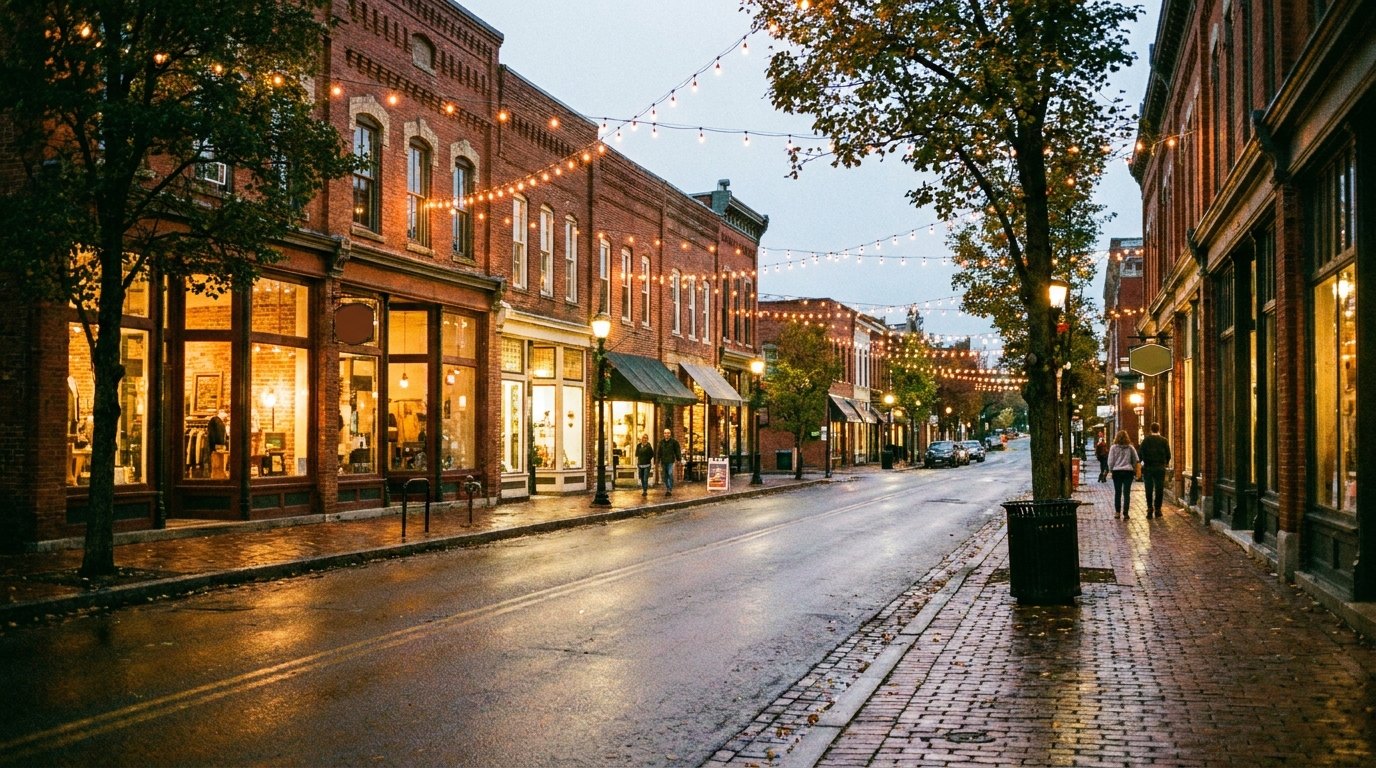
Fairhaven. The historic village at Bellingham’s south end — Victorian brick, an independent bookstore, coffee shops, a wine bar, and the ferry terminal to the San Juans. Walkable, charming, tight lots. Homes run roughly $700K–$1.1M+. Miami and downtown-Orlando buyers who love a walkable core feel at home fast. Links to /neighborhoods/fairhaven/.
Edgemoor. Northwest Bellingham — established mid-century homes, big lots, mature trees, quiet streets above the bay. Private, leafy, no through-traffic. Roughly $700K–$1.1M. Florida buyers leaving a gated community or a large-lot suburb for privacy and space tend to gravitate here. Links to /neighborhoods/edgemoor/.
Barkley. Northeast Bellingham — more suburban, newer construction mixed with 1990s homes, good schools, and the Barkley Village shopping center five minutes away. Roughly $550K–$750K. Buyers from the Orlando suburbs, Wesley Chapel, or master-planned Florida communities recognize the rhythm immediately. Links to /neighborhoods/barkley/.
Sehome. Near WWU — a mix of walkability and residential calm, strong school proximity, roughly $580K–$750K. Younger professional families and folks who want to bike to campus or downtown land here. Links to /neighborhoods/sehome/.
South Hill. South of downtown, a range of price points and styles, walking distance to Whatcom Falls Park (one of the best urban parks in the Northwest), good transit. Roughly $500K–$700K. A solid entry point for Florida buyers who want Bellingham proper without the Fairhaven premium. Links to /neighborhoods/south-hill/.
A note on space and water: if you’re leaving a Florida home on a canal or with acreage, Bellingham proper won’t replicate that, but Whatcom County can. Larger lots and rural character near Ferndale, Lynden, and Birch Bay sit 20–30 minutes from city services — and Birch Bay and Lake Whatcom give you genuine waterfront life without the storm risk.
The lifestyle shift — what changes
The first thing Florida buyers notice is that the outdoors is usable year-round in a different way. You trade beach-and-boat-but-only-if-it’s-not-95°F for trails, bay, lake, and mountains in air you actually want to be in. You’re 15 minutes from a trailhead at Galbraith or Chuckanut, 20 minutes from the bay for paddling or sailing, 25 minutes from Lake Whatcom for swimming, 90 minutes from Mt. Baker’s ski area, and 30 minutes from Anacortes for the San Juan ferry. People here structure their weeks around that access, not around avoiding the heat.
The pace is slower and the traffic essentially doesn’t exist by Florida standards. No I-4, no I-95, no 45-minute crawl to anywhere. Getting across Bellingham takes 10–15 minutes on a bad day. After Orlando or South Florida traffic, that alone reorganizes your sense of time.
The social texture is different, and worth naming. Floridians — especially transplant-heavy Florida — can be quick and open. The Pacific Northwest runs cooler on first contact; people are polite but reserved (the “Seattle Freeze,” milder in Bellingham than Seattle). Six months in — with neighbors, a league, a regular café — it warms up. But the first weeks can feel quiet if you’re expecting instant friendliness.
Food and culture shift too. You lose the Cuban coffee, the stone crab, the genuinely great Latin and Caribbean food that South Florida does better than almost anywhere. You gain serious Pacific Northwest coffee, fresh oysters and salmon, a deep craft-beer scene (Kulshan, Boundary Bay, Chuckanut), farm-to-table cooking, and Lynden’s Dutch bakeries. It’s not better or worse — it’s its own thing. Let it be that.
Frequently asked
Is the Florida to Bellingham move financially positive after carrying costs?
For most buyers, yes — but not through taxes. Income tax is a wash (both 0%) and property tax is roughly even. The win is homeowners insurance: Florida averages about $7,562/year and Washington about $1,533, a ~$6,000 annual swing that compounds for as long as you own. Add near-zero cooling costs and no hurricane-prep spending, and the carrying-cost math favors Bellingham clearly from year one, even when the purchase price is comparable or a bit higher.
Will my homeowners insurance really drop that much?
In almost every case, yes. Whatcom County has no hurricane exposure and a functioning insurance market, so premiums look nothing like Florida’s. Your exact rate depends on the home’s age, roof, and condition, but going from a Florida coastal premium to a Bellingham premium is routinely a multi-thousand-dollar annual reduction. It’s the most reliable single financial benefit of this move.
What’s the real winter like compared to Florida?
Gray and mild, not cold and harsh. November through February is mostly overcast — only about 155–175 sunny days a year here — with light, cool drizzle rather than Florida’s summer downpours. Temperatures usually sit between the high 20s and high 40s; snow in the city is an occasional event. The adjustment isn’t temperature, it’s *light*: Floridians are used to winter sunshine, and here December can go gray for a week. A vitamin D supplement and a daylight lamp help. Visit in January before you commit.
Can I buy a Bellingham home without moving here first?
Yes — many of my Florida buyers do essentially this. The process includes video walkthroughs on every serious candidate, a focused 2–3 day scouting trip to see finalists in person, and signatures via DocuSign with a mobile notary in Florida for closing. I’ve closed buyers who flew up once, toured six homes, made an offer, and moved in within a month.
What about hurricanes and storm risk up there?
There are none of the kind you know. Bellingham has no hurricane exposure and isn’t a wildfire-prone area within the city. Our weather events are windstorms that may knock out power for hours, not days, and the occasional snow event. After three hard Florida seasons in a row — Ian, then Helene and Milton — the absence of hurricane season is one of the most-cited reasons my Florida buyers give for the move.
Does Bellingham feel like a small town or a real city?
It’s a real, complete city of about 100,000 — just smaller and calmer than what you’re leaving. Western Washington University (~17,000 students) adds energy, live music, and a younger demographic without dominating the town. You’ll find healthcare, maritime industry, retail, and a working downtown. It’s not Miami or Orlando in scale or nightlife, and that’s the point for most people making this move.
What’s the catch?
Honestly: the gray winters and the smaller job market. From November to March the persistent cloud cover takes real adjustment for someone used to Florida sunshine, and if you need local employment outside healthcare, education, or trades, the market is thinner than a major Florida metro. You also give up some food culture — the Cuban and Latin food especially. If you work remotely or you’re retiring, the job concern disappears, and what you get in return — a livable summer, no hurricanes, insurance you can afford, and outdoor access in air you actually want to breathe — is, for most of my Florida buyers, well worth the trade.
How much does the move itself cost?
Full-service interstate movers from Florida run roughly $9,000–$24,000 depending on load size and origin — Miami to Bellingham is about 3,300 driving miles, Orlando about 3,070. Container moves (PODS, U-Pack) run $4,500–$10,000 with 2–4 weeks transit. Most Florida buyers ship the car on a transport carrier rather than drive cross-country, adding roughly $1,200–$1,900.
Thinking about Bellingham?
Tell me where in Florida you’re coming from, your budget, and how you work, and I’ll send two or three neighborhoods that fit plus what’s active. If you have a place to sell first, a home valuation is the place to start.