
NEVADA → BELLINGHAM · RELOCATION GUIDE
From Nevada to Bellingham.
The honest math.
Same tax bill, radically different summers — the Nevada-to-Bellingham move is about climate, water, and choosing green over desert.
title: “Nevada to Bellingham: The Honest Relocation Guide (2026)” slug: nevada-to-bellingham eyebrow: “NEVADA” focus_keyword: “nevada to bellingham” origin_name: “Nevada”
I talk with Nevada buyers—mostly Las Vegas and Reno—probably once or twice a month. The conversation rarely starts with “I want to save on taxes.” Both states are at 0% income tax, so there’s nothing to arbitrage there. It starts with something like: “I cannot do another summer. I’m done with the heat.” Or: “We’ve been watching Lake Mead for five years and we’re worried.” Or, from Reno folks especially: “August air quality is getting worse every year and we don’t want to raise kids in it.” The cost math is genuinely honest—you’re not escaping to a cheaper market. Bellingham’s median single-family price is now close to $710K, which is higher than most of Nevada outside premium Las Vegas submarkets. What you’re buying is 36 inches of rain, green mountains, Puget Sound salt air, and summers that stay in the 70s. That trade makes sense for a specific kind of buyer. If you’re that buyer, here’s the full picture.
The equity reset, in actual numbers

Las Vegas single-family homes have a median sale price of approximately $440,000 as of early 2026, down slightly from the 2025 peak near $475k. Reno’s median sits around $575,000 as of April 2026, up about 10% year-over-year. Neither city is cheap anymore, but both are meaningfully below Bellingham’s current range.
Here’s what the numbers actually look like side by side:
| Nevada (Las Vegas) | Nevada (Reno) | Bellingham WA | What’s different | |
|---|---|---|---|---|
| Median home price | ~$440k | ~$575k | ~$710K | Bellingham costs more in most comparisons |
| Property tax effective rate | ~0.48% (Clark Co.) | ~0.48%–0.55% | ~0.85% | WA rate higher; but WA assessed values aren’t capped like NV |
| Property tax on $500k home | ~$2,400/yr | ~$2,500/yr | ~$4,250/yr | Real gap—budget for it |
| State income tax | 0% | 0% | 0% | Neutral — both states are 0% |
| Sales tax | 8.375% (Clark Co.) | 8.27% (Washoe Co.) | ~8.8% | Near-identical; WA slightly higher |
| Typical summer high | 106°F (Jul avg) | 95°F (Jul avg) | 73°F (Jul avg) | The number most people point to |
| Annual sunny days | ~294 | ~252 | ~170 | You trade 120+ sunny days |
| Annual rainfall | ~4″ | ~7″ | ~36″ | PNW is genuinely wet in winter |
| Gas (regular, ~2025 avg) | ~$3.73/gal | ~$3.73/gal | ~$4.20/gal | Modestly higher in WA |
| Summer electricity bill | Very high (heavy AC) | Moderate-high | Low (no AC needed) | Major monthly savings |
| Water costs | Rising; restrictions in place | Moderate | Stable, abundant | Long-term security story |
The worked equity example, Las Vegas seller: Sell a $500k Las Vegas home, net roughly $470k after 6% transaction costs. Buying the median Bellingham home at $710k plus ~$11k closing costs requires roughly a $251k cash addition, or financing the gap, or targeting a $470k–$500k Bellingham home (entry-level condos and smaller SFRs exist in that range). Bellingham is not the equity-windfall move that California-to-Bellingham sometimes is.
The worked equity example, Reno seller: Sell a $575k Reno home, net roughly $540k. The Bellingham median at $710k requires roughly a $180k cash addition or financing the delta. Premium Reno (north valleys, suburban) sellers at $750k–$950k can break even or come out ahead.
The worked equity example, premium Las Vegas (Summerlin) seller: Sell an $850k Summerlin home, net ~$799k. Buy the $710k Bellingham median (about $721k all-in) and pocket roughly $75k after closing. That transaction works cleanly.
The honest summary: if you’re in standard Las Vegas or standard Reno, you’re likely adding cash or stepping down in home size. That’s not a dealbreaker for the right buyer—but go in with clear eyes.
Cost of living, line by line
The places where you genuinely save in Bellingham versus Nevada:
Summer electricity is the biggest line item. Las Vegas summer electric bills running $250–$500/month are common for a typical home. Bellingham doesn’t require central AC at all for most of the year—July highs average 73°F, and even the warmest stretches rarely break 85°F. Your electric bill drops dramatically once you stop cooling against desert heat.
Water gets cheaper and more secure. Las Vegas water rates have been climbing alongside conservation mandates and Southern Nevada Water Authority surcharges tied to Colorado River tier levels. Nevada faces ongoing cuts through at least 2026–2027, with Lake Mead sitting roughly 175 feet below full capacity. Bellingham draws from Whatcom Falls watershed—the supply story is entirely different.
Auto insurance runs modestly lower in Washington compared to Nevada, particularly versus Clark County.
The places where you spend more or break even:
Housing is the dominant cost increase for most Nevada buyers, as laid out above. This isn’t marginal—it’s the core trade-off of this move.
Property taxes are a real step up. Nevada’s effective rate in Clark and Washoe counties runs around 0.48–0.55%, and Nevada law caps annual increases at 3% on primary residences. Washington has no equivalent cap, and Whatcom County’s effective rate is approximately 0.85%. On a $650k purchase, expect roughly $5,525/year in property taxes versus $2,400 on a $500k Nevada home.
Gas is $0.40–$0.50 per gallon higher in Bellingham, but annual mileage often drops because Bellingham is a walkable small city versus the spread-out Las Vegas metro where daily 20–30 mile commutes are standard.
Groceries are comparable—both markets run 2–4% above national average.
The climate — the honest part

I’ll give you the real number first: Bellingham gets roughly 230 gray or cloudy days per year and about 36 inches of rain annually. If you’re coming from Las Vegas with its 294 sunny days, you are trading away roughly 120 sunshine days. That is a meaningful lifestyle change and I don’t want to minimize it.
What “230 gray days” actually means in practice: November through February is overcast and drizzly most of the time. Temperatures are mild—January lows average around 35°F, highs around 46°F—so it’s not brutally cold, but it’s relentlessly gray and damp. Some people find it cozy. Some people find it genuinely difficult, especially if they’re used to waking up to sun every morning. Both reactions are legitimate.
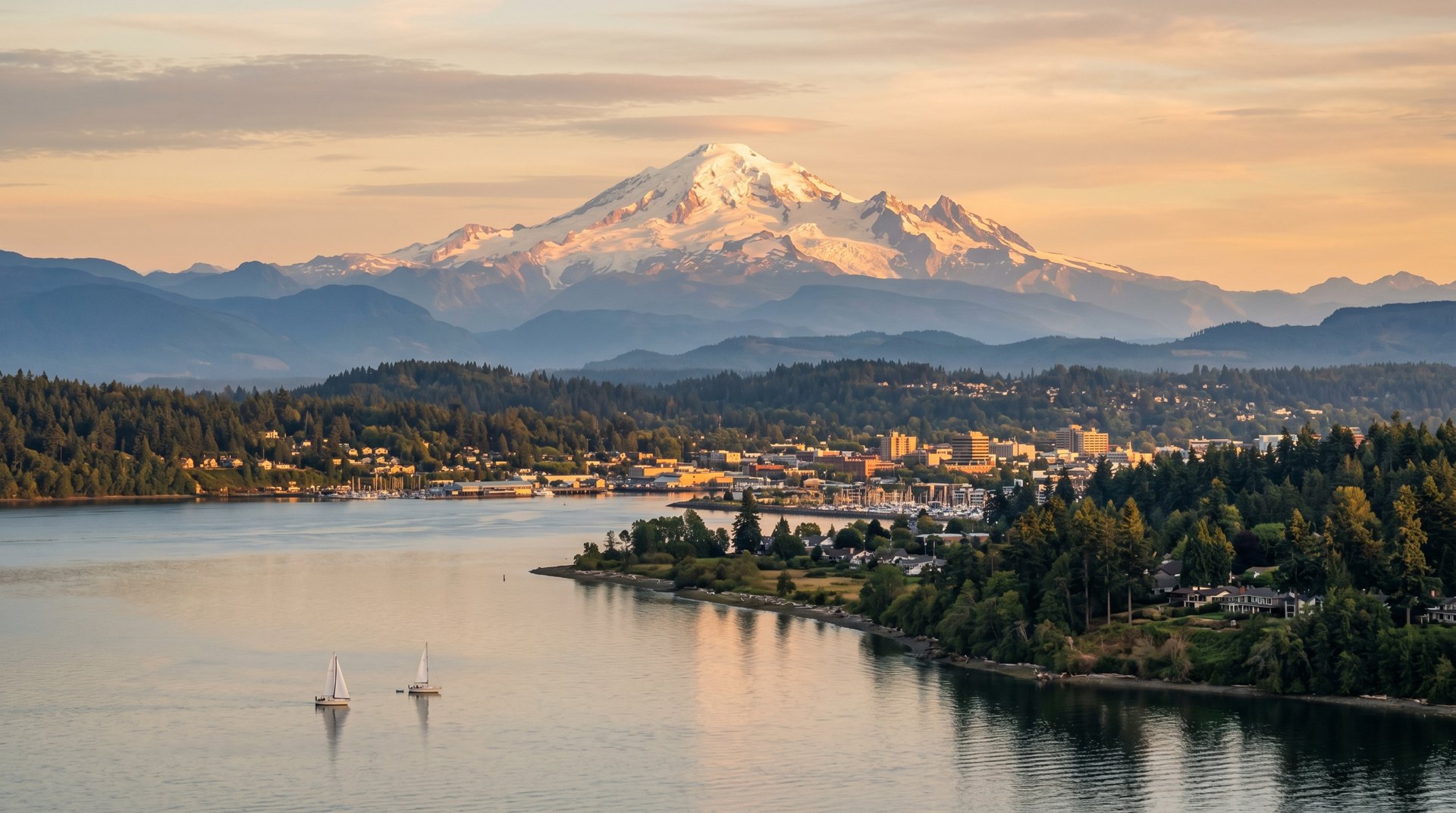
Here’s what doesn’t get covered enough: Bellingham summers are exceptional. June through September is legitimately beautiful—70s, dry, clear skies, Mt. Baker visible on the horizon, the bay blue and calm. In July and August, Bellingham competes with anywhere in the country for outdoor living quality. The irony for Nevada transplants is that you can actually enjoy outdoor summer activity here—kayaking, hiking Chuckanut, farmers’ markets—because the temperature is 72°F, not 107°F.
For Reno buyers: your climate adjustment is less dramatic in terms of temperature swing, but you know better than anyone that late August in Reno can mean AQI of 150+ from wildfire smoke, smoke that sometimes blankets the entire Tahoe basin region for weeks. One study found that wildfire smoke accounted for 56–65% of PM2.5 in Reno’s air during fire-prone months. Bellingham is not immune to smoke—smoke from BC and eastern Washington wildfires occasionally reaches here—but the frequency and severity is meaningfully lower.
For Las Vegas buyers: the desert aesthetic is real and some people miss it. Brown mountains, big skies, stark geology. Bellingham’s landscape—dense cedar and fir, salal understory, salt air, herons on the bay—is the opposite of that. Beautiful in a completely different way, but different.
My recommendation: book a trip to Bellingham in November or early February before you commit. Don’t come in August—August sells itself. Come when the skies are flat gray and it’s 44°F and drizzling at 3pm and see how you feel. If you can find the coziness in that—coffee shops, bookstores, a fire at home—you’ll be fine. If it makes you anxious and miserable, trust that reaction.
Why people leave Nevada

The push factors I hear most consistently from Nevada buyers:
Heat escalation in Las Vegas. The Las Vegas metro has recorded summer highs above 115°F in recent years, and the urban heat island effect is intensifying. July average highs are 106°F—that’s the average, not the extreme. Extended heat dome events, where overnight lows barely drop below 90°F, are now a regular summer feature. Heat-related emergency room visits in Clark County rise every summer. Many buyers who moved to Las Vegas in the 1990s or 2000s describe a city that has become materially harder to inhabit between May and September. “I used to love it. I don’t love it anymore” is a sentence I hear often.
Water anxiety. This isn’t abstract. Lake Mead is sitting at roughly 1,054 feet above sea level—175 feet below full. Bureau of Reclamation projections have the reservoir dropping toward Tier 2 shortage status by late 2026, which would trigger additional cuts to Nevada’s Colorado River allocation. Southern Nevada Water Authority has done extraordinary work on conservation and recycled water, and Nevada actually uses far less than its full Colorado River allocation. But the long-term trajectory of a desert metro of 2.3 million people dependent on a declining reservoir creates genuine unease for a certain category of long-term buyer.
Wildfire smoke in Reno. The basin geography traps smoke. DRI research quantified what Reno residents already knew: during fire-prone late-summer months, wildfire smoke makes up more than half of all particulate matter in Reno’s air. The American Lung Association has given Reno a “D” grade for short-term particulate pollution. Families with kids with asthma or respiratory sensitivities feel this acutely.
Lifestyle ceiling. Las Vegas is genuinely extraordinary for entertainment, dining, and nightlife. It’s also—for a subset of residents—a city that can feel like a continuous performance that starts to wear. The 24-hour-city energy is stimulating at 30 and exhausting at 45. Some buyers aren’t fleeing Las Vegas; they’re graduating from it.
Cost drift. Las Vegas isn’t inexpensive anymore. Rents have climbed. Home values have risen sharply over the past five years. The “bargain desert city” narrative is largely obsolete for anyone looking at the data.
Commute reality — can you still work?
Las Vegas is 1,198 miles from Bellingham by road—roughly 18 hours of driving. Reno is about 794 miles, approximately 13 hours. Neither is a reasonable commute. This is a relocation move.
Flying. Allegiant operates direct LAS to BLI (Bellingham International) service; flight time is approximately 2 hours 50 minutes. Reno-Tahoe International (RNO) to BLI has connecting options through SEA; direct service isn’t reliably scheduled year-round from RNO. The practical pattern for Reno residents: fly to Seattle-Tacoma (SEA), pick up a rental, drive 90 minutes north to Bellingham. SEA is a major Alaska Airlines hub with multiple daily RNO–SEA flights in under 2 hours.
Seattle-Tacoma as the main hub. BLI is convenient but limited—Alaska, Allegiant, United, and Frontier serve it with direct flights to maybe a dozen cities. For Nevada origins, SEA gives you far more options, especially for business travel. The I-5 run from SEA to Bellingham is 90 miles and takes 80–100 minutes depending on traffic. Most Bellingham residents with regular travel needs budget that drive as part of the trip.
Remote work. This is the primary economic unlock that makes the Nevada-to-Bellingham move viable for working-age buyers. If your employer allows full remote, the logistics collapse: you work from Bellingham, maybe fly back to Las Vegas for quarterly meetings. Tesla’s Gigafactory Nevada, casino hospitality operations, and Reno’s growing tech corridor are all mixed on remote-work policies—verify your specific situation before listing. The last thing you want is to be seven months into the move and discover your employer requires Nevada residency or weekly in-office attendance.
Bellingham’s own job market. Western Washington University (13,000+ students), PeaceHealth hospital system, Whatcom Community College, and a modest manufacturing base anchor local employment. It’s not a tech hub. If you’re relocating with dependence on a local job market, do the research first.
Buying a home here without flying up six times
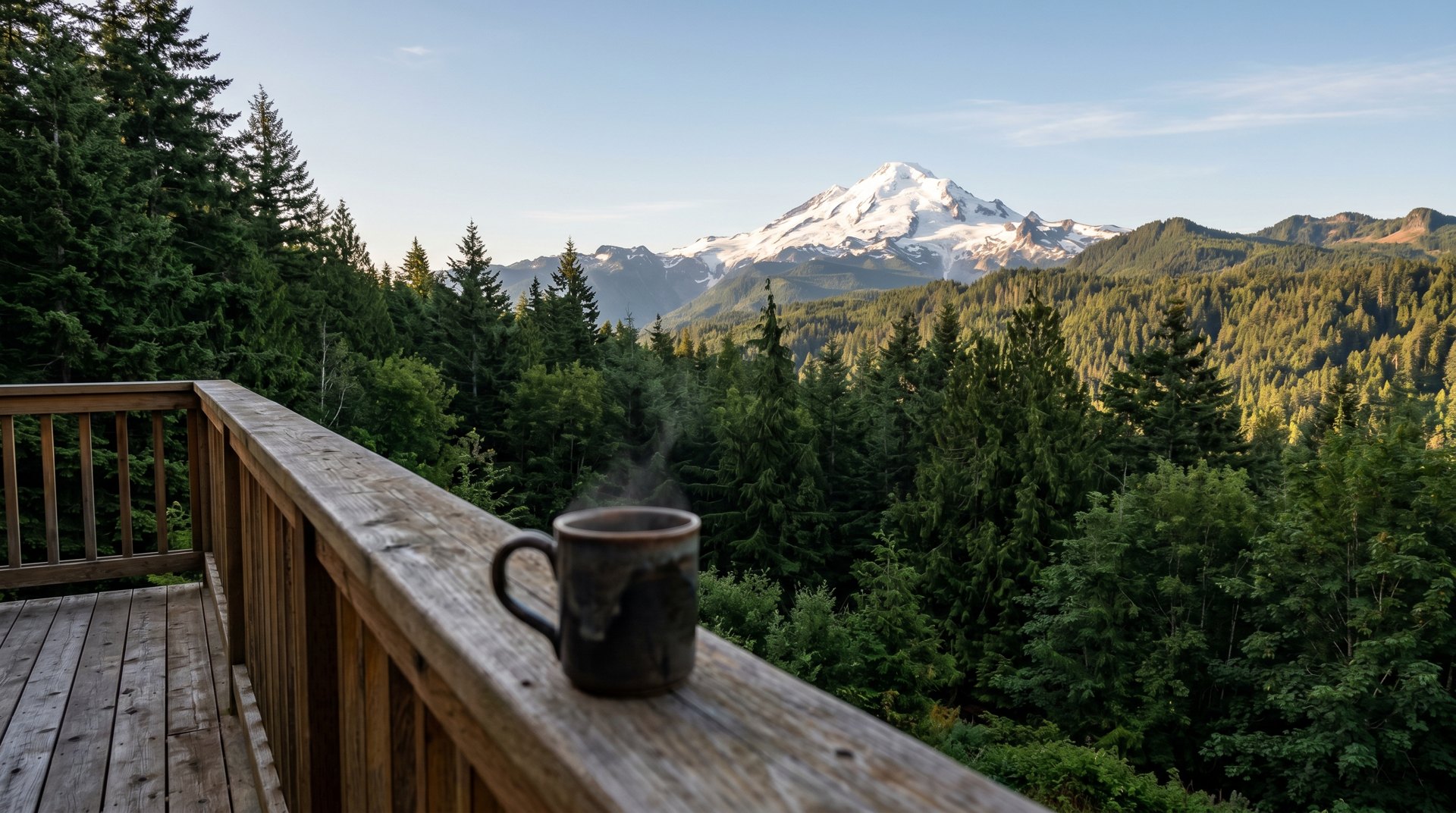
Most of my Nevada buyers complete the entire transaction with one in-person trip. Here’s how the process works in practice.
The virtual discovery phase. I set up NWMLS listing alerts the moment we talk. When something relevant hits, I’ll do a same-day video walkthrough—FaceTime, Zoom, whatever you prefer—walking every room, checking the mechanicals, narrating what I’m seeing honestly. I’ll tell you if the foundation has settling cracks I’d want an engineer to look at, or if the “updated kitchen” in the photos is actually a laminate-countertop-and-fresh-paint job. This phase runs until you’re ready to narrow to a shortlist of two or three properties that justify the trip.
The one-trip model. Once you have a shortlist, fly up. I schedule the viewings back to back over a day and a half—Thursday afternoon through Saturday morning is typical. You walk the finalists in person, get a feel for the neighborhoods, drive the commute routes, eat dinner downtown. Most buyers make their decision before flying home Sunday.
Washington offer mechanics. Earnest money is typically 1–3% of purchase price, held in escrow. Washington allows inspection contingencies—standard is 10 days—so you can back out with earnest money returned if inspections reveal serious problems. This is your safety net as an out-of-state buyer. Don’t waive it unless you’re in a very competitive situation and have already done a pre-inspection.
Coordinating the Nevada sale. If you’re selling Nevada real estate simultaneously, the biggest risk is timing: closing your Nevada sale two weeks before your Bellingham closing leaves you in a hotel; closing your Nevada sale two weeks after leaves you carrying two mortgages. I work with Nevada agents regularly to synchronize this. The standard approach: get a Bellingham home under contract with a 45–60 day close window, list Nevada immediately, use bridge financing or a HELOC if needed to carry the gap. Chicago Title handles both escrow and title in Bellingham—they’re my go-to, and they’re experienced with out-of-state coordination.
Closing remotely. Washington allows remote online notarization, so the final signing can happen from Las Vegas or Reno. I’ll coordinate the notary. Most Nevada buyers close entirely remotely after their one in-person trip.
Schools — the comparison families ask about
Bellingham Unified School District is the primary district for the city proper. Scores are solid for a mid-size Washington city—above state average in most categories. The district runs six elementary schools, two middle schools, and Bellingham High and Squalicum High at the secondary level.
If school quality is a top priority, two nearby districts get mentioned consistently in family conversations:
Ferndale School District (12 miles north) has a strong reputation, newer facilities, and is serving a fast-growing suburban community. Home prices run slightly lower than Bellingham proper, which means the same budget buys more house.
Lynden School District (18 miles north) consistently posts among the highest academic performance numbers in Whatcom County. It’s a smaller, more conservative community with a Dutch agricultural heritage. The school metrics are genuinely excellent.
Western Washington University is located in Bellingham—13,000 students, Division II athletics, strong programs in education, business, and environmental sciences. Its presence shapes the city’s culture and provides a pipeline of young professionals. For families thinking long-term, having a four-year university in town is a real quality-of-life asset.
Whatcom Community College (two-year, strong workforce programs) rounds out the local post-secondary picture.
Five Bellingham neighborhoods Nevada buyers tend to land in

Fairhaven is the neighborhood I show most often to Las Vegas buyers who describe wanting something with character and walkability. The historic village district—Victorian storefronts, independent bookstores, wine bars, a ferry terminal to the San Juan Islands—has an energy that’s the exact opposite of strip-mall Las Vegas sprawl. Homes here run $700k–$1.1M+ for single-family. It’s not cheap, but buyers who land there rarely regret it. Walkability score is legitimately high by Bellingham standards. Link: /neighborhoods/fairhaven/
Edgemoor sits on Bellingham Bay’s north side with some of the best unobstructed water and island views in the city. Older homes—1950s and 60s ranches and split-levels—on large lots. Prices from $650k–$950k depending on view tier. Buyers from premium Las Vegas and Reno suburbs who want space, quiet, and scenery end up here. /neighborhoods/edgemoor/
South Hill is the practical choice for families: newer construction, larger square footage per dollar, good school access, easy I-5 access for Seattle-area travel or airport runs. Less character than Fairhaven but more house for the money. Bellingham buyers from Summerlin or Henderson—used to planned-community suburban living—often feel most at home here. /neighborhoods/south-hill/
Barkley is the city’s commercial hub neighborhood—big-box retail, chain restaurants, medical offices—surrounded by solid mid-tier residential. Not the most picturesque, but practical for buyers who prioritize convenience over aesthetics. Entry-level single-family pricing relative to the city. Good for buyers stepping into Bellingham from a $440k Las Vegas sale without a large cash addition. /neighborhoods/barkley/
Sehome sits adjacent to Western Washington University and Sehome Hill Arboretum—250 acres of forested trails accessible directly from the neighborhood. Strong rental market given the university proximity. Homes run $550k–$850k depending on size and condition. Reno buyers who valued Tahoe trail access often respond well to the trail-access story here—different terrain, but the same instinct. /neighborhoods/sehome/
The lifestyle shift — what changes
The rhythm of daily life in Bellingham is fundamentally different from either Las Vegas or Reno.
Las Vegas is 24-hour. Bellingham is 9-to-9. Restaurants close at 9pm or 10pm. There’s no casino floor. The entertainment calendar runs on farmers’ markets, folk concerts at the Pickford Film Center, First Fridays in the arts district, and the odd music act at the Shakedown. If you derive energy from urban stimulation, be honest with yourself about whether this trade works.
What replaces it, for buyers who find the reset welcome: the physical environment is immediately accessible in ways Las Vegas isn’t. You can walk to saltwater. You can mountain bike to the ridgeline above town in 20 minutes from the Fairhaven trailheads. The San Juan Islands are a ferry ride away. Vancouver BC is 55 minutes north—a world-class city for day trips and long weekends. In August, the region is objectively one of the finest outdoor living environments in North America.
The pace slows down. For some people that’s the whole point. For others it becomes claustrophobic after 18 months. I’ve seen both outcomes. The buyers who thrive are the ones who arrived already knowing what they wanted to do with unstructured time—trail runners, kayakers, gardeners, people who’ve been waiting to actually read all those books. The buyers who struggle arrive hoping the environment will solve something internal.
Frequently asked
Since both Nevada and Washington have 0% income tax, is there any tax benefit to this move at all?
Largely no—the tax picture is roughly neutral. Both states have 0% income tax. Sales taxes are within a fraction of a point of each other (Clark County 8.375% vs. Bellingham 8.8%). The real tax step-up is property taxes: Nevada’s effective rate in Clark and Washoe counties runs around 0.48–0.55%, versus Whatcom County’s approximately 0.85%. Nevada also caps annual property tax increases at 3% on primary residences; Washington has no equivalent cap. Over 10–15 years, that difference compounds. Be accurate in your budget projections.
What is winter actually like compared to Nevada?
Mild but relentlessly gray. January highs average 46°F, lows around 35°F—so you’re not shoveling your driveway in most years (Bellingham gets roughly 9 inches of snow annually versus Reno’s 24 inches). What you’re adjusting to is the absence of sun from November through March. For Las Vegas buyers used to 60°F sunny December days, the darkness is the harder adjustment than the cold. I tell every Nevada buyer: visit in February, not August.
Can I buy in Bellingham remotely, or do I have to make multiple trips?
One trip is the realistic standard for my out-of-state buyers. Virtual walkthroughs narrow the list; one in-person trip confirms the finalist and you make the offer. Washington’s inspection contingency (typically 10 days) protects you after the offer is accepted. Closing can happen via remote online notarization. The whole process from first conversation to keys in hand typically runs 60–90 days.
What’s the catch with Bellingham housing prices versus Nevada?
The catch is real: Bellingham’s median single-family is approximately $710k, which is higher than all of Nevada except premium Las Vegas submarkets. You are not moving to a cheaper market. The value proposition is quality of life, not cost savings. If your budget requires stepping down in home size from what you have in Nevada, plan for that—entry-level Bellingham single-family starts around $475k–$550k in neighborhoods like Barkley and parts of South Hill.
I’m a Reno buyer—does losing Tahoe hurt as much as I think?
It depends entirely on how you use Tahoe. If you’re skiing at Heavenly five times a year and wakeboarding every summer weekend, yes, you’ll feel that loss acutely. Mt. Baker is 58 miles from Bellingham and receives more annual snowfall than almost any ski area in North America—averaging over 600 inches per year—but it’s a smaller, more rugged ski culture than Tahoe’s groomed-cruiser aesthetic. What you gain is Vancouver BC for the city fix, the San Juan Islands for the water fix, and North Cascades National Park for the backcountry fix. Different mountains, different culture, different tradeoff.
Is Bellingham genuinely a good escape from Las Vegas heat?
It’s among the most effective heat escapes in the continental West. Las Vegas July average high is 106°F. Bellingham’s July average high is 73°F. There’s no comparison. What you give up is the 294 sunny days. The question is whether you want to be comfortable outdoors in summer or have sun overhead year-round. For buyers who have spent years hiding indoors from May to September, the answer is almost always: I’ll take the 73°F.
Is there any scenario where the Nevada-to-Bellingham move pencils as a financial upgrade?
Yes—specifically premium Las Vegas sellers (Summerlin, Henderson hills, Seven Hills, Lake Las Vegas) who have significant equity and are comparing to Bellingham’s mid-tier rather than its high end. A $775k–$900k Las Vegas home netting $728k–$846k can buy the median Bellingham home outright with cash left over. For standard Las Vegas ($400k–$550k) or standard Reno ($500k–$600k) sellers, the financial case is neutral-to-negative—this is a lifestyle and quality-of-life move, not an equity play.
Does Bellingham have the job market to support a non-remote move?
It’s limited but real. PeaceHealth (regional hospital system), Western Washington University, Whatcom Community College, and a mix of manufacturing and trades employment anchor the local economy. Healthcare, education, and skilled trades are the strongest sectors. If you’re a tech professional, attorney, or finance person expecting to find comparable employment locally, you will struggle—Bellingham is not that market. If you’re in healthcare, education, or can work remote, the calculus is much better.
Thinking about Bellingham?
Tell me where in Nevada you’re coming from, your budget, and how you work, and I’ll send two or three neighborhoods that fit plus what’s active. If you have a place to sell first, a home valuation is the place to start.