

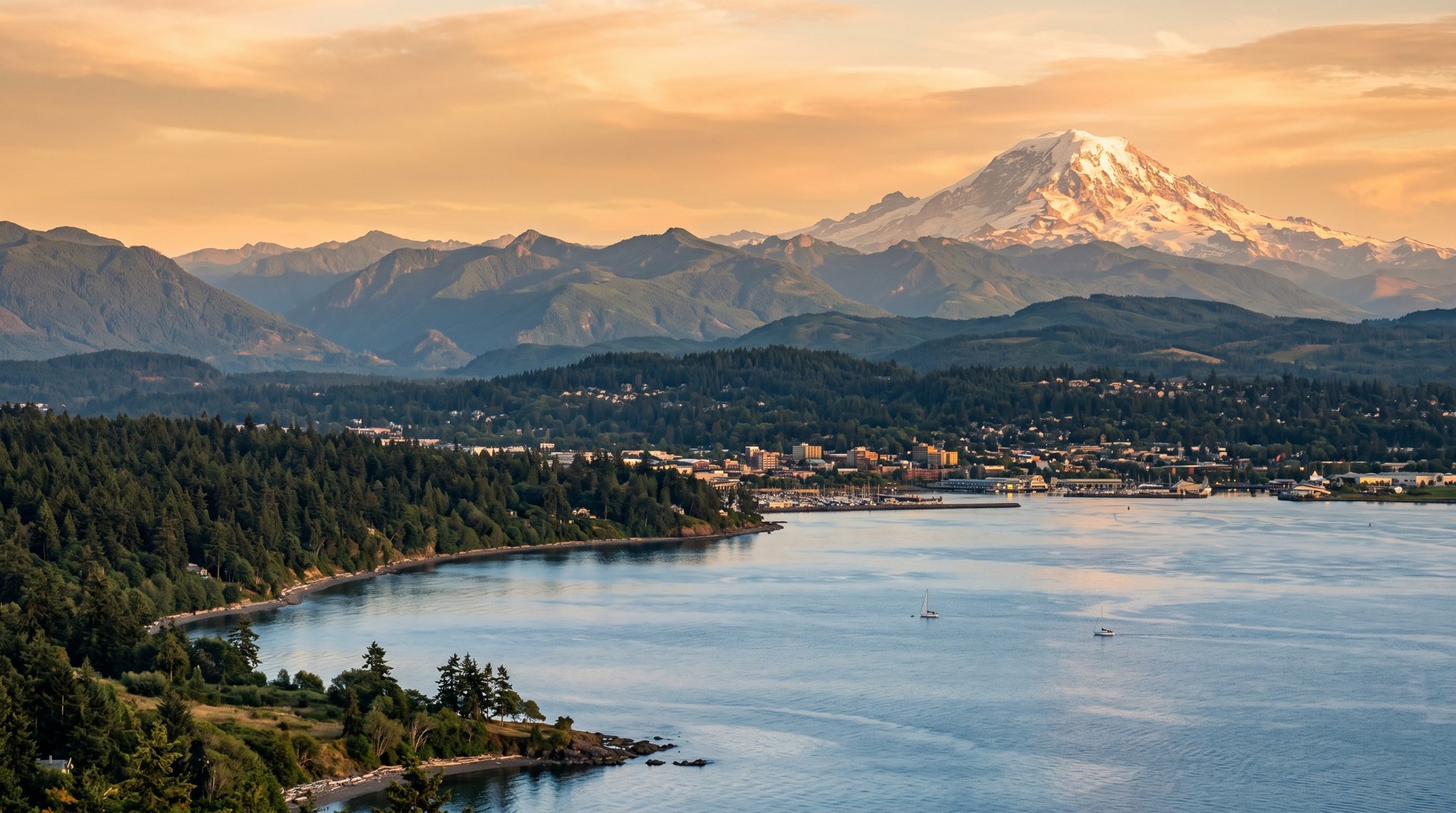
TEXAS → BELLINGHAM · RELOCATION GUIDE
From Texas to Bellingham.
The honest math.
Property tax relief, a summer you can actually live in, and the full financial picture from a broker who’s done this move dozens of times.
The Texas-to-Bellingham conversation is one I have several times a month, and it sounds different from every other relocation call I take. Texans already know they don’t pay state income tax — they’re not moving for that. What they’re moving for is the property tax math (Texas runs 1.6–1.8% effective; Whatcom runs 0.71%), the climate math (105°F humid summers for 72°F dry summers), and something harder to quantify: peace of mind about whether the lights stay on in February. I’m Genaro Shaffer, a licensed broker here in Bellingham — 11+ years, 67+ closings. Here’s the full picture for buyers coming from Austin, Dallas, Houston, San Antonio, or Fort Worth.
The equity reset, in actual numbers

Let’s start with the numbers that actually matter for a Texas buyer. The income-tax picture is a wash — Texas has no state income tax, and neither does Washington. That talking point you’ll see on other sites doesn’t apply to your move. The real financial mechanics are property tax and the equity you’re pulling out of a Texas market that’s been cooling since 2023.
What Texas homes are selling for right now (April–May 2026):
| Texas metro | Median sale price (Q1 2026) | Net to seller (after ~6% costs) |
|---|---|---|
| Austin / Round Rock | ~$540,000 | ~$508,000 |
| Dallas / Plano | ~$435,000 | ~$409,000 |
| Houston | ~$342,000 | ~$322,000 |
| San Antonio | ~$310,000 | ~$291,000 |
| Fort Worth | ~$330,000 | ~$310,000 |
Sources: Redfin April 2026 metro data; Austin median reflects correction from 2022–23 peak.
Bellingham median single-family home: approximately $710,000 (Redfin, May 2026; the countywide median is $625,000 per NWMLS April data). I’ll use $710,000 as the working figure with closing costs ~1.5% ($11K).
The worked equity example:
An Austin seller who nets $508K can put 25% down on a $710K Bellingham home ($178K) and still hold roughly $330K in reserve. That’s a functional move. A Dallas seller who nets $409K is looking at a $312K gap to the median — realistically a 20% down payment on $710K ($142K) with $267K in reserve and a mortgage for the rest, or a reason to shop Bellingham’s $475K–$550K tier (it exists). A Houston or San Antonio seller nets $291K–$322K, which covers a healthy down payment on a $500K–$575K Bellingham home — a smaller or older home, but a real one.
The math is tighter than the California version. What compensates is the property tax savings stacking every year you own.
The comparison table:
| Texas (avg major metro) | Bellingham WA | What changes | |
|---|---|---|---|
| Median home price | $310K–$540K (metro dep.) | ~$710K | Higher purchase price |
| Property tax (effective) | ~1.6%–1.8% | ~0.71%–0.85% | ↓↓ major savings |
| Annual tax on $500K home | ~$8,000–$9,000 | ~$3,550–$4,250 | ~$4,500/yr saved |
| State income tax | 0% | 0% | No change |
| Sales tax (combined) | Up to 8.25% | ~8.8%–9.4% | ↑ slightly higher |
| Gas (per gallon avg) | ~$3.00–$3.20 | ~$4.00–$4.30 | ↑ higher in WA |
| Groceries | ~4% below national avg | Near national avg | ↑ modest increase |
| Summer electricity (AC) | $250–$500/mo July–Aug | ~$0–$30/mo (AC rarely needed) | ↓↓ major savings |
| Annual sunny days | 204 (Houston) to 234 (Dallas) | ~155–175 | ↓ significantly fewer |
| Summer high (July avg) | 95–100°F (humid) | ~72°F (dry) | ↓↓ far cooler |
| Winter low (January avg) | 35–45°F | ~33°F | Similar |
The 20-year property tax math:
On a $650K Bellingham home at 0.78% effective: ~$5,070/year. On a comparable-value Texas home at 1.7% effective: ~$11,050/year. Annual difference: ~$5,980. Invested at 7% S&P historical average over 20 years: approximately $310,000 in compounded savings.
That’s real money. It doesn’t show up in the day-one transaction but it changes your financial picture meaningfully over the time you own the house.
Cost of living, line by line
Texas buyers usually expect Bellingham to be expensive. Some things are. Some things are meaningfully cheaper. Here’s the honest breakdown.
What gets cheaper:
Property taxes — already covered above, but it bears repeating: the savings are large and compound. If you’re coming from Harris County (Houston), Travis County (Austin), or Tarrant County (Fort Worth), you’ve been paying some of the highest effective property tax rates in the country. That bill goes away.
Summer electricity — Texas summer electricity bills run $250–$500/month in July and August for a typical house running central AC full-time. In Bellingham, most homes don’t even have central AC. The occasional August heat wave (85–90°F lasts 1–2 weeks) might push you to a $400 window unit, but annual summer cooling costs drop to near zero compared to a Texas summer.
Car insurance — Washington auto insurance runs modestly lower than Texas metro rates on average, reflecting lower accident and weather-damage claims.
Housing (depending on origin) — If you’re coming from Austin’s $540K median, Bellingham at $710K is meaningfully higher — the property-tax savings narrow the carry gap every year you own. If you’re coming from Dallas ($435K) or Houston ($342K), Bellingham is more expensive, but the trade is a different kind of city.
What gets more expensive:
Gas — Washington gas taxes and distribution costs push pump prices to roughly $4.00–$4.30/gallon. You’ll notice this immediately.
Sales tax — Bellingham’s combined rate is ~8.8%; some parts of Whatcom County reach 8.9%. Texas caps at 8.25%. The difference is real but not dramatic day-to-day.
Groceries — Texas grocery costs run slightly below the national average; Washington runs near or slightly above. You’ll pay somewhat more for the same basket.
Eating out — Bellingham’s restaurant scene has improved but prices have risen with wages. Mid-tier dining is comparable to Austin; service industry compensation is higher in WA (higher minimum wage), which shows in check totals.
Real estate excise tax (REET) — Washington sellers pay REET on sale (1.1%–3.0% graduated). Texas has no equivalent deed transfer tax. This matters when you eventually sell.
The climate — the honest part
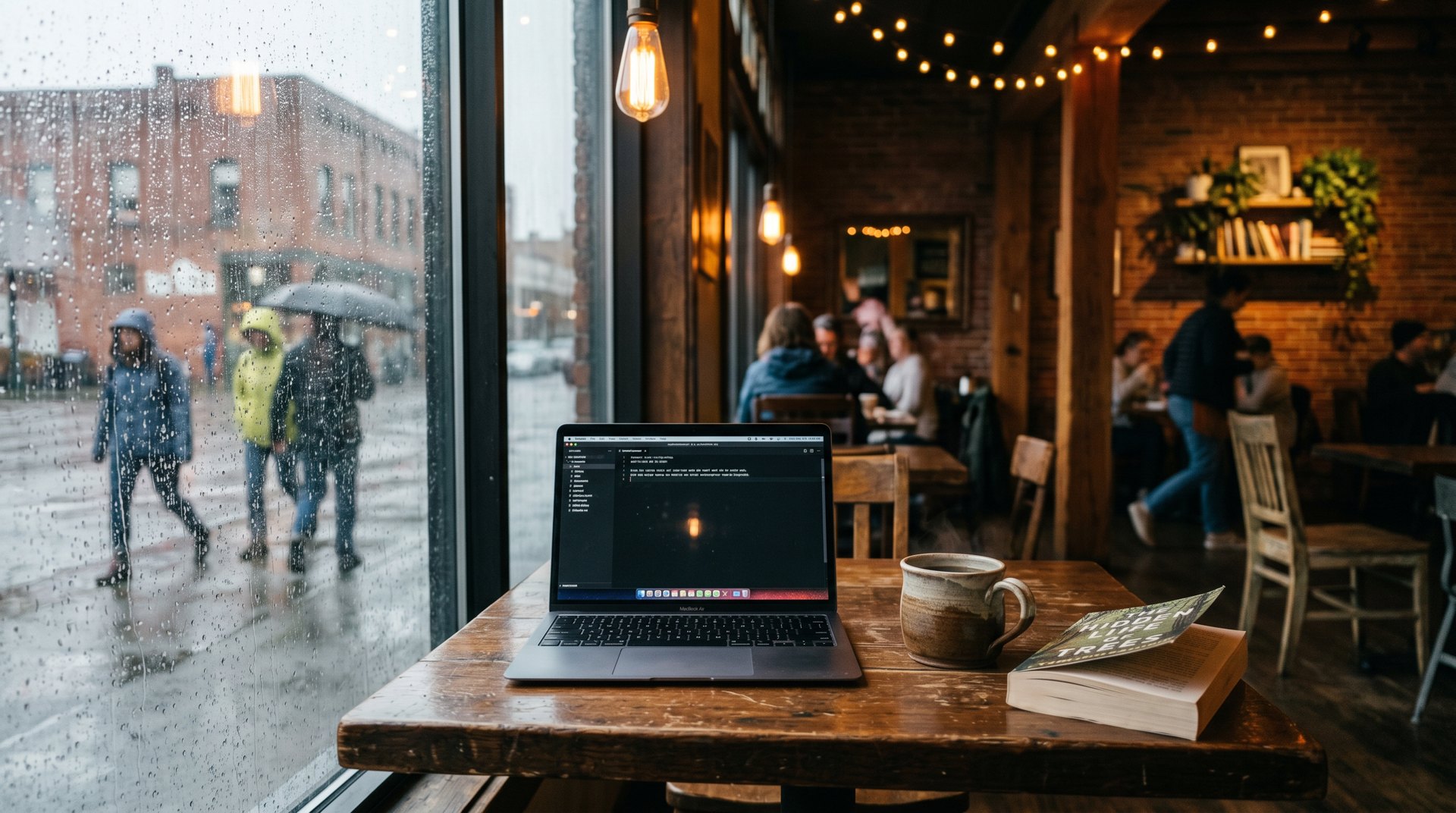
No other aspect of this move is as dramatic. Texas and Bellingham have roughly similar annual rainfall (36″–50″ depending on Texas metro vs. Bellingham’s 36″). But the rainfall pattern, the temperature range, and the sunshine calendar are completely different.
Texas summers in 2023, 2024, and 2025 each set records. Dallas averages 23 days of 100°F or higher per year — and recent summers have pushed that number significantly higher. Houston summers combine the heat with Gulf humidity: a 95°F Houston day at 80% humidity feels different than any temperature in Bellingham. Austin hit 45 consecutive days over 100°F in 2023. These are not statistical edge cases anymore; they’re the Texas summer experience.
Bellingham summers are genuinely different. July and August average highs run 72°F–75°F with low humidity. Locals complain when it hits 85°F. Heat warnings are rare; heat deaths are almost nonexistent. Kids play outside all summer. Hiking, cycling, kayaking — you do these things on a Wednesday afternoon because it’s comfortable.
The honest Bellingham winter: November through February, Bellingham sees cloud cover most days. We average 230 gray or overcast days per year — that’s not a typo. Rain is light and persistent (36″ annually, spread across 9–10 months) rather than violent. Dallas averages 234 sunny days a year; Bellingham averages roughly 160–170. That’s a real deficit, and Texans feel it. Seasonal affective disorder is real here; a vitamin D regimen and full-spectrum lights are practical tools, not jokes.
What the gray winter delivers in exchange: temperatures that rarely drop below 28°F, almost no ice events on city streets, no wind chill factor. Bellingham winters are gray and damp, not brutal. They’re also not dangerous in the way Texas winters occasionally become.
The 2021 Texas freeze killed hundreds of Texans and left millions without power for days. In 2025, Winter Storm Fern triggered another DOE emergency order for ERCOT backup generation. ERCOT projects peak demand may exceed supply capacity beginning summer 2026 in worst-case scenarios. Bellingham is served by Puget Sound Energy from a Pacific Northwest grid with abundant hydroelectric generation. Grid outages here are weather events measured in hours, not infrastructure failures measured in days.
My honest recommendation: visit Bellingham in November or February before you commit. Summer sells itself. If you can spend a rainy Bellingham week in January and still see yourself here, you’re ready. I’ve had buyers visit in November, walk around Fairhaven in the drizzle, eat at one of the good restaurants, and come back saying it felt exactly right. Others come in January and go quiet on the drive back to Sea-Tac. Know which one you are before you list your Texas house.
Why people leave Texas

The Texas push factors are real, specific, and worth naming directly. I’m not here to disparage anyone’s home state — I have clients from every Texas metro and they all have genuine Texas loyalty — but something is moving people, and it’s not abstract.
Heat, worsening. The 2020s Texas summers are a different animal than the 1990s Texas summers. Dallas-Fort Worth recorded 45+ days above 100°F in recent years. Austin’s 2023 summer was historically severe. Houston’s combination of heat and Gulf humidity makes outdoor activity genuinely dangerous from June through September. For families with young kids or older parents, this increasingly means months indoors with AC as the only safe option. The lifestyle contraction is significant.
Property tax sticker shock. A $450K Dallas house carries roughly $8,100–$9,000 in annual property tax. That’s $675–$750 per month, every month, regardless of what your mortgage costs. Texas property taxes are structured to fund schools and local services that other states fund through income tax — the intent is defensible, but the carrying cost is real and it never goes away.
ERCOT grid anxiety. The 2021 winter storm didn’t just kill people — it changed how Texans think about their infrastructure. Four years later, doubts about grid reliability persist (per NPR, February 2025). The data center expansion driving a projected 170% increase in grid connection requests raises legitimate questions about demand growth outpacing supply. Whether your personal risk is material depends on many factors, but the anxiety is legitimate.
Traffic and suburban sprawl. Austin, Dallas, and Houston are among the nation’s worst metros for commute times. The car dependency is total. There is no practical alternative to driving for most daily life, and the distances involved (metro areas spanning 50+ miles in multiple directions) mean long drives are built into everyday living.
Political environment. Some Texans are moving for political reasons; many more are moving despite their politics or indifferent to them. I note it here because it comes up, but it’s not the leading driver I hear — the heat, tax, and traffic reasons are more consistent across the political spectrum.
Commute reality — can you still work?
Most Texas-to-Bellingham buyers I work with are remote workers or semi-remote. That’s the dominant pattern, and it works well. Here’s the logistics breakdown.
Remote work from Bellingham: CST to PST is a 2-hour gap. An Austin or Dallas tech worker on a standard 9–5 CST schedule starts their Bellingham day at 7 AM PST — early but manageable. A Houston energy professional with East Coast clients might work 5 AM–2 PM Bellingham time and have long afternoons free. The time zone adjustment is a practical constraint worth planning around, not a dealbreaker.
Flying back to Texas: Austin (AUS) to Bellingham (BLI) is approximately 2,300 miles. Direct flights don’t currently exist from BLI to Austin or Houston; typical routing goes BLI → SEA → AUS with total travel time around 5–7 hours. Seattle-Tacoma (SEA) is the practical airport: 90 miles south of Bellingham (~1.5–2 hr drive depending on I-5 traffic), with direct nonstop service to Austin, Dallas, and Houston from multiple carriers. If you’re flying to Texas once a month for face time, the SEA routing is reasonable.
Bellingham International (BLI): Small regional airport with Allegiant flights to a handful of destinations plus limited Alaska routes. Useful for cheap direct flights to Las Vegas, Phoenix, and a few California cities. Not the airport you’re using for Texas business travel — that’s Sea-Tac.
Driving to Seattle or Vancouver: Bellingham is 88 miles north of Seattle (1.5–2 hrs depending on I-5). Vancouver, BC is 51 miles north (45 min border-to-city on a normal day, longer with border wait). Both cities expand your practical job market for hybrid work arrangements. Microsoft, Amazon, Boeing, Costco headquarters are all within the Seattle area.
For the non-remote buyer: Bellingham’s local job market is dominated by healthcare (PeaceHealth, largest employer), Western Washington University, retail, and maritime/construction. If you’re not remote and need to transition to local employment, the professional opportunities are smaller-scale than Austin or Dallas. This is a real constraint. The salary compression is real; the cost-of-living offset helps but doesn’t fully close the gap.
Buying a home here without flying up six times
About a third of my Texas-to-Bellingham buyers close a home they’ve seen once in person, and some close without visiting at all. The process is more manageable than it sounds.
The remote-buyer workflow I use:
We start with a 30-minute video call — your situation, timeline, budget, dealbreakers. After that I set up NWMLS listing alerts filtered to your criteria; you get daily email digests of new listings and price changes. When something looks interesting, I do a FaceTime or Zoom walkthrough. I walk every room, open every door, go in the attic, narrate the condition honestly. If you’re seriously interested, I send my own observations about the street, the lot, what the neighborhood actually feels like, what I’d think twice about.
When you’re ready to see your short list in person, the typical Texas buyer does a 3-day trip: fly in Thursday, see 6–8 properties Friday and Saturday, fly home Sunday. That’s enough to make a real decision on.
Washington purchase mechanics:
Earnest money in Washington typically runs 1%–3% of purchase price — on a $650K home, that’s $6,500–$19,500 held by the escrow/title company (I work with Chicago Title, Leah Richardson’s team in Bellingham). Inspection contingencies are standard and meaningful; if the inspection reveals problems you don’t accept, you get your earnest money back. Inspection period is typically 10 business days.
Closing remotely is routine. DocuSign handles most of the paperwork. If closing in person isn’t possible, a mobile notary can come to you anywhere in Texas for the final signature. Title transfers, you have keys, the moving truck shows up.
Coordinating the Texas sale:
Most buyers want to close their Texas sale before or simultaneously with the Bellingham purchase. If you’re in a hurry-up market and need to move fast, a bridge loan or HELOC on the Texas equity can fund the Bellingham purchase while you wait for Texas to close. I can connect you with Bellingham-area lenders experienced in this pattern. The Seattle-area mortgage market is competitive; you don’t have to use a local lender but having one who knows WA purchase contracts helps.
Schools — the comparison families ask about
Texas has large, well-funded public school districts with strong athletic programs and established college-prep tracks. The Bellingham comparison is different in scale and culture, not necessarily in quality.
Bellingham Public Schools serves the city proper. It’s a well-regarded mid-size district (~11,000 students) with emphasis on outdoor education, project-based learning, and smaller class sizes than typical Texas suburban districts. AP and IB programs exist at Bellingham High and Squalicum High. The curriculum culture is more progressive than Texas norm — less standardized-test-emphasis, more emphasis on arts and inquiry.
Smaller Whatcom County districts offer different flavors. Ferndale School District is strong and growing. Lynden School District has a distinct character — small-town, culturally conservative (Dutch heritage, agricultural community) — and draws families from Texas who want a quieter, more traditional school environment. Mount Baker School District serves rural Foothills families near the ski area.
Western Washington University is a genuine asset for families with college-age kids or kids approaching college. Top-tier liberal arts and sciences, strong environmental and outdoor education programs. WA residents qualify for the Washington College Grant (need-based) and in-state tuition after 12 months of WA residency. For a Texas family comparing WWU costs to UT-Austin or Texas A&M in-state rates, the comparison is favorable, especially on the liberal arts side.
One note for Texas families: the state testing culture is very different. Texas STAAR testing is gone in Bellingham. That shift is genuinely welcome for some families and an adjustment for parents who orient by standardized benchmarks.
Five Bellingham neighborhoods Texas buyers tend to land in

Texans I’ve placed over the years have a few consistent patterns. You tend to want outdoor access, a real yard, a kitchen you can host in, and — depending on how you’ve been living — either more walkability than Houston or Dallas offers, or a quieter suburban-style neighborhood that reminds you of what you had.
Fairhaven. The historic village district at Bellingham’s south end. Victorian-era buildings, independent bookstore, coffee shops, wine bar, ferry terminal to the San Juans. Walkable. Tight lots but charming streets. Home prices run $700K–$1.1M+ for character houses. Texas buyers who lived in Austin’s central neighborhoods or Dallas’ Lakewood tend to feel at home immediately. Links to /neighborhoods/fairhaven/.
Barkley. Northeast Bellingham, more suburban feel, newer construction mixed with 1990s homes, good schools, Barkley Village shopping center. Home prices $550K–$750K. Texas buyers from Plano, Frisco, or The Woodlands recognize the pattern: quiet streets, good schools, groceries within 5 minutes, garage attached. Links to /neighborhoods/barkley/.
Edgemoor. Northwest Bellingham, established mid-century homes, large lots, mature tree canopy, quiet streets above Bellingham Bay. Birding culture. More private than Fairhaven, more character than Barkley. $700K–$1.1M. Texas buyers who value a larger lot with privacy and don’t need walkable density tend to find this their place. Links to /neighborhoods/edgemoor/.
Sehome. Near WWU campus, good mix of walkability and residential calm, strong school proximity, $580K–$750K range. Younger professional families from Austin and Houston who want bike-to-campus or bike-to-downtown capability land here. Links to /neighborhoods/sehome/.
South Hill. South of downtown, mix of price points and housing types, close to Whatcom Falls Park (one of the better urban parks in the Pacific Northwest), good transit access. Entry point for Texas buyers who want Bellingham proper without spending at the Fairhaven premium. $500K–$700K. Links to /neighborhoods/south-hill/.
A note on the acreage option: if you’re coming from Texas with 2+ acres in mind, Bellingham proper won’t give you that. The county can. Homes outside city limits in the Ferndale, Lynden, or Birch Bay areas offer larger lots and rural character within 20–30 minutes of Bellingham services. That’s a different conversation but a real option for Texas buyers accustomed to space.
The lifestyle shift — what changes
The most immediate thing Texas buyers notice is the pace. Bellingham moves slower than Austin. It moves much slower than Houston or Dallas. Traffic does not exist here in any way that would be recognizable to a Texan commuting through I-35 or 610. Getting anywhere in Bellingham takes 10–15 minutes on the worst day.
The outdoor access is genuinely different from any major Texas metro. You’re 15 minutes from a trailhead at Galbraith Mountain or Chuckanut. You’re 20 minutes from Bellingham Bay for paddling or sailing. You’re 25 minutes from Lake Whatcom for swimming. You’re 90 minutes from Mt. Baker’s ski area. You’re 30 minutes south of Anacortes for San Juan Islands ferry service. This isn’t a marketing brochure item — it’s how people structure their weeks here.
The social texture is different. Texans are famously warm. The Pacific Northwest runs cooler on first contact; people are polite but not immediately open. Most Texas transplants report the “Seattle Freeze” operating at lower intensity in Bellingham — not hostile, just reserved. Six months in, with neighbors, a sports league, a few regulars at a coffee shop, it opens up. But the first weeks can feel lonely if you’re expecting Texas hospitality at full volume.
Food culture is different. Texas has a regional food identity that Bellingham genuinely can’t replicate: the breakfast taco, the brisket culture, the Tex-Mex tradition. Bellingham has serious coffee, good seafood and oysters, a strong craft beer culture (Kulshan, Boundary Bay, Chuckanut), farm-to-table cooking, and proximity to Lynden’s Dutch bakery culture. It’s not better or worse than Texas food — it’s different. Reset your expectations and let it be its own thing.
Frequently asked
Is the Texas to Bellingham move tax-positive after all carrying costs?
Yes, for most buyers who own for 5+ years. You give up nothing on income tax (both 0%), pay slightly more in sales tax and gas, and save substantially on property tax — roughly $4,500–$6,000 per year on a median home. Compounded over 20 years, that’s $200K–$310K in real savings. The first-year transaction costs (moving, buying, REET eventually) are real but the carry-cost math favors Bellingham strongly from year two onward.
What’s the real winter like compared to Texas?
Gray, damp, and mild. November through February averages 8–12 hours of meaningful sunshine per month — far less than Texas’s 200+ hours per month in winter. Rain is persistent and light (rarely heavy), temperatures stay mostly between 35–48°F, and snow in the city is an event rather than a season. The main adjustment is psychological: Texas winters bring sunshine even when cold. Bellingham winters are genuinely overcast. A vitamin D supplement and a light therapy lamp are practical tools most PNW residents use. Come visit in February before you decide.
Can I buy a Bellingham home without moving there first?
Yes, and about a third of my Texas buyers do essentially this. The remote-buyer process includes video walkthroughs on any serious candidate, a focused 2–3 day scouting trip to see your finalists in person, and all signatures via DocuSign. Closing can be fully remote with a mobile notary. I’ve closed buyers who flew up once, saw six homes, made an offer, and moved in 30 days later.
What about the ERCOT grid versus the Pacific Northwest grid?
Puget Sound Energy, which serves Bellingham, draws from a Pacific Northwest grid anchored by hydroelectric power. Grid outages here are typically weather events (a downed line in a windstorm) measured in hours, not infrastructure failures measured in days. The 2021 Texas freeze killed hundreds and left millions without power for days; Winter Storm Fern in 2025 again triggered a DOE emergency order for ERCOT. If grid reliability is part of your calculus — and for many Texas families it now is — the Pacific Northwest’s grid profile is materially different.
Does Bellingham feel like a college town?
Somewhat. Western Washington University (17,000 students) gives Bellingham a younger-skewing demographic, good live music, and a few areas that feel actively college-adjacent (the area around campus, some Sehome restaurants). But Bellingham is not a college town in the way Denton or College Station is. The university is a presence, not the city’s identity. There’s a full city around it: healthcare, maritime, retail, real estate. Most buyers find the WWU presence adds energy without dominating the character.
What’s the catch?
The honest catch for Texans is: the gray is real, the job market is small, and some of the food culture you love doesn’t translate. Bellingham is a 100,000-person city — it doesn’t have the professional density of Austin, the energy industry of Houston, or the financial sector of Dallas. If you need to work locally and you’re not in healthcare, education, or trades, the job market will feel limited. If you work remotely or are retiring, that constraint disappears. The gray from November to March takes real adjustment for Texans who’ve never lived in a persistently cloudy climate. Both of these are honest trade-offs for what you get: property tax relief, summer climate that’s genuinely exceptional, and outdoor access that Texas metros can’t match.
How much does the move itself cost?
Full-service interstate movers: $9,000–$22,000 depending on load size and Texas origin metro. Houston-to-Bellingham is approximately 2,400 miles; Austin-to-Bellingham is 2,300 miles. Container moves (PODS, U-Pack) run $4,000–$9,000. Budget 2–4 weeks transit time for container options. Most Texas buyers ship the car on a transport carrier rather than drive it, adding $1,100–$1,800.
Thinking about Bellingham?
Tell me where in Texas you’re coming from, your budget, and how you work, and I’ll send two or three neighborhoods that fit plus what’s active. If you have a place to sell first, a home valuation is the place to start.