
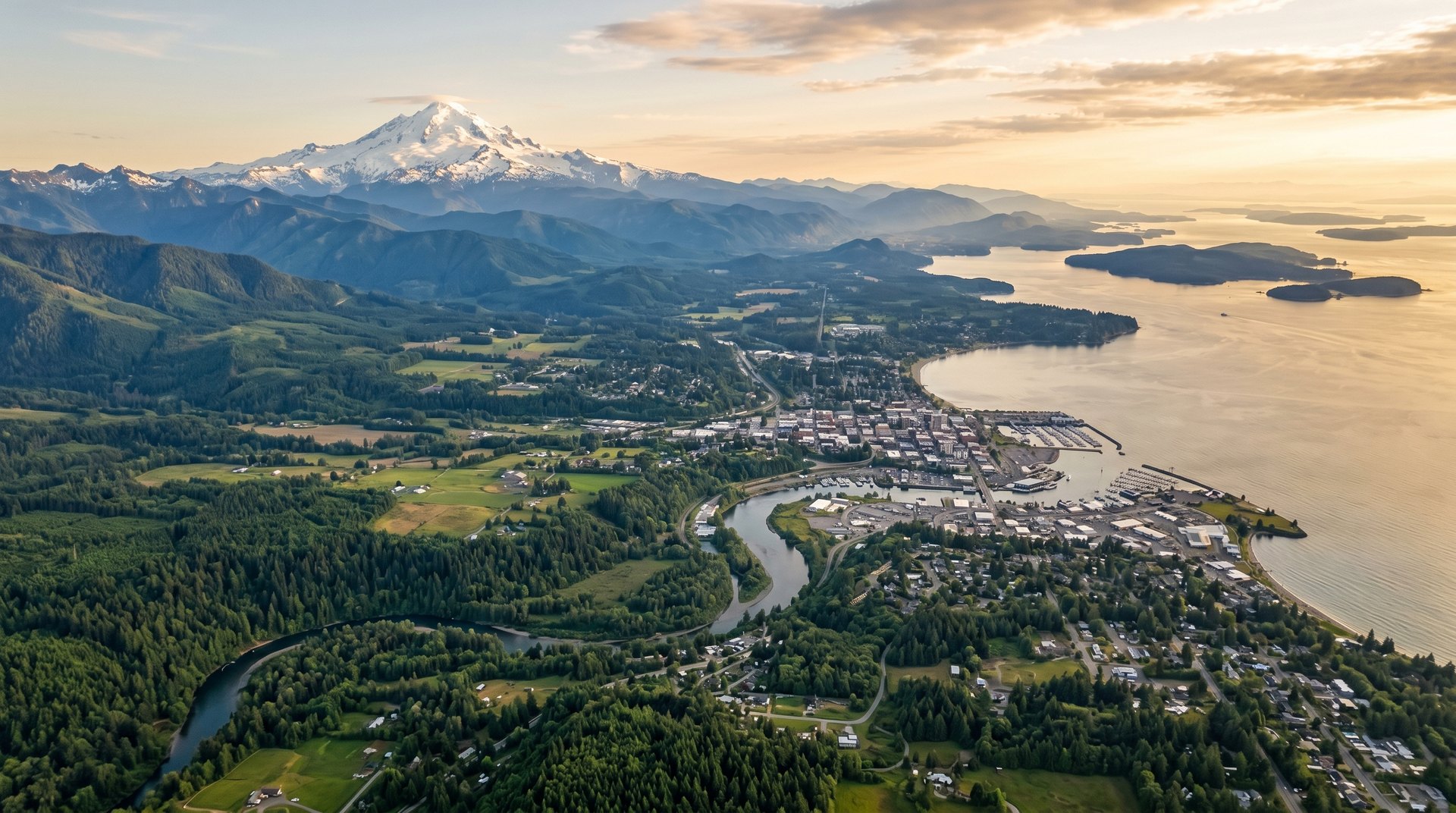
BELLINGHAM · WHATCOM COUNTY EVENTS
Ski to Sea.
Mountain to saltwater in a day.
Seven sports, eight racers, about ninety miles from the snow on Mt. Baker to the saltwater of Bellingham Bay — the one day that explains this whole county.
I’ve lived in Bellingham long enough to know which Sunday of the year the whole town shows up at the water, and it isn’t the Fourth of July. It’s Ski to Sea — our hundred-year-old, seven-sport relay that runs from the snow on Mt. Baker all the way down to the saltwater of Bellingham Bay in a single morning. After eleven years selling real estate here, I’ve come to think of it as the most honest advertisement Whatcom County has. You can’t fake what this race shows off: a county where the mountains and the sea are close enough to touch on the same day. Here’s the full rundown — what it is, the seven legs, the route, how to watch it, and how to get a team into it.
What Ski to Sea actually is
Ski to Sea is a relay. Eight teammates each take a leg, hand off to the next, and together move one timing chip from the top of the mountain to the edge of the bay — about 90 miles and a vertical mile of descent. Seven sports, in order: cross-country ski, downhill ski or snowboard, trail run, road bike, canoe, cyclocross bike, and sea kayak. It happens on the Sunday of Memorial Day weekend every year, and it draws several hundred teams — from sponsored hot-shots gunning for the record to family squads who mostly want the finish-line beer.
The genius of the format is that it uses the actual geography of where we live as the racecourse. Most relays loop a stadium. This one literally pours off a volcano, down a river valley, through farm country, and into the Salish Sea.
A race with hundred-year roots
Ski to Sea didn’t come from nowhere. Its ancestor was the Mount Baker Marathon, run from 1911 to 1913 — a wild, half-reckless dash where competitors raced by train or car from Bellingham to the foot of Mt. Baker, ran to the summit and back, and tore home. It was thrilling and genuinely dangerous (a racer fell into a crevasse in 1913), and the town shelved it.
The modern relay was revived in 1973 and has run every year since, now organized by the local nonprofit Whatcom Events. The bones are the same as that old marathon: start in the snow, finish in town, and let the mountain set the terms.
The seven legs
Here’s the whole chain at a glance, then a closer look at each leg with what makes it hard and where it’s worth standing to watch.
| Leg | Sport | Roughly | Where |
|---|---|---|---|
| 1 | Cross-country ski | ~4 mi | Mt. Baker Ski Area |
| 2 | Downhill ski / snowboard | short, with a run-up | Mt. Baker Ski Area |
| 3 | Running | ~8 mi, downhill | Mt. Baker Highway |
| 4 | Road bike | ~40 mi | Glacier down the valley |
| 5 | Canoe (2 paddlers) | ~18 mi | Nooksack River |
| 6 | Cyclocross / mtn bike | ~13 mi | Valley into Bellingham |
| 7 | Sea kayak | ~5 mi | Bellingham Bay to Fairhaven |
Eight racers, seven legs, roughly 90 miles top to bottom. Exact distances and hand-off points shift year to year — treat these as ballpark.
Leg 1 — Cross-country ski
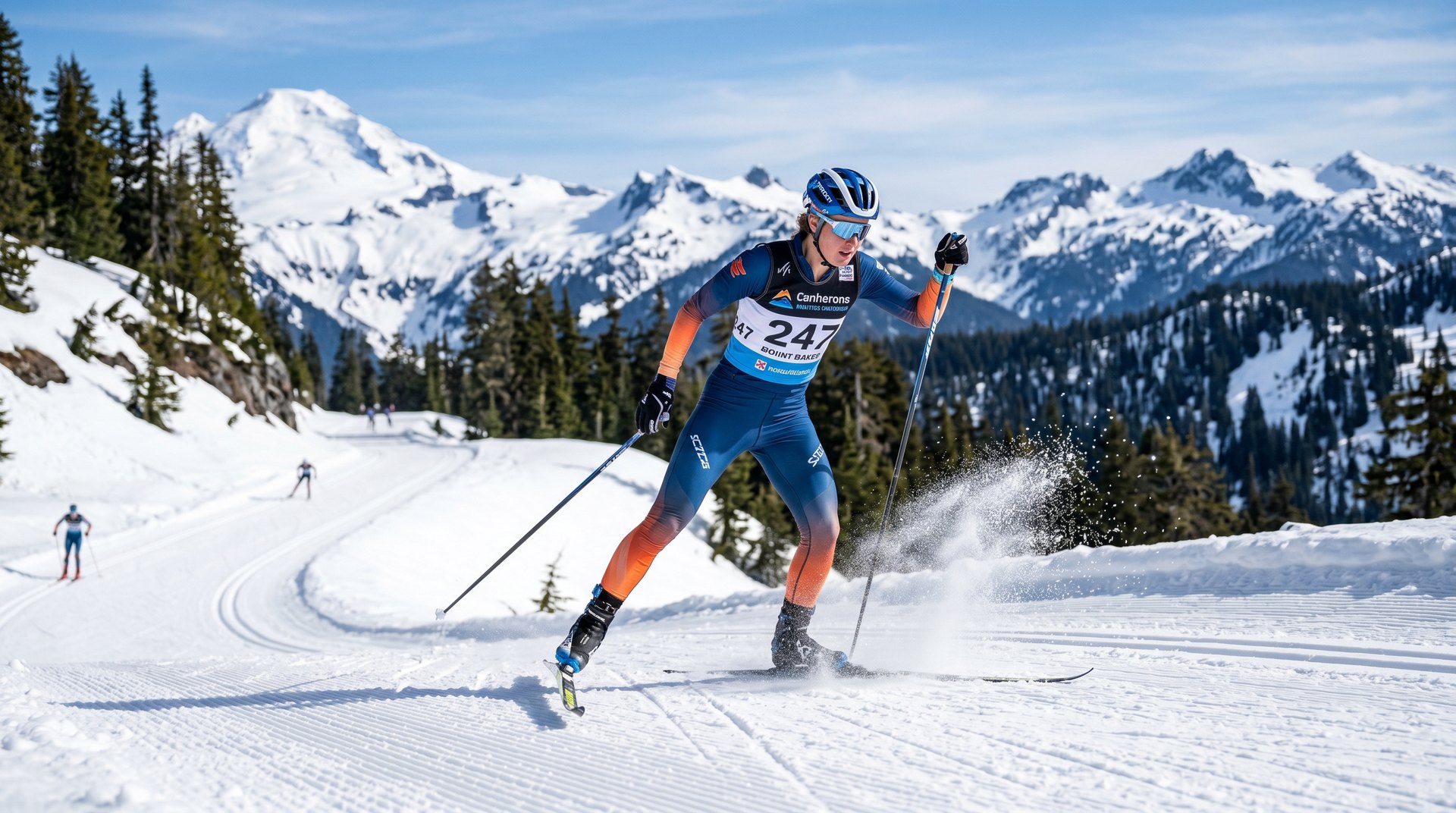
The day opens in the snow at the Mt. Baker Ski Area, around 4,000 feet. Skate skiers push roughly four miles of groomed track in thin mountain air. It’s the only leg most racers will spend in winter conditions — by the time the chip reaches the bay, the same teams are in shorts.
Leg 2 — Downhill ski or snowboard
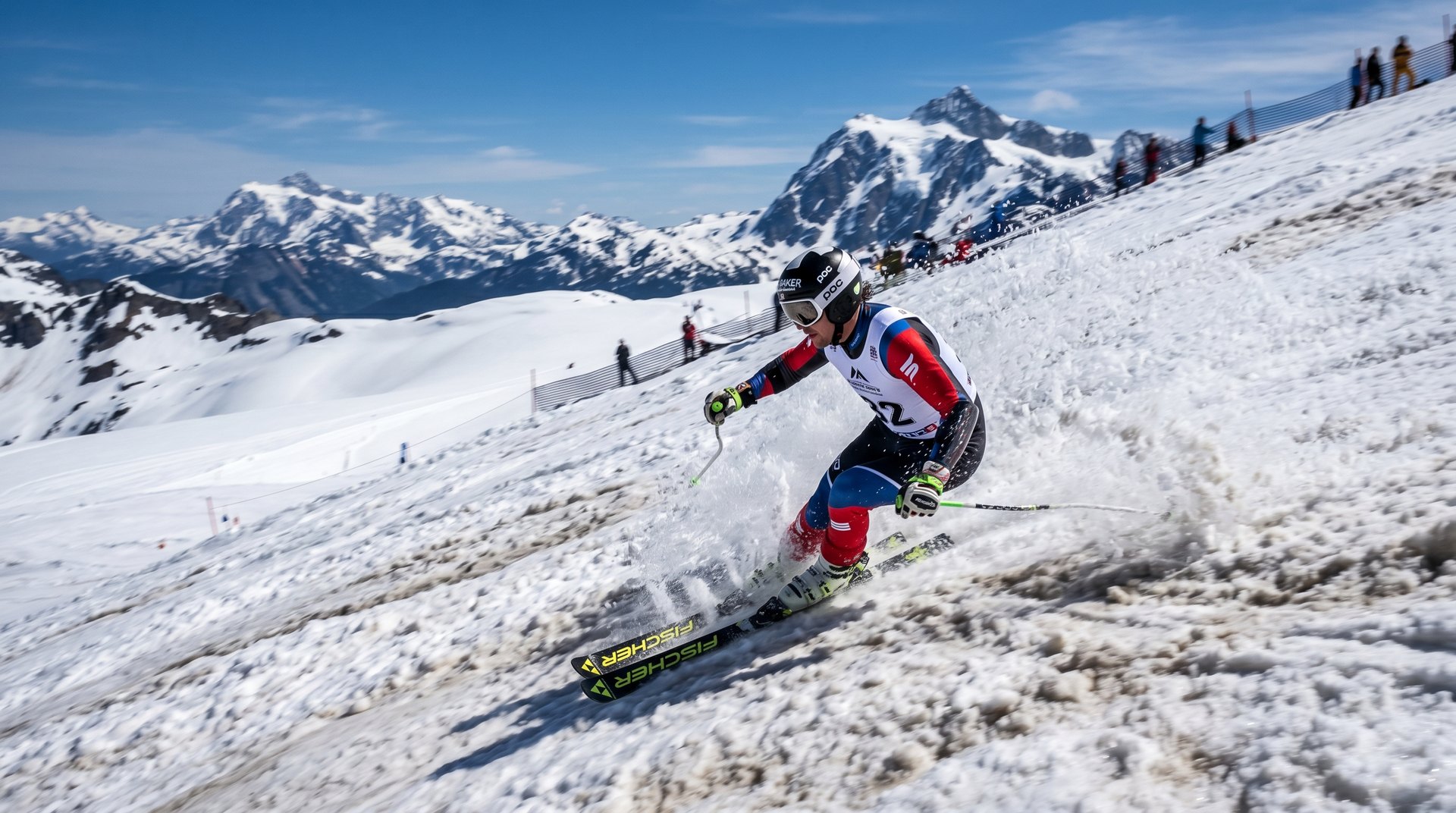
Short and theatrical. The racer runs uphill on foot to grab their gear, then skis or snowboards down the slope to the hand-off. It’s over fast, the run-up is brutal on the lungs at altitude, and it’s one of the best legs to watch because everything happens in front of you.
Leg 3 — Running
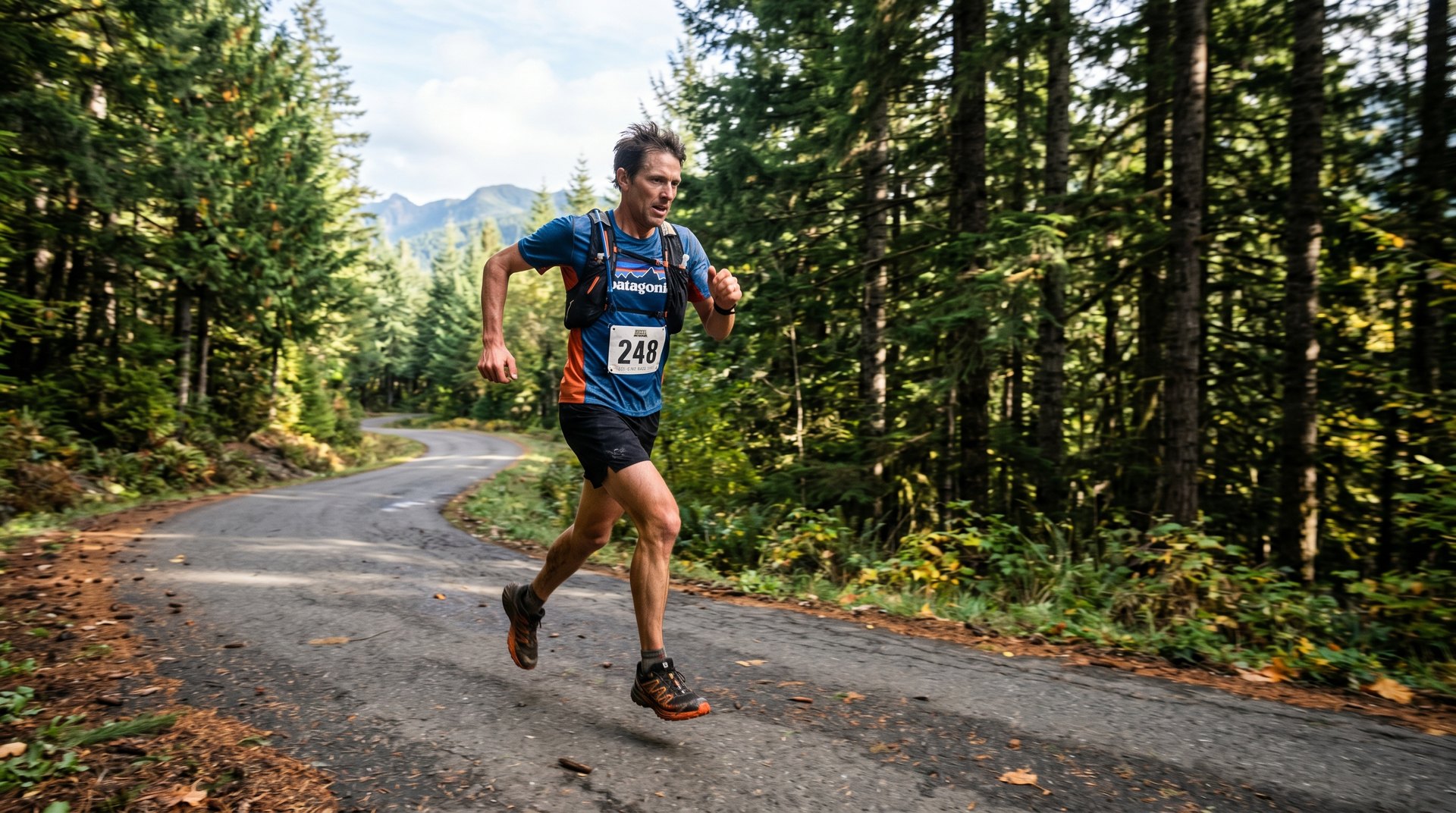
Now gravity helps. The runner pounds about eight miles downhill on the Mt. Baker Highway, which sounds easy until your quads remember that downhill running is its own kind of punishment. Fast, loud, and lined with cowbells.
Leg 4 — Road bike
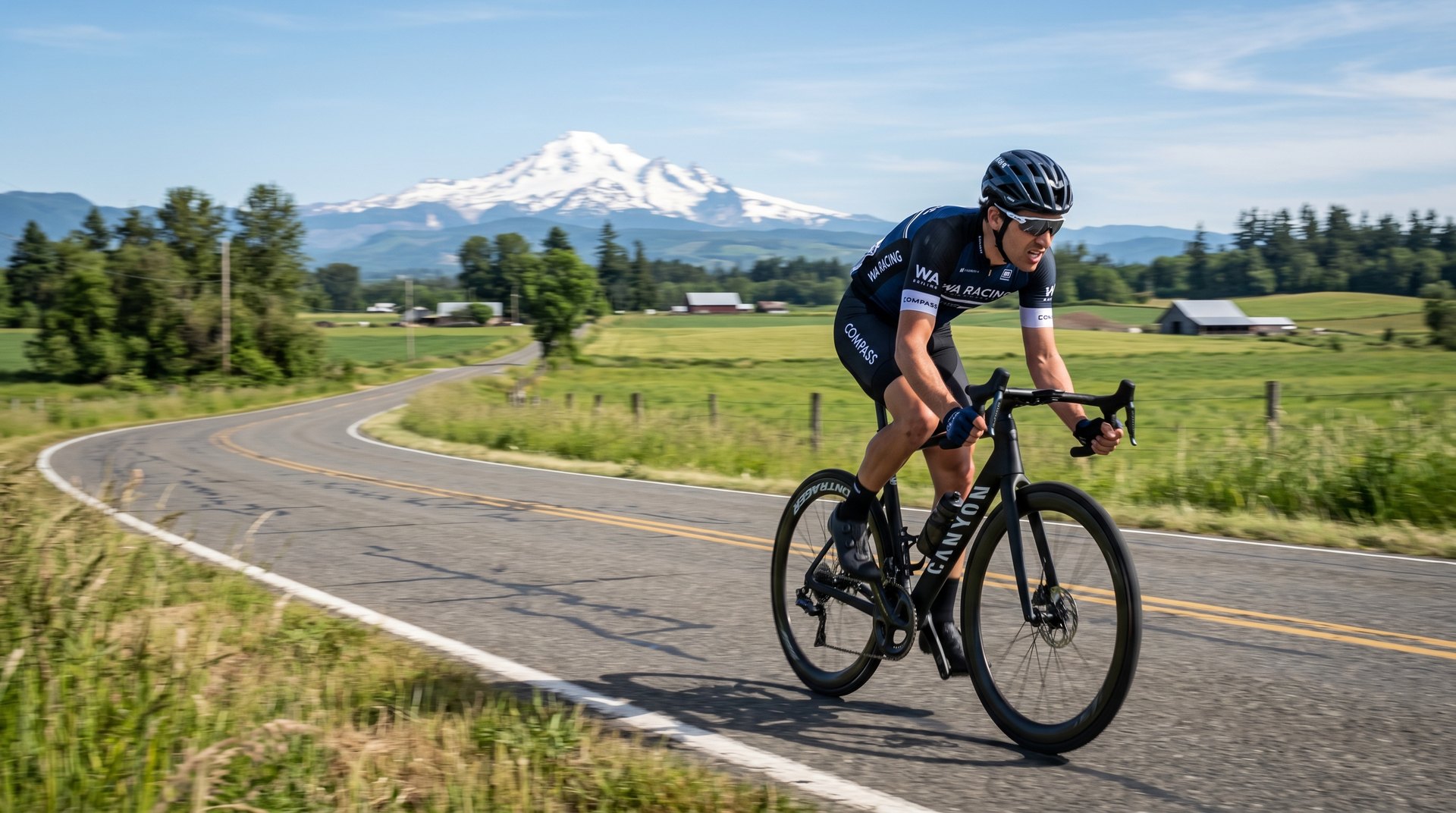
The longest leg — roughly forty miles of road cycling out of the foothills, through the town of Glacier and down into the green Nooksack valley with Mt. Baker filling the mirror. This is where the strong teams build or lose their lead, heads down over the bars on quiet farm roads.
Leg 5 — Canoe
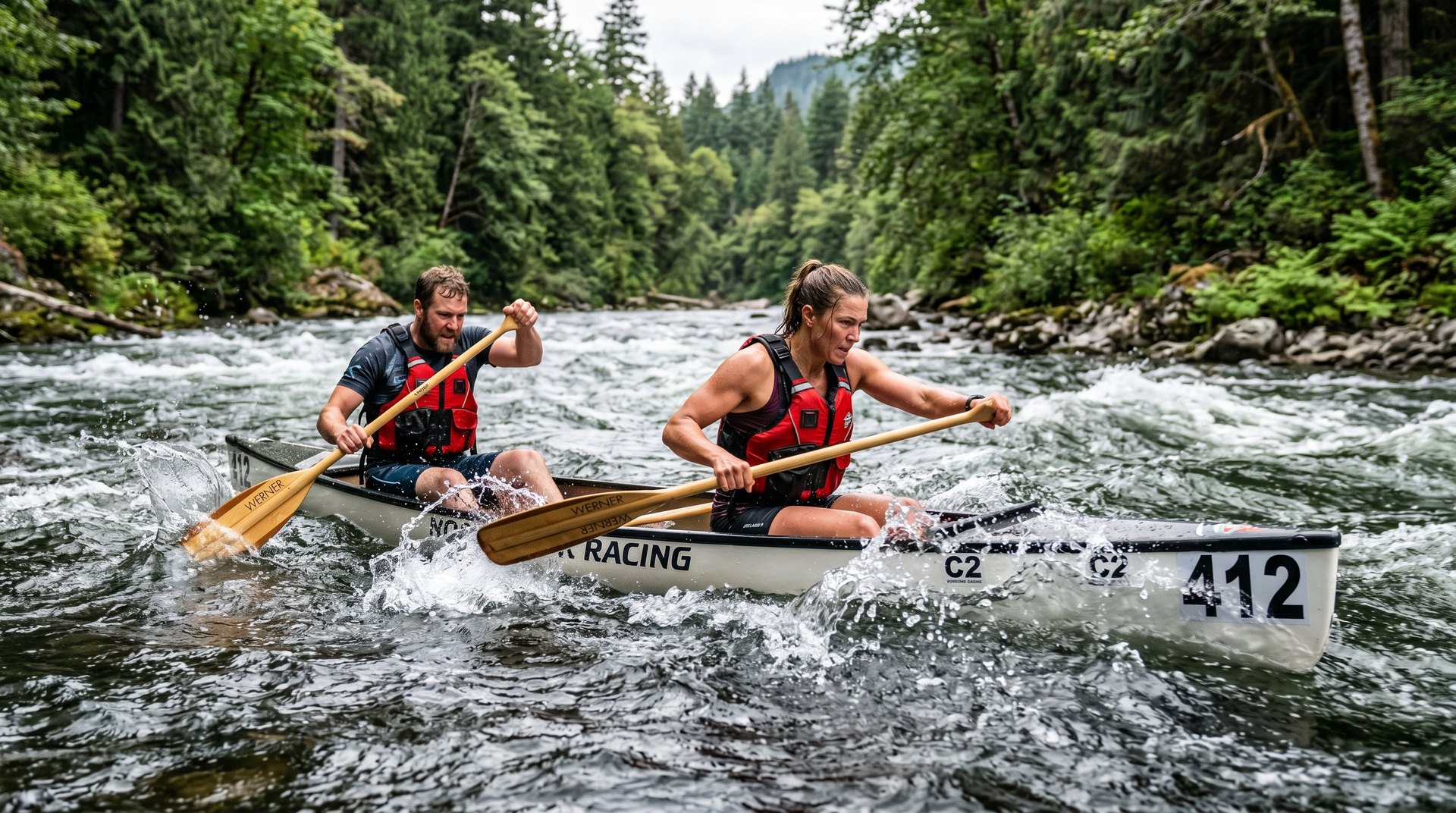
Two paddlers, one canoe, about eighteen miles of the cold, fast Nooksack River. The Nooksack runs on Mt. Baker snowmelt, so it’s pushy and frigid, and the canoe leg reliably produces the day’s best spectator theater — packed gravel bars, big cheers, and the occasional capsize. If you watch one leg, this is a contender.
Leg 6 — Cyclocross / mountain bike
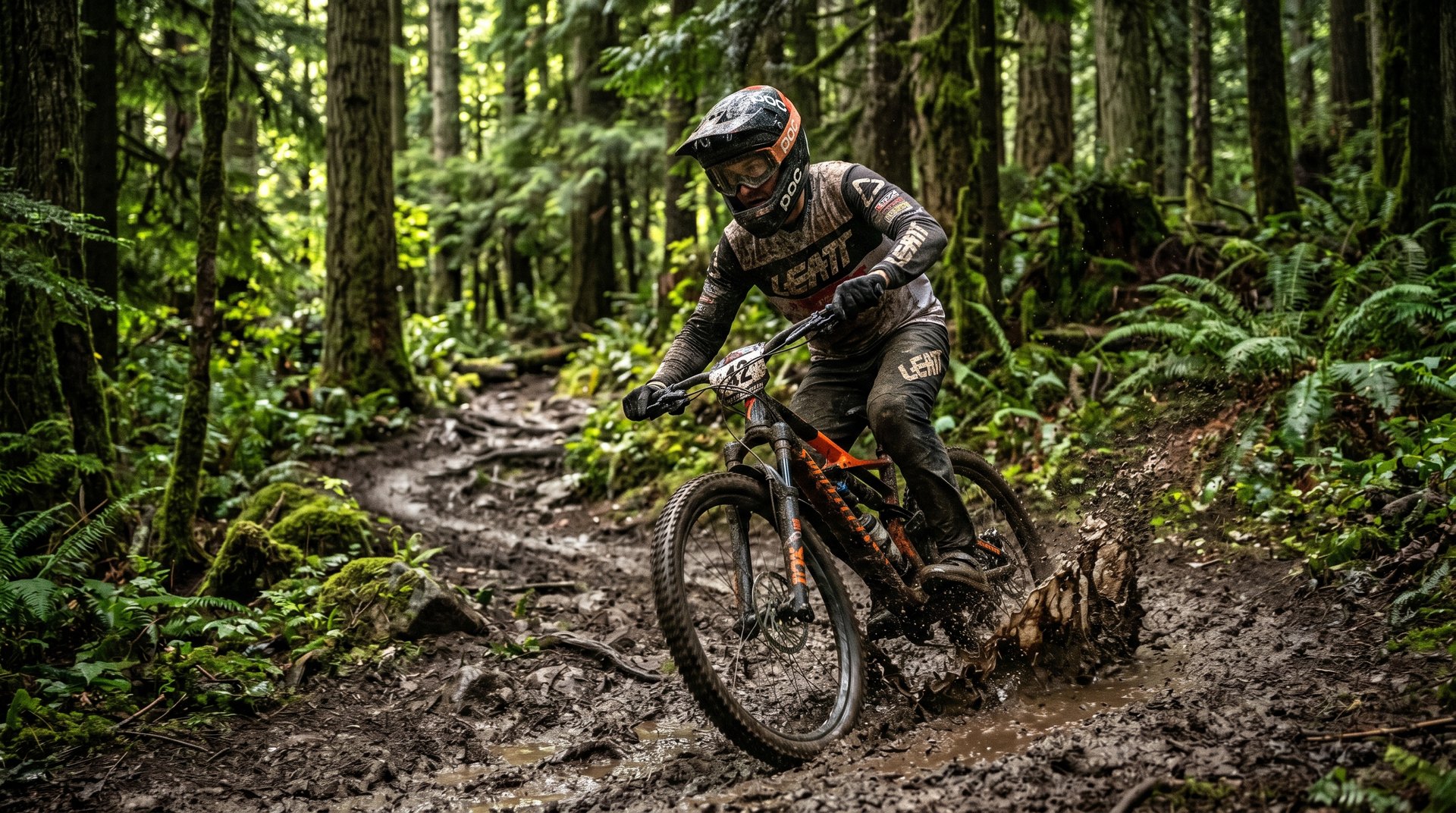
Off the river and onto the dirt. The cyclocross leg, roughly thirteen muddy miles, threads trails and back roads from the valley toward the Bellingham waterfront. If you ride, you’ll recognize the terrain — this is the same forest-and-loam riding that makes Galbraith Mountain famous a few miles south.
Leg 7 — Sea kayak
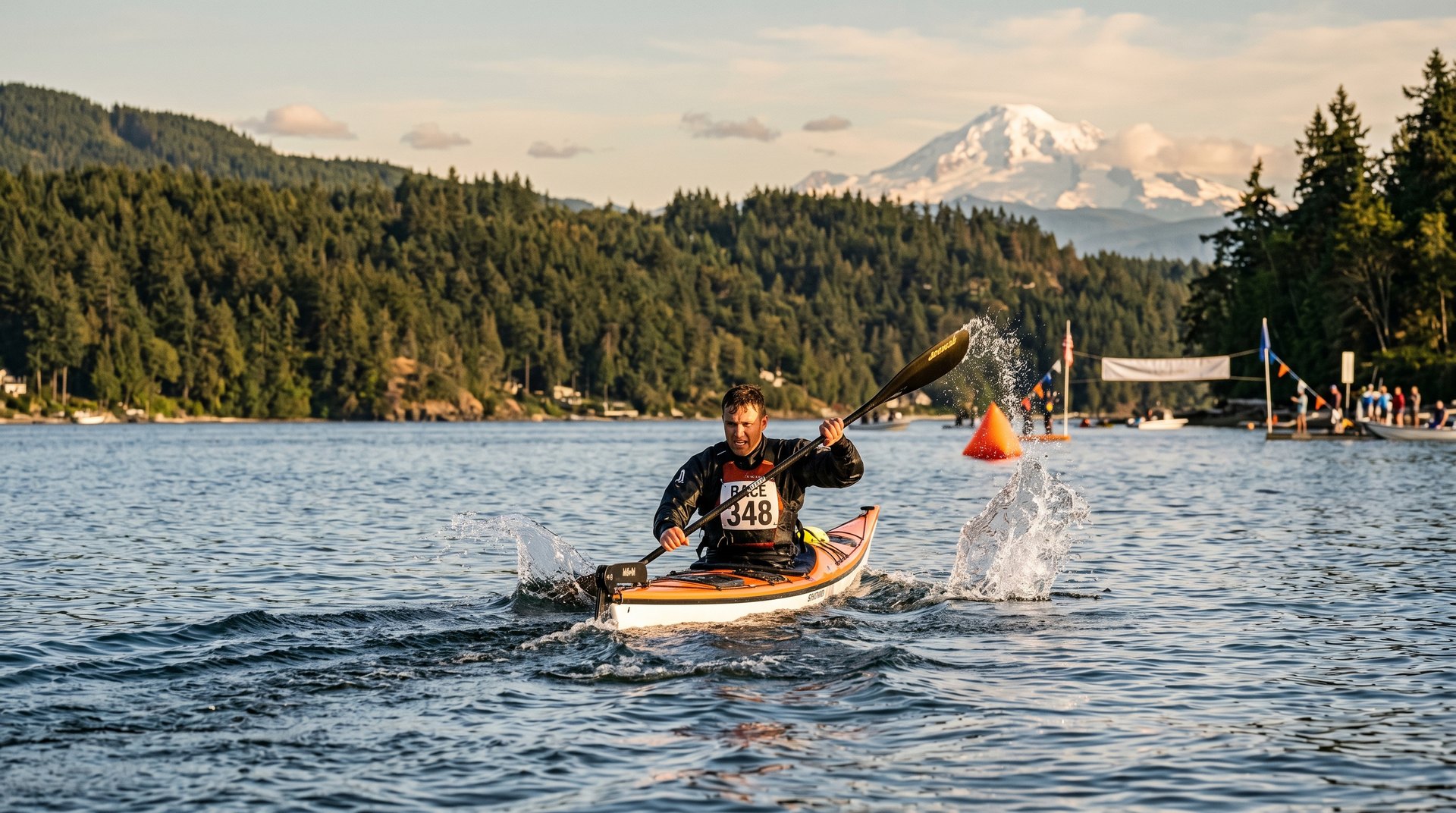
The finale, and the reason it’s called Ski to Sea. The kayaker launches into Bellingham Bay and sprints about five miles of open saltwater to the beach at Fairhaven. Crossing a finish line by paddling onto a gravel beach, with Mt. Baker still visible behind you where the day started, is about as Pacific Northwest as a finish gets.
The route: Mt. Baker to Bellingham Bay
Trace the course on a map and you’ve basically drawn a cross-section of Whatcom County. It starts in alpine snow at the ski area, drops through old-growth and the little mountain town of Glacier, follows the Nooksack River out of the Cascades, crosses dairy-and-berry farm country, and spills into the city at the water. Snow, forest, river, farmland, bay — in that order, in one morning. There’s no better way to understand why people who live here are so insufferable about the place.
The finish: the Fairhaven festival
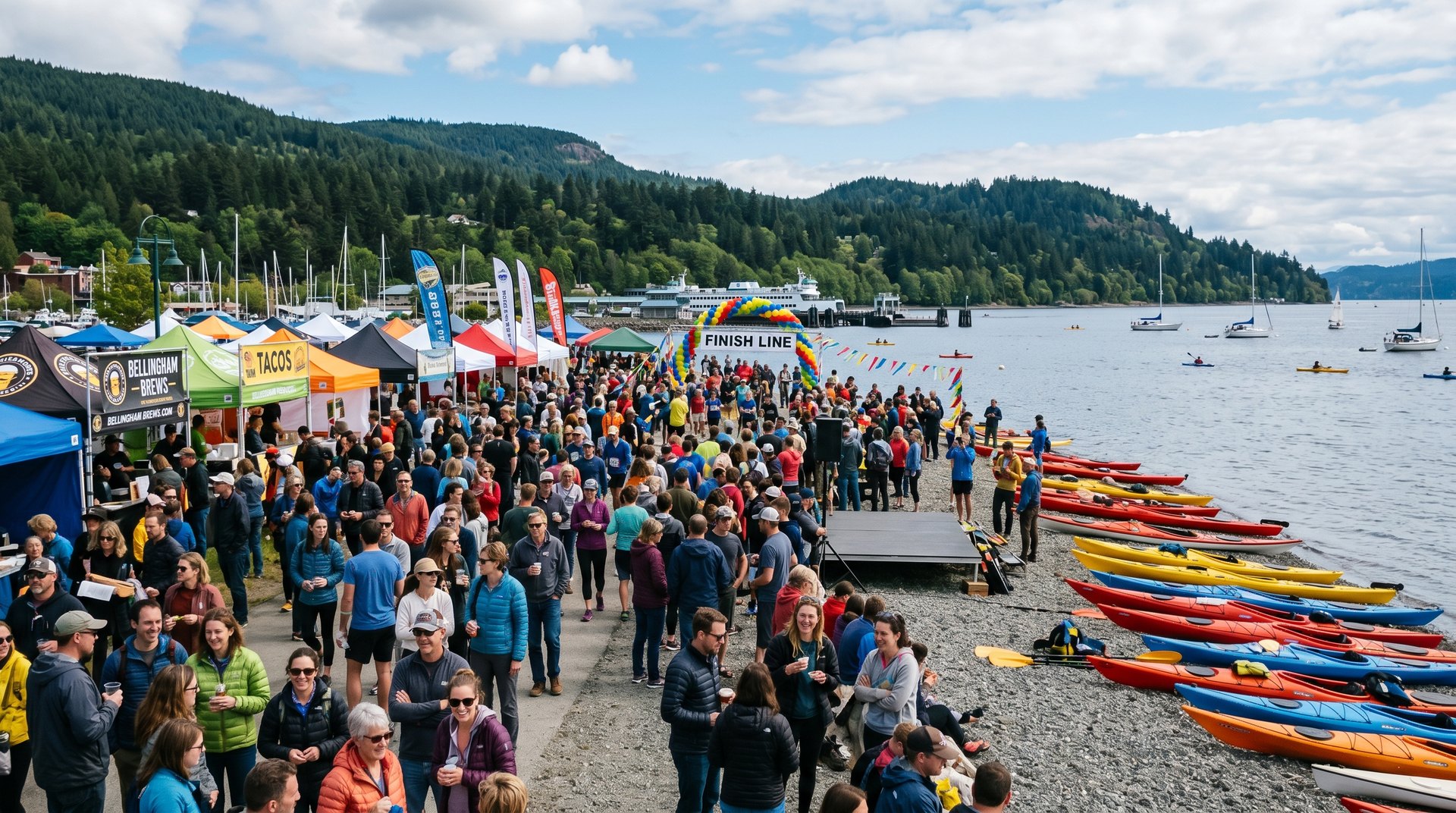
The whole day funnels into Marine Park in historic Fairhaven, where kayaks come ashore one after another and the finish area turns into a street-fair-on-the-bay: food trucks, a beer garden pouring local breweries, music, and several thousand people who came down to the water on a holiday Sunday. You do not need to know a single racer to have a great time here. Get there mid-afternoon, bring a layer, and post up where the kayaks land.
How to watch — a spectator’s guide
Spectating is free, and the trick is picking one or two spots rather than chasing the whole course (you can’t — it’s 90 miles). My honest advice:
For the mountain drama: head up to the Mt. Baker Ski Area early for the ski legs and the downhill run-up — it’s the most concentrated action of the day. For the best cheering: find a public access point along the lower Nooksack for the canoe leg; it’s the rowdiest, most spectator-friendly stretch. For the party: skip straight to the Fairhaven finish festival in the afternoon. Roads along the course see rolling closures and the ski area fills up, so leave early, carpool, and be patient.
Want to race? How teams work
You don’t have to be elite to do Ski to Sea — you have to be willing to find eight people and commit one of them to the cold river. Teams enter by category: competitive, recreational, family, high-school, and corporate, so a crew of weekend athletes lines up in the same event as the record-chasers. Each racer needs the gear and basic competence for their leg (the kayak and canoe legs in particular want real water experience — this is cold, moving water, not a pool).
Registration opens in late winter through Whatcom Events, and popular categories sell out, so teams that want in start organizing months ahead. If you’ve just moved here and want the fastest way to meet people, talk your way onto a recreational team — there’s no better instant community than eight strangers who suffered through a relay together.
Why Ski to Sea is the most Bellingham thing there is
I send this race to out-of-state buyers all the time, because it answers the question they’re really asking better than any spec sheet can. People considering a move here want to know what the life is — and Ski to Sea is the life, compressed into one day: real mountains with real snow, a river you can paddle, forest singletrack, farm roads, and saltwater with islands on the horizon, all close enough to string together before dinner. Plenty of places have one or two of those. Almost nowhere has all of them in a 90-mile line.
If that’s the version of life you’re after, that’s the version I help people actually land in — the right neighborhood, the realistic budget, the honest version of the winters. Start with moving to Bellingham, browse the neighborhoods, and reach out when you want to talk specifics.
Ski to Sea — frequently asked
When is Ski to Sea?
Ski to Sea runs every year on the Sunday of Memorial Day weekend. The 2026 race was held on May 24; the next one lands in late May 2027. Plan on a late-May Sunday and you’ll be right.
How long is the race?
Roughly 90 miles in total, split across seven legs that drop from the snow at Mt. Baker all the way down to sea level at Bellingham Bay. The fastest competitive teams finish in a hair over six hours; recreational teams take longer and have more fun.
How many people are on a team?
Eight. There are seven legs, but the canoe leg is paddled by two people, so a full team is eight athletes — one each for cross-country ski, downhill, run, road bike, cyclocross bike and sea kayak, plus the canoe pair.
Where does it start and finish?
It starts high up at the Mt. Baker Ski Area and finishes at Marine Park in Fairhaven, on the Bellingham waterfront. The finish-line festival on the bay is the heart of the whole day.
What are the seven legs, in order?
Cross-country ski, downhill ski or snowboard, running, road bike, canoe (on the Nooksack River), cyclocross / mountain bike, and sea kayak. Each racer hands off to the next, mountain to sea.
Is it free to watch?
Yes. Spectating is free everywhere along the course, and the finish festival in Fairhaven is open to everyone — food, drinks, music and several hundred kayaks coming ashore. You don’t need a ticket to be part of it.
Can anyone enter a team?
Pretty much. Alongside the elite competitive division there are recreational, family, high-school and corporate categories, so you don’t have to be a pro — you just need eight people and a sense of humor. Registration opens in late winter and the field sells out, so teams sign up early.
How old is Ski to Sea?
The modern Ski to Sea has run since 1973, but its roots go back to the Mount Baker Marathon of 1911–1913 — an early, gloriously dangerous race from Bellingham to the summit of Mt. Baker and back. Today it’s organized by the local nonprofit Whatcom Events.
What river is the canoe leg on?
The Nooksack River. It’s cold, fast and fed by Mt. Baker snowmelt, which is exactly why the canoe leg produces the most cheering — and the most capsizes — of the day.
Want the mountains and the sea in the same day?
That’s the thing Ski to Sea is really advertising — a place where you can put your boots in the snow and your boat in saltwater between sunrise and dinner. It’s the exact reason most of my buyers move here. I’m a local broker who does this move all the time; if you’re starting to wonder what it would take to live in Whatcom County, let’s talk it through — no pressure, no script. Start with the moving-to-Bellingham guide or just reach out.