
COLORADO → BELLINGHAM · RELOCATION GUIDE
From Colorado to Bellingham.
The honest math.
No income tax, real powder, saltwater — and the gray winters you need to know about before you move.
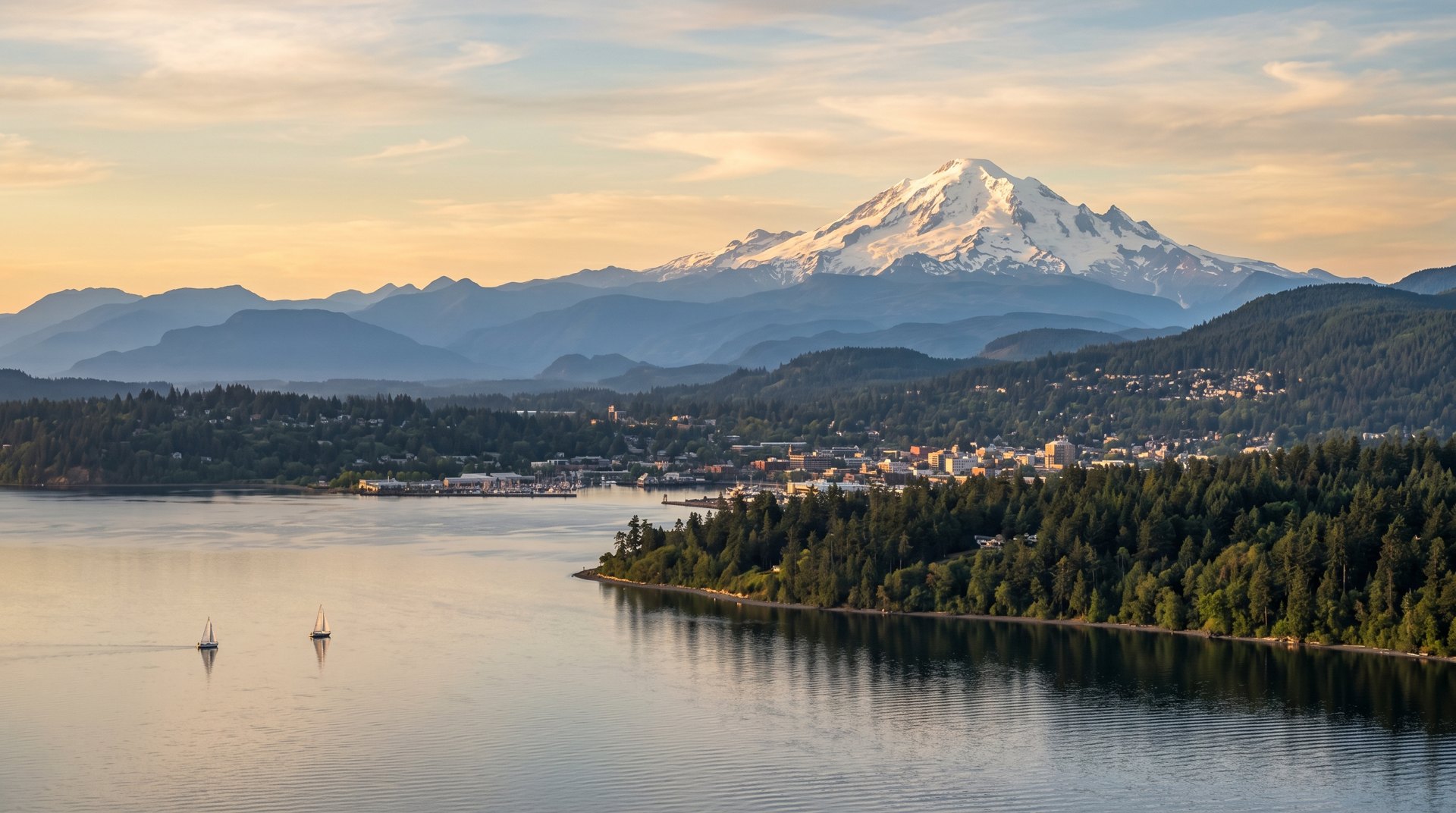
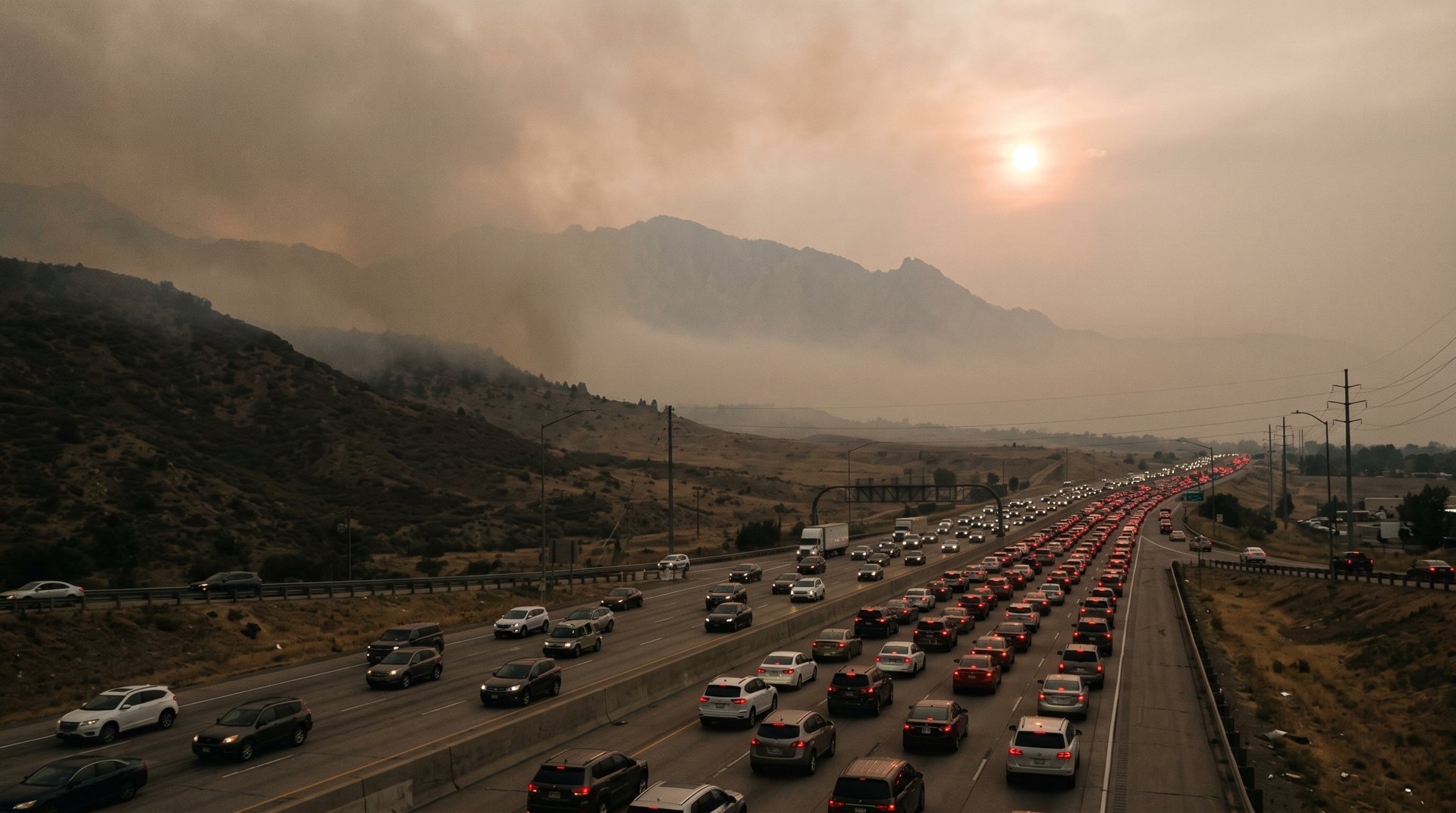
I talk with Front Range people constantly who are done with Denver’s version of itself — not the Colorado they moved there for, but the version with $9 breakfasts in RiNo, two hours of stop-and-go on I-25, and an August skyline that smells like someone started a campfire three states away. They want the outdoors-first life, the real mountains, the culture that doesn’t take itself too seriously. They’ve started looking north, and Bellingham keeps coming up. So let me be the honest broker about this particular move — what you gain, what you genuinely give up, and what the numbers actually say. Because there are real trade-offs here, and I’d rather you know them from me than discover them on your own after you’ve moved.
The equity reset, in actual numbers
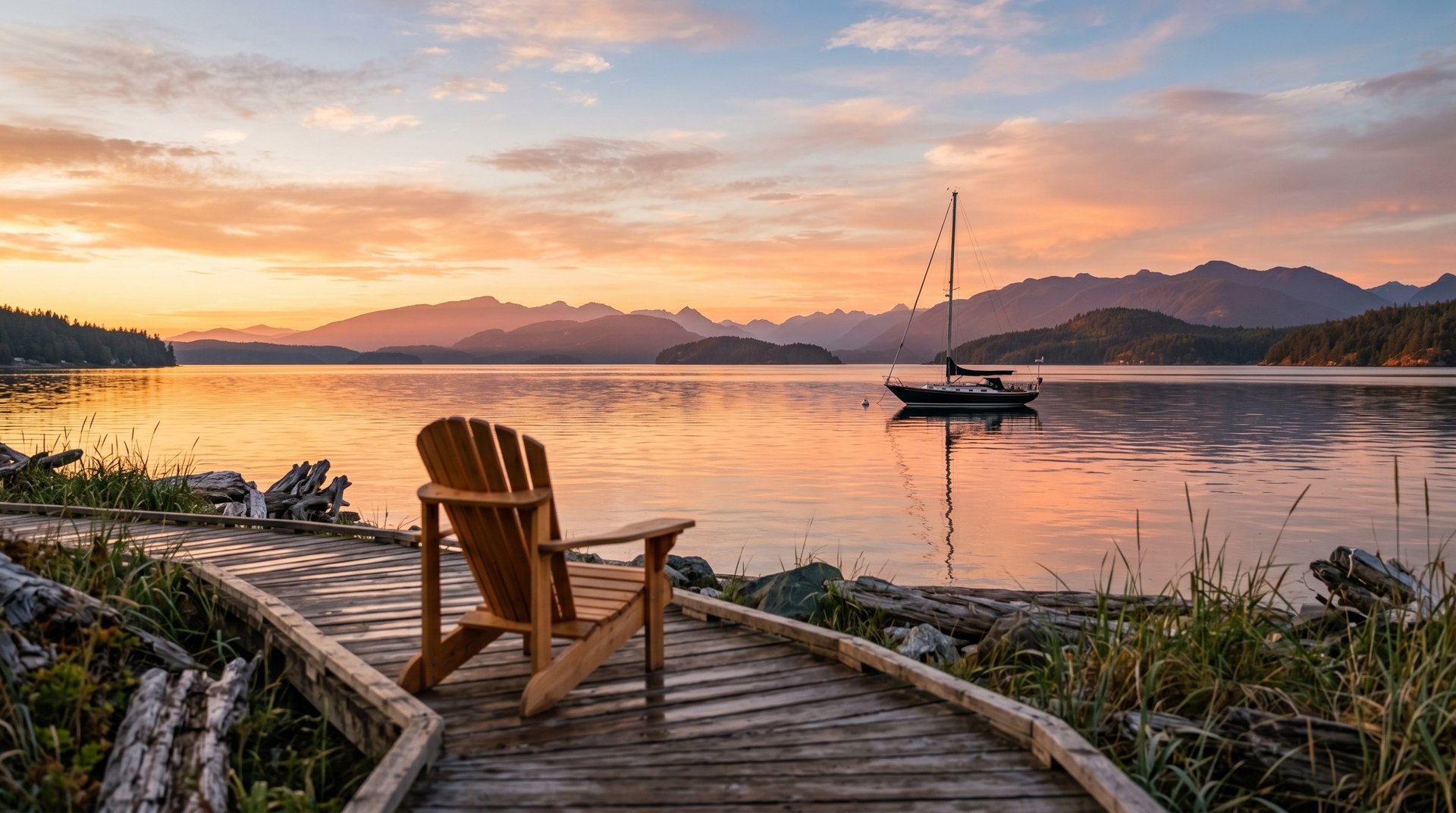
Let me say the uncomfortable thing first: you are not moving somewhere cheaper. The numbers are close, and where you land on the Front Range matters a lot, but Bellingham is not a discount market relative to Denver.
Here is the comparison table, using current figures:
| Colorado (Denver-area) | Bellingham, WA | What’s different | |
|---|---|---|---|
| Median single-family sale price | ~$595,000 | ~$650,000 | BLI is ~$55K higher |
| Effective property tax rate | ~0.55% | ~0.85% | CO is notably lower |
| Annual property tax (on median) | ~$3,270 | ~$5,525 | ~$2,255/yr more in WA |
| State income tax | 4.40% flat | 0% | ~$8,800/yr saved on $200K income |
| Sales tax (city) | 9.15% (Denver) | 8.81% | Nearly identical |
| Typical summer high | 88°F (dry) | 72°F (marine) | Cooler, more humid |
| Typical winter low | 22°F (sunny/dry) | 35°F (wet/gray) | WA milder, much cloudier |
| Gas (avg/gallon, 2025) | ~$4.27 | ~$5.66 | WA notably higher |
| Groceries | ~2% above national avg | ~5–8% above national avg | Both above average |
| Annual sunny days | ~245 | ~185–200 | CO wins, clearly |
A few things to unpack in that table:
The equity story depends entirely on where you’re coming from. If you own in Boulder (median north of $900K), you bring real cash to the table. Coming from a mid-tier Denver suburb at $550K, it’s roughly a wash — your proceeds buy a comparable Bellingham home without a windfall left over. And if you’re in an affordable Colorado town where homes are still under $400K, Bellingham will feel like a step up in price. Run your specific numbers before you fall for a listing.
The property-tax truth. Colorado genuinely has some of the lowest property taxes in the country — effective rate around 0.55%, tenth-lowest nationally per the Colorado Sun. Whatcom County runs closer to 0.85%. On a $650,000 Bellingham home, that’s roughly $5,525 a year versus what would have been about $3,270 on a similar Colorado purchase. That gap is real and I won’t pretend it away.
The income-tax win is real, but it’s the main win. Colorado’s flat 4.40% income tax disappears entirely when you become a Washington resident. On a household earning $150,000 that’s $6,600 a year back in your pocket. On $200,000, it’s $8,800. Retirement income — Social Security, pensions, IRA and 401(k) withdrawals — is entirely untaxed in Washington. For people drawing down accounts in retirement, this is often the headline number. Add back the higher property tax (~$2,200/yr on comparable values) and you still net ahead materially if you have solid earned or retirement income.
Gas is the other honest hit. Washington consistently runs $1.25–$1.40/gallon higher than Colorado. If you drive a lot, budget for it.
The worked example, Boulder edition: Sell a $960,000 Boulder home, net ~$850K after realtor fees and closing costs. Buy a $760K Bellingham home (Edgemoor or a strong Fairhaven property). You’re left with roughly $90K in the bank after closing, and you’ve eliminated $42,000/year in Colorado income tax on a dual-income household earning $190K combined. The math works clearly. Call me to run your specific scenario — I do this walk-through as a normal part of the conversation.
Cost of living, line by line
The honest picture is mixed — Bellingham is not cheaper across the board, and Colorado is not as affordable as it used to be.
What gets cheaper (or disappears):
State income tax. This is the headline item. Washington has no state income tax, full stop. Not on wages, not on a small business, not on retirement distributions. Colorado’s flat 4.40% is gone the day you establish Washington residency. This is money that used to leave your account every April that now stays.
I-70 mountain corridor costs. Not a line item in the budget, but real: the hours lost to the ski-traffic gauntlet, the gas burned sitting in the parking lot that used to be an interstate, the wear on your nerves every January weekend. Mt. Baker is about an hour from downtown Bellingham on a two-lane road. No reservation system, no $45 parking fees, no standing in the westbound exit queue at 3 p.m. Sunday.
The Ski Pass math. Ikon and Epic passes have inflated dramatically for Colorado’s marquee resorts. Baker’s season pass runs significantly less, and the product — genuine Cascades powder, a vertical that punches above its price — is legitimately world-class.
What stays about the same:
Sales tax. Denver’s combined rate ticked up to 9.15% in 2025 after voters approved a ballot measure funding Denver Health. Bellingham sits at 8.81%. Essentially a wash; you won’t feel this one.
Groceries. Both markets run above the national average. Colorado is roughly 2% above; the Pacific Northwest runs 5–8% higher. Real but not dramatic.
What gets more expensive:
Gas. Already noted: Washington runs ~$1.25–$1.40/gallon more than Colorado. This is structural — Washington’s fuel taxes and blend requirements are among the highest in the country. If you commute by car and drive over 20,000 miles a year, it adds up.
Property tax. Covered above. Colorado’s 0.55% effective rate versus Whatcom’s ~0.85% is the clearest financial cost of this move. It doesn’t wipe out the income-tax gain for most households, but it’s not trivial.
Housing itself. If you’re coming from affordable Colorado, Bellingham costs more to buy into. If you’re coming from Boulder or premium Denver, it costs less. Know where you are on that spectrum.
The climate — the honest part

This is the section where I risk losing you, and I’d rather lose you here than after you’ve moved.
You are trading something real. Denver gets roughly 245 sunny days a year — genuinely more than Miami, more than Los Angeles on some measures, and far more than people expect from a high-altitude mountain city. The air is dry and thin and the sun is intense. Even a cold January day in Denver is often brilliant blue overhead. That is a quality of life that is harder to quantify than a tax rate, and it is the thing Coloradans miss most when they move to the Pacific Northwest.
Bellingham gets somewhere between 185 and 200 days with meaningful sunshine annually. The gray stretches from early November through late March are real, persistent, and long. Rainfall averages 36–40 inches a year — roughly three times Denver’s annual precipitation. It is not dramatic rain most of the time; it’s drizzle, overcast, soft. But it is relentless in those winter months. I tell every Coloradan who’s seriously interested: visit in January. Not July, when Bellingham is genuinely spectacular. January. Walk around, go for coffee, take a trail. If the soft gray sky makes you feel cozy and calm, you’ll probably be fine. If you feel your mood dropping after two days, that’s important data.
What you gain in the exchange:
No 88°F afternoons in July. Bellingham’s summer highs run in the low 70s with long daylight and typically low humidity from late June through September. It is flat-out beautiful and mild in a way that Colorado’s high desert summer — increasingly punctuated by heat warnings and ozone action days — is not.
No wildfire smoke. The Front Range logged 41 days exceeding federal ozone limits in the summer of 2024. 2025 was better (23 days), but the structural trend of deteriorating summer air quality on the Front Range is real and documented. Colorado has been out of compliance with federal ozone standards for over two decades. In Bellingham, you get occasional drift smoke on bad regional years, but you are not living under a smoke-haze dome from late July through September the way increasingly many Front Range summers feel.
No -20°F cold snaps and no chinook-whiplash. Bellingham rarely drops below the high 20s. January lows average around 35°F — cold enough to be damp and uncomfortable sometimes, but not the bone-cold dry freeze of a Denver January. No pipes freezing. No starting your car with your gloves on.
The green. After dry, brown Colorado winters and the high-desert palette of the eastern slope, the mossy evergreen lushness of the Bellingham area is a genuine visual shock. Everything is alive, thick, and dark green year-round. Some people find it oppressive. Most Coloradans I’ve worked with find it beautiful.
One more thing: sea level. Coming down from Denver’s 5,280 feet, most people feel meaningfully better — better sleep, easier exercise, no dry nosebleeds, no altitude headaches when a friend comes to visit.
My honest advice: plan a November visit before you put your Front Range home on the market. It’s the only way to know whether the gray fits you.
Why people leave Colorado
The people who call me from Denver aren’t leaving Colorado the ideal — they’re leaving Colorado the current reality. Here’s what’s actually driving them.
The Front Range is crowded and expensive in a way that feels recent. Denver added nearly a million people in fifteen years. The city that felt like a hidden gem in 2010 is now the third most expensive state in the country for cost of living. Rents, restaurant prices, grocery bills, and the general texture of daily life have repriced to match. The things that made it feel like a bargain — cheap rent near downtown, cheap season passes, affordable homes within 30 minutes of trails — are largely gone.
I-70 is a defining frustration. Every Front Range skier knows the feeling: two hours to cover 60 miles on a Sunday afternoon, sitting in a line of brake lights all the way from the Eisenhower Tunnel back to Golden. CDOT’s Floyd Hill expansion won’t be finished until 2028. The mountain corridor has been studied, discussed, and partially managed for decades, and the fundamental problem — too many people chasing too few lanes to too many resorts — isn’t being solved. People who moved to Colorado specifically to ski are increasingly questioning whether they actually ski, or whether they just sit in I-70 traffic twice a month.
Summer air quality has changed. This is the most underreported push factor. The Front Range’s ozone problem is structural — geography, vehicle density, altitude, and heat all combine in a way that regularly pushes air quality into unhealthy ranges during summer. Add wildfire smoke from Colorado’s own burn seasons and from neighboring states, and the “clear mountain air” marketing claim has become increasingly strained. Summers that used to feel pure now come with air quality alerts, brown haze over the Flatirons, and days where running outside isn’t advisable.
Density anxiety. The thing Coloradans came for — open space, elbow room, a slightly slower culture — has compressed. Traffic. Trailhead parking lots overflowing at 7 a.m. The feeling that the place is running over capacity. Bellingham at 95,000 people feels, to a lot of Front Range expats, like what Colorado felt like fifteen years ago.
Commute reality — can you still work?
The honest answer for most of my Colorado clients: yes, if you’ve already gone remote or can negotiate it. The direct answer to “can I work in Bellingham while keeping my Denver employer”: probably yes, and here’s how it actually plays out.
The geography: Denver to Bellingham is 1,392 miles by road — roughly 20 hours of driving. You’re not commuting this. The question is whether your work model lets you live here.
Flights: Denver International (DEN) to Bellingham International (BLI) runs a direct nonstop on Alaska Airlines — about 2.5 hours gate-to-gate. When you need to be in Denver for a meeting, it’s a morning flight and an evening return. I have clients who do this once a month. Seattle (SEA) is 90 minutes south and offers considerably more flight options and frequencies if your Denver office needs you there regularly; Alaska, Southwest, Delta, and United all run SEA-DEN multiple times daily.
Remote-work landscape: Bellingham has decent fiber infrastructure (Comcast, CenturyLink, and several smaller providers), and there’s a real co-working culture here — the city has attracted a meaningful tech-worker and remote-professional population over the last several years, partly from Seattle overflow and partly from exactly the kind of Front Range relocation we’re talking about. The timezone (Pacific, one hour behind Mountain) is genuinely convenient for maintaining Denver or Colorado relationships — you’re awake before them every morning.
If you’re an employer yourself: Washington has no income tax but does have a Business & Occupation (B&O) tax on gross receipts. It’s worth a 30-minute conversation with a WA-licensed CPA before you move — for most small businesses it’s manageable and often still a net tax win after eliminating personal income tax.
The commute within Bellingham: This is one of the genuine surprises for Front Range expats. Bellingham is small. The longest commute from one end of the metro area to the other is maybe 20 minutes. Interstate 5 runs north-south through town and is essentially uncongested compared to I-25 or I-70. People here complain about “traffic” and it’s genuinely funny to anyone who’s spent time on Colorado’s roads.
Buying a home here without flying up six times
Most of my Colorado clients complete their Bellingham purchase without being here more than one or two nights total. Here is exactly how that process works.
Step one: the long-range narrowing call. Before you look at a single listing, we spend an hour on the phone — where you live now, how you actually spend a Saturday, what you earn, what you need, what you’re willing to give up. I’ve done this enough times with Coloradans specifically that I can map your Front Range lifestyle to two or three Bellingham neighborhoods with reasonable confidence. That call saves you from flying out to tour homes in the wrong part of town.
Step two: video-first touring. I walk every serious contender on a live video call. Not the listing agent’s curated walk-through — a real one. I point the camera at the busy arterial visible from the backyard. I walk into the unfinished basement corner. I stand on the street and show you the neighbor’s fence and the power lines. I’m a licensed videographer; this is genuinely part of my practice, not a workaround. Most of my Colorado clients have eliminated four out of five homes before they ever book a flight.
Step three: the 1–2 day decision trip. When you’ve narrowed to two or three homes you’d seriously consider buying, we book a trip. You fly into Bellingham (BLI) or Seattle (SEA — rental car is 90 minutes). In a focused day or two, you walk the homes, walk the neighborhoods, get coffee in the areas you’re considering. This is a decision trip, not an exploration trip. You already know where you’re going and why.
The Washington offer process. WA is a strong seller’s market in Bellingham specifically. Earnest money here typically runs 1–3% of purchase price. Washington law allows robust inspection contingencies, and I build them into every offer for out-of-state buyers — you have the right to walk away if the inspection reveals something material. We use e-sign throughout; you never need to be physically present to submit or accept an offer.
Coordinating with your Colorado sale. Most Coloradans sell first and buy second. Colorado has a reasonably liquid resale market in most price tiers — just longer than the 2021–22 frenzy — and a simultaneous sale/purchase coordinated across 1,400 miles is a normal thing I do. Chicago Title here in Bellingham has a working relationship with Colorado title companies that makes the dual-closing logistics clean. We can also discuss bridge financing if the timing doesn’t line up perfectly.
Start with the buyer’s guide for the process overview, then reach out and we’ll build your specific plan.
Schools — the comparison families ask about
Colorado has a decent public school system overall — Cherry Creek, Douglas County, and Boulder Valley regularly rank among the state’s and nation’s better districts. Bellingham’s school picture is genuinely strong, though different in character, and there are some rural choices nearby that put Bellingham’s district to shame on certain metrics.
Bellingham School District serves the city proper with seven K–8 schools and two comprehensive high schools (Bellingham High and Squalicum High). AP enrollment is solid, and the district has a strong dual-language immersion program at several elementary schools. The district’s graduation rate sits above 90%, and it consistently rates among the stronger urban districts in Washington state.
Ferndale School District, immediately north, has drawn families specifically because of its schools — newer facilities, tight community feel, and consistently strong test scores. Several of my Colorado families with kids have settled in Ferndale specifically after visiting the district.
Lynden School District covers the farming community 10 miles north and is worth a look for families prioritizing a tightly-knit, conservative community with strong athletics and extracurriculars. It consistently outperforms state averages.
Western Washington University (WWU) is right here in Bellingham — about 16,000 students on a hillside campus overlooking the bay. Its presence keeps the city younger, culturally active, and intellectually engaged in a way that mid-sized cities without a university often aren’t. For families with high-school-aged kids who want a college feel nearby, or for people who want easy access to lectures, arts events, and a university library, WWU is a legitimate quality-of-life asset.
For families with specific school concerns — special education resources, gifted programming, particular sports — get me on a call and I can walk through options by neighborhood. Ferndale and Lynden in particular are worth the 15-minute drive if schools are your primary filter.
Five Bellingham neighborhoods Colorado buyers tend to land in

Front Range transplants come in a few distinct flavors. Here’s where they actually end up.
Edgemoor — for the Boulder or Cherry Creek buyer. If you’re coming from a premium Front Range address — a classic Boulder bungalow, a Washington Park Tudor, a Hilltop Denver square — Edgemoor is probably your Bellingham landing zone. It’s the city’s established, mature neighborhood: large lots with old-growth trees, view properties over Bellingham Bay, walking distance to Fairhaven, and homes that were built to last. Price point runs $700K–$1.2M for the nicest stuff. The buyers who love Edgemoor are the ones who want settled, canopy-covered streets and don’t need new construction amenities.
Fairhaven — for the walkable-neighborhood Coloradan. Fairhaven is Bellingham’s historic village district — think a miniature, saltwater version of the Pearl District or parts of Capitol Hill, with actual walkability, independent coffee shops, a bookstore, a hardware store, and the water visible at the end of the street. The buyers who end up here are often empty-nesters or remote professionals who came from walkable Denver neighborhoods and refuse to give that up. It also has the best restaurants in the city. Homes run $650K–$950K for the right properties.
South Hill — for the family relocating from a good suburb. South Hill is quieter, newer, and sits above downtown with easy highway access. If you’re coming from Parker, Highlands Ranch, or a solid Douglas County address, you’ll recognize the DNA: good schools nearby, quiet streets, newer construction, a bit more yard. Less character than Edgemoor, more practical for a family with two cars and a dog. Homes here generally $550K–$750K.
Barkley — for the new-construction suburban buyer. Coming from Stapleton, Lone Tree, or a newer Broomfield subdivision? Barkley is your neighborhood — master-planned, trail-connected, newer builds, good amenities access, and a price point that’s more accessible than the waterfront neighborhoods. It’s Bellingham’s answer to the well-executed Colorado suburb. Some buyers find it a bit generic; others find it exactly right.
Sehome / Columbia — for the academic, creative, or car-light buyer. The area near Western Washington University and the Sehome Arboretum has a completely different energy — walkable, mixed-character, older homes on interesting streets, close to the university farmers market and the Sehome trail network. If you’re coming from a Boulder Hill or University Hill neighborhood in Denver, this registers immediately as your zone. Prices tend to be a bit more accessible than Edgemoor or Fairhaven.
Tell me your Colorado neighborhood, how you spend a Saturday, and whether you have kids — I’ll narrow these five to two in about ten minutes.
The lifestyle shift — what changes
The pace is genuinely slower, in ways that Front Range people either love immediately or find jarring for the first few months. Denver has the energy of a city that’s been trying to prove itself for twenty years. Bellingham has nothing to prove. It’s 95,000 people who mostly moved here for quality of life and mostly found it. The local culture is outdoor-first, unpretentious, food-and-coffee serious, and not particularly interested in status displays. That takes some adjustment if you’re coming from a startup-culture, hustle-culture, or high-achievement-culture professional environment.
The water changes your sense of distance. You can be on Bellingham Bay in 15 minutes. The San Juan Islands are accessible by ferry. There is a fundamentally different relationship to the horizon, and to weather, and to the idea of going somewhere, when saltwater is that close. Colorado is a beautiful, landlocked place. Most people who grew up near an ocean have a low-grade longing for it that they’ve talked themselves out of. Moving here scratches that itch in a way that’s hard to describe to someone who hasn’t experienced it.
You stop dreading August. This is underrated. After years of Colorado summers defined by smoke advisories, heat warnings, and haze, Bellingham in July and August is mild, green, and clear. The light is extraordinary — long evenings, low sun, everything slightly luminous. People who’ve been through a few Front Range smoke seasons particularly notice the difference.
You will miss the sun in November, February, and March. I’m not going to talk you out of that. Be honest with yourself about what you need.
Frequently asked
Is the Colorado to Bellingham move tax-positive after you account for higher property tax?
For most households with meaningful income, yes. Colorado’s 4.40% flat income tax disappears entirely when you move to Washington — that’s $6,600 saved on $150K of income, $8,800 on $200K. You give back roughly $2,255 per year more in property tax on a comparable home value. The net for a mid-to-high income household is clearly positive, typically by $4,000–$6,000 a year or more. For a retiree drawing down accounts, the income-tax savings on distributions can be even more significant. Colorado’s property tax is genuinely low — this is not a move you make primarily for the property-tax savings. The income-tax story is what makes the financial case.
What is the winter actually like compared to Colorado’s?
Milder in temperature — Bellingham rarely drops below the high 20s, while Denver regularly hits the teens and occasionally lower. But far grayer and wetter. Colorado’s winter is cold and sunny; Bellingham’s is mild and relentlessly overcast. No snow shoveling, no furnace at 4 a.m., no black ice on a brilliant January morning, but also no brilliant January mornings. Visit in November before you commit — it’s the most honest test.
Can I still ski?
Yes, and possibly better. Mt. Baker Ski Area is about an hour from downtown Bellingham — no I-70 traffic, no resort fees for parking, world-record season snowfall (1,140 inches in the record year). It’s a no-attitude mountain: no valet, no VIP lines, just deep Cascades powder. Coloradan skiers who visit Baker tend to become evangelists. The trade-off is fewer resort options within an easy drive compared to the Summit County corridor.
Is Bellingham more expensive than Denver?
For housing, it runs slightly higher on current medians — roughly $650,000 in Bellingham versus $595K in Denver proper. Boulder buyers typically land with equity to spare. Denver-metro buyers at current prices will find it close to a wash. Gas and groceries are meaningfully more expensive in Washington. The income tax savings is the offset that makes the full picture often positive for higher earners.
What’s the catch with the wildfire smoke comparison?
Bellingham does get smoke in bad regional fire years — there are seasons where Canadian or eastern Washington fires push haze into the Salish Sea area for a week or two. But this is categorically different from the Front Range situation, where local wildfires, high-altitude geography, and urban ozone combine to make extended periods of unhealthy air a recurring seasonal reality. The Front Range had 41 days exceeding federal ozone limits in summer 2024. Bellingham doesn’t have that problem structurally.
How do I handle buying in Bellingham while selling in Colorado simultaneously?
This is a normal part of my practice — I’ve done many dual-state closings and have solid relationships with both Colorado-side agents (I can refer you to someone good) and with Chicago Title here in Bellingham, which handles the WA escrow. Most of my out-of-state buyers sell first and buy second; the timing can be managed with a short bridge, a temporary rental, or careful contingency structuring. The remote buying process I use — video tours, e-sign, remote close — makes the logistics clean even when the transactions are 1,400 miles apart.
Will the altitude change be noticeable coming from Denver?
Noticeably positive for most people. Coming down from 5,280 feet to sea level, most newcomers report better sleep within the first few weeks, easier cardiovascular exercise, and no more dry nosebleeds or the altitude fatigue that shows up when friends come to visit from lower elevations. A few people find the marine air heavier than Denver’s thin, dry air and need an adjustment period. Most consider it an upgrade.
Thinking about Bellingham?
Tell me where in Colorado you’re coming from, your budget, and how you work, and I’ll send two or three neighborhoods that fit plus what’s active. If you have a place to sell first, a home valuation is the place to start.