
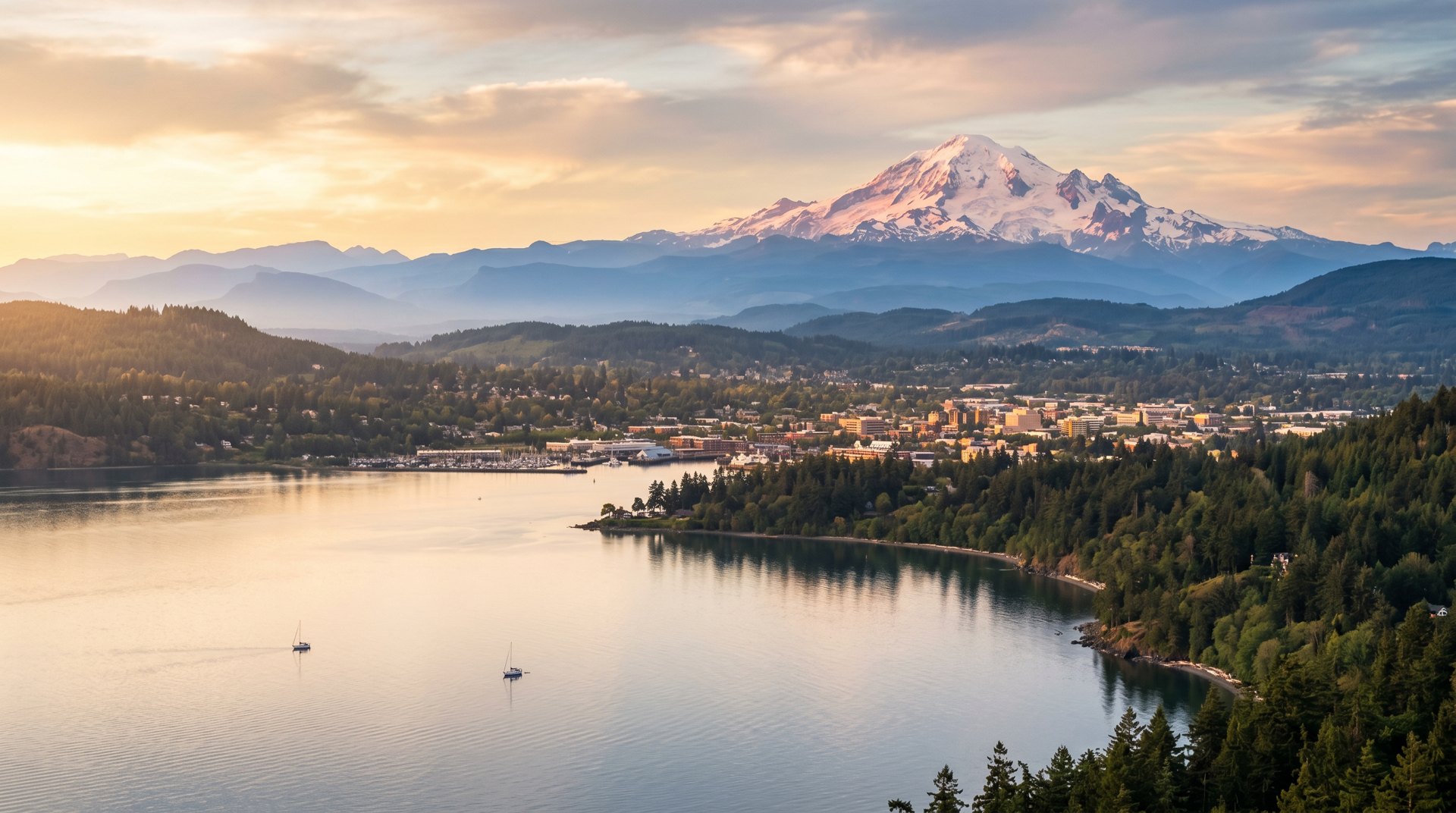
SAN DIEGO → BELLINGHAM · RELOCATION GUIDE
From San Diego to Bellingham.
The honest math.
You’re trading the best climate in America for an equity reset, zero income tax, and four real seasons.
San Diego–to–Bellingham is the move I spend the most time being honest about. You’re not trading up on weather — San Diego has the best year-round climate in America, and Bellingham has roughly 230 gray days. What I tell every San Diego buyer is this: the math has to be so good that you can look at a February drizzle and not feel cheated. For most people making this call in 2025 and 2026, the math is exactly that good — $1.1M median sale price, 0% Washington income tax, and an equity reset that often funds the Bellingham purchase outright with cash to spare. But if you need sunshine to feel like yourself, I’ll tell you that plainly too.
The equity reset, in actual numbers

San Diego’s median single-family home hit $1,100,000 in May 2026, up from $1,015,000 a year prior. That is not a typo. A mid-tier home in North Park, Hillcrest, or Oceanside sells above seven figures. A home in Encinitas, Carlsbad, or La Jolla can clear $1.5M to $3M. Those numbers are compressing equity into the homes of people who bought five or ten years ago — and Bellingham is where a meaningful share of that equity is landing.
Here is the direct comparison of where the two markets sit today:
| San Diego | Bellingham | What’s different | |
|---|---|---|---|
| Median single-family price | $1,100,000 | $650,000 | You clear ~$374K+ after buying here outright |
| Property tax effective rate | ~1.19–1.37% | ~0.85% | SD Mello-Roos + bond levies push the rate up |
| State income tax | 1–12.3% (+ 1% surcharge >$1M) | 0% | The most important line on this table |
| Sales tax | 7.75% | 8.8% | Bellingham is slightly higher here |
| Typical commute | 35–55 min (I-5/I-8 congestion) | 15–22 min | Night-and-day difference |
| Gas (regular, per gallon) | ~$5.45 | ~$4.00 | Bellingham meaningfully cheaper |
| Groceries vs. national avg | +13% | Near national avg | San Diego groceries are pricier |
| Utilities (monthly avg) | ~$400 | ~$200–$250 | San Diego energy costs are extreme |
The worked equity example. Sell a $1.1M San Diego home: net proceeds after 6% selling costs land around $1,034,000. Buy a $650,000 Bellingham home with $10,000 in closing costs: total $660,000. Cash remaining after the move: approximately $374,000 — enough to fund years of living or invest outright. For someone coming out of La Jolla at $2M, the leftover cash exceeds the entire Bellingham purchase price.
The income tax flip. California’s income tax runs from 1% to 12.3%, with a 1% Mental Health Services surtax on income above $1 million, and a payroll surcharge that can push effective rates past 14% on high wage income. Washington has zero state income tax. For a San Diego household earning $200,000 per year, that flip saves roughly $18,000 to $22,000 annually depending on filing status and deductions. Compounded over 20 years at a conservative 6% return, you’re looking at $650,000 to $800,000 in wealth that simply wouldn’t have existed in California.
The property tax comparison deserves nuance. San Diego’s Prop 13 base rate is 1%, but Mello-Roos Community Facility Districts and voter-approved bond levies push effective rates to 1.19%–1.37% in many ZIP codes — notably higher than Bellingham’s ~0.85%. On a $1.1M San Diego home, you’re paying $13,090–$15,070 per year in property taxes. On a $650,000 Bellingham home at 0.85%, you pay $5,525. The property tax savings alone are more than $7,500 annually.
Cost of living, line by line
The number that surprises San Diego buyers most is utilities. San Diego Gas & Electric is one of the most expensive utility providers in the United States. Residents pay on average $400 per month for electricity, gas, and water combined — partly because SDG&E’s rate structure and partly because the mild climate creates year-round demand without the seasonal breaks that moderate usage elsewhere. In Bellingham, a comparable home runs $200–$250 per month for all utilities. The savings are immediate and permanent.
Gas is another line that surprises. San Diego averaged around $5.45 per gallon in 2026. Bellingham is running near $4.00. If you drive 15,000 miles annually in a 28-mpg car, you burn about 535 gallons per year. That gap costs San Diego drivers roughly $780 more per year just in fuel — and the San Diego commute is longer, so you’re burning more of it.
Groceries in San Diego run about 13% above the national average. Bellingham is close to national average. For a family of four spending $1,200 per month on food in San Diego, expect to spend around $1,050–$1,080 in Bellingham. Not transformative, but real.
What gets more expensive in Bellingham: sales tax. San Diego charges 7.75%; Bellingham charges 8.8%. On a $40,000 annual spend on taxable goods and services, you’d pay about $420 more per year in Bellingham. That is a rounding error against the income tax and utility savings.
Auto insurance also tends to run lower in Bellingham. San Diego’s high-density urban driving, theft rates, and accident frequency push premiums up. Expect to pay 15–25% less for comparable coverage in Bellingham.
The overall picture: San Diego transplants consistently report a 30–40% reduction in monthly burn rate after moving to Bellingham. The biggest drivers are housing (if you’re still carrying a mortgage or rent in SD), income tax, utilities, and gas.
The climate — the honest part

I will not sugarcoat this. San Diego is climatically exceptional. It averages 266 sunny days per year, roughly 10 inches of annual rainfall, and temperatures that hover between 57°F in January and 72°F in August. You almost never need a jacket and almost never need to run your AC. There is no meaningful winter. The marine layer rolls in some mornings and burns off by noon. It is, genuinely, the best weather in the continental United States.
Bellingham averages approximately 145 fully sunny days per year and about 230 days that are cloudy, gray, or rainy. Annual rainfall is 36 inches. January lows hover around 33–35°F. The gray period runs from late October through late April — roughly six months of overcast skies, drizzle, and short days. It is not brutal cold. It is not ice and snow every week. It is relentless gray.
The summer payoff is real and worth describing carefully. July and August in Bellingham are genuinely beautiful — sunny days with highs around 72–75°F, low humidity, no heat dome, and long light until 9:30pm. The bay is calm, the trails are dry, kayaking and paddleboarding are excellent, and the nearby islands are world-class. Local farmers markets are overflowing. Outdoor dining is everywhere. People who moved from San Diego consistently say: “July and August here are better than anything in San Diego.” That is a real statement. The trade is that you get two exceptional months in exchange for six challenging ones.
Seasonal adjustment varies enormously by person. Buyers who come from the Pacific Northwest, the Midwest, or the East Coast often find Bellingham’s winters mild and manageable. Buyers who spent their entire lives in Southern California often struggle in year one. The ones who adapt successfully tend to: invest in outdoor rain gear rather than waiting for breaks, plan a two-week trip south each winter, build indoor routines (climbing gyms, coffee shops, books), and focus on the long-term financial picture when the gray gets heavy.
My standing recommendation for every San Diego buyer: plan a week in Bellingham in January or February before you sign anything. Not a scouting trip in July. A winter trip. Walk Fairhaven in the rain. Drive up to Chuckanut on a gray Tuesday. Sit in a coffee shop and watch the bay. If you feel settled and at peace, you’ll adapt. If you feel a low-grade dread, trust that signal.
Why people leave San Diego
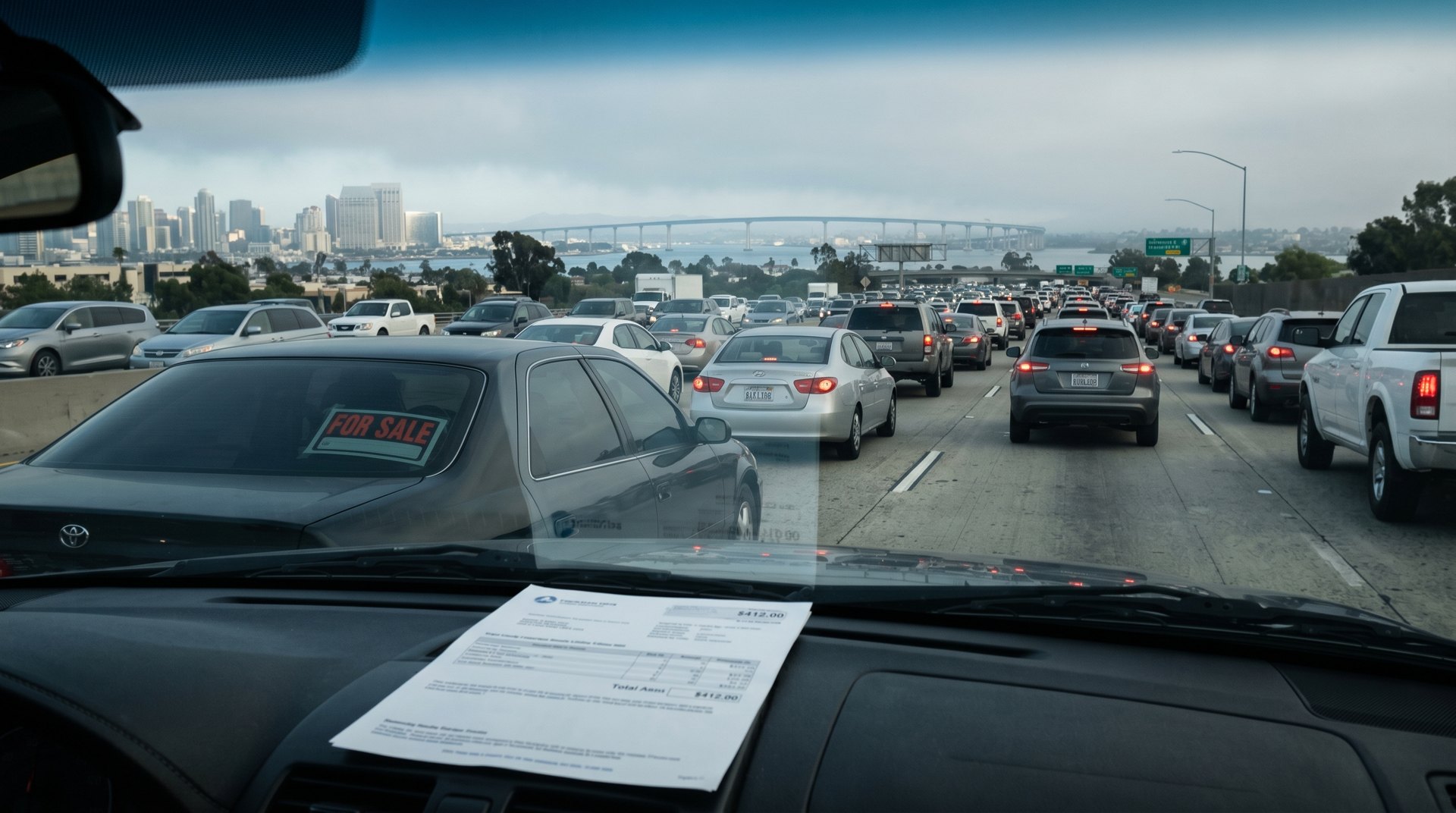
The push factors out of San Diego are real and they are accelerating.
Housing cost has reached a genuinely irrational level. A $1.1M median single-family price means a household needs to earn $220,000+ per year to comfortably carry a purchase — and that assumes 20% down ($220,000) and a principal-and-interest payment around $5,800 per month at current rates before taxes and insurance. Most San Diego households do not earn $220,000. The gap between what people earn and what homes cost has widened steadily since 2020, and it is pushing people out.
Insurance is getting harder and more expensive. Wildfire risk in San Diego County — particularly in the eastern and northern inland areas — has pushed multiple major carriers to restrict or exit the market. The FAIR Plan is a backstop, not a solution. Homeowners in fire-adjacent neighborhoods are paying $4,000–$10,000+ annually for coverage that would cost $1,200–$1,800 in Bellingham, and renewals are increasingly uncertain. The January 2025 Los Angeles fires sent a visible reminder through every San Diego homeowner’s inbox.
Water. San Diego is one of the driest large metros in the country. It imports roughly 85–90% of its water from the Colorado River and Northern California sources, both under long-term stress. Water rates have climbed every year for a decade. Drought-year restrictions are a recurring reality. Bellingham draws from the Nooksack River and faces none of these structural constraints.
Traffic. Interstate 5 through San Diego is one of the most congested corridors on the West Coast. A commute that looks like 12 miles on a map can take 50–70 minutes in practice. The congestion has worsened as San Diego’s population grew without proportional transit expansion. In Bellingham, a 12-mile commute takes 18 minutes.
Density and pace. San Diego County has 3.3 million people. Whatcom County has 240,000. That is a 14:1 ratio. Bellingham operates at a pace that many San Diego transplants describe as disorienting at first — in a good way. There is no gridlock, no parking wars, no feeling of constant competition for space.
Commute reality — can you still work?
San Diego’s largest employer sectors are defense and aerospace, biotech and life sciences, tourism and hospitality, technology, and healthcare. Of these, defense/aerospace tends to require physical presence (clearances, secure facilities). Biotech and tech are increasingly remote-friendly. Healthcare requires local presence.
If you are in a remote-eligible role, the move is clean. Washington has no state income tax, which means your employer does not need to do anything differently and you keep more of the same paycheck. If you are in a defense contractor role with a physical presence requirement at Miramar, SPAWAR, or a base facility, you need a conversation with HR before you commit to the move.
By air. Allegiant flies nonstop from San Diego (SAN) to Bellingham (BLI) in approximately 2 hours 58 minutes — a direct route that is genuinely convenient for quarterly office visits. Alaska and other carriers connect through Seattle (SEA) in about 5 hours total. SAN to SEA nonstop runs about 3 hours, with SEA roughly 90 minutes from Bellingham by car. Monthly trips back to San Diego run $150–$400 round-trip on Allegiant if you book ahead.
By car. The drive is 1,345 miles via I-5 North — roughly 20–21 hours non-stop, realistically a two-day drive with an overnight in the Redding or Medford area. Most people making the move hire movers and fly. The I-5 route is scenic in Oregon and southern Washington.
Seattle proximity. For buyers whose companies are headquartered in Seattle — Amazon, Microsoft, Boeing, Starbucks — Bellingham is an excellent base. Seattle is 90 miles south via I-5, roughly 80–90 minutes in light traffic, 2+ hours in rush hour. The Amtrak Cascades train also runs Bellingham–Seattle daily.
Vancouver, BC. The Canadian border is 30 minutes north of Bellingham. If your work has any Canada-facing component, this is a meaningful advantage that San Diego cannot offer.
Buying a home here without flying up six times
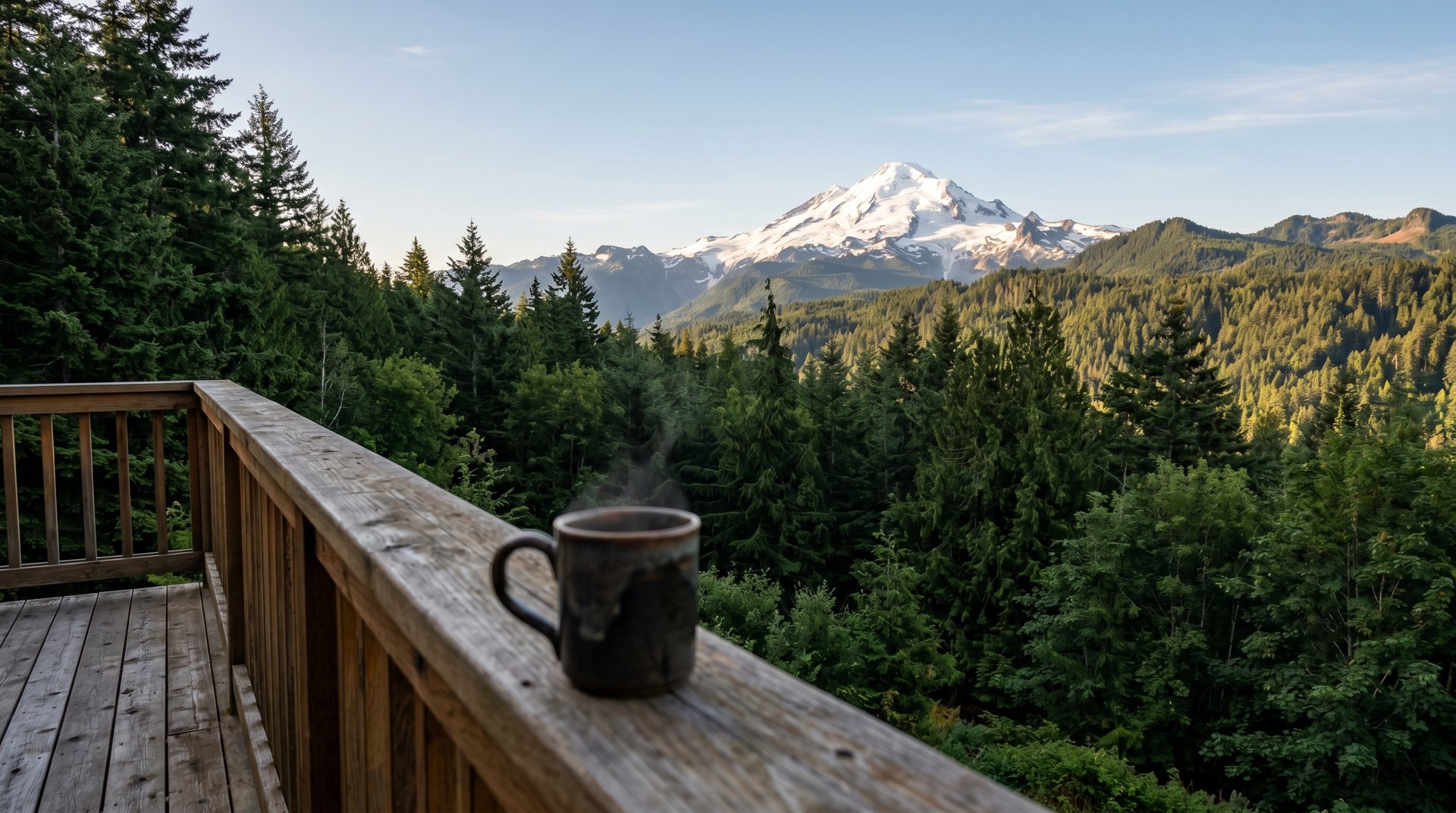
The San Diego-to-Bellingham move is 1,345 miles. Most buyers make it work in one to two trips, and some have closed without visiting at all — though I push back on that last one. Here is the standard remote-buying process I use with San Diego clients:
Step 1: Discovery call. We spend 45–60 minutes on the goals, budget, must-haves, and timeline. I set up NWMLS listing alerts filtered to your criteria. You start seeing real inventory in real time.
Step 2: Virtual showings. For every serious property, I do a live video walkthrough via FaceTime or Zoom — not a recorded reel. I narrate the flaws, the noise, the neighborhood, the light. I walk the lot. I check the basement. This is a different experience from a listing video.
Step 3: The scouting trip. I recommend one in-person visit before making an offer — ideally in fall or winter, not summer. Two to three days covers four to eight properties, neighborhood drives, a restaurant meal or two, and a real sense of whether Bellingham feels like home. Many San Diego buyers combine this with an offer if a property is right.
Step 4: Offer and inspection. Washington State uses an inspection contingency that gives buyers the right to back out (or negotiate) after the inspection period. The standard earnest money deposit is 1–3% of purchase price. I work with Chicago Title in Bellingham for escrow — Leah Richardson at Chicago Title Bellingham is my go-to escrow officer.
Step 5: Closing remotely. You do not need to be in Bellingham to close. A mobile notary or signing agent in San Diego handles the final paperwork. Wires from your San Diego bank to escrow are standard. I have closed transactions with buyers in San Diego, Los Angeles, and overseas without a second in-person visit.
Coordinating with the San Diego sale. Most buyers sell in San Diego first and use a short-term rental or stay with family during the gap. The alternative — buy in Bellingham contingent on the San Diego sale — is possible but limits your leverage in a competitive market. I typically recommend getting the Bellingham purchase under control first if your equity is strong, then listing in San Diego immediately after mutual acceptance.
Schools — the comparison families ask about
Bellingham School District serves the city proper and is strong at the elementary and middle levels, with multiple schools earning high state ratings. Bellingham High School and Sehome High School are both well-regarded. The district’s arts and dual-language programs are genuinely competitive.
Ferndale School District, 15 minutes north, is frequently cited by families as Whatcom County’s best overall K–12 experience — newer facilities, strong athletics, good test performance relative to statewide averages.
Lynden School District, 20 minutes north, runs a more traditional academic and athletic program with high graduation rates and strong community support.
Western Washington University (WWU) is a 15,000-student public university located in the heart of Bellingham. It runs Division II athletics, strong programs in business, education, and environmental sciences, and a visible presence that gives the city an intellectual and cultural energy most small cities lack. WWU’s presence also means consistent access to university events, lectures, and a young-adult population that keeps the food and arts scene active.
For San Diego families used to the San Diego Unified School District’s size and diversity: Bellingham’s districts are smaller and less diverse. The trade is walkability, smaller class sizes, and lower competition pressure. Many families find it a relief; some miss the urban school environment.
Five Bellingham neighborhoods San Diego buyers tend to land in

Fairhaven. This is the first neighborhood I show San Diego buyers, and it closes more of them than any other. Fairhaven is a Victorian-era village neighborhood on the south end of Bellingham — walkable to independent bookstores, coffee shops, restaurants, a brewery, and the ferry terminal to the San Juan Islands and Alaska. The streets are quiet and tree-lined. Homes are mostly 1900s–1940s craftsmans and bungalows with real character. The waterfront is a five-minute walk. San Diego buyers from Hillcrest or North Park often feel an immediate recognition here. See /neighborhoods/fairhaven/ for current listings.
Edgemoor. The waterfront neighborhood on the northwest side of Bellingham, with Chuckanut Drive running along the bay and views of the San Juan Islands and Vancouver Island. Homes here are larger, newer, and priced at the upper end of the Bellingham market — $900K to $2M and up. This is where San Diego buyers coming out of Encinitas, La Jolla, or Del Mar tend to land. The character is quieter and more residential; the views are genuinely spectacular. See /neighborhoods/edgemoor/.
Sehome. A hillside neighborhood adjacent to Western Washington University, with a mix of craftsman homes, modern infills, and strong walkability. The Sehome Hill Arboretum — 180 acres of forested trails — is walkable from most streets in the neighborhood. The combination of trail access, neighborhood coffee shops, and the university’s proximity makes Sehome a strong fit for San Diego buyers who ran or hiked in Torrey Pines or Mission Trails. See /neighborhoods/sehome/.
South Hill. The highest-elevation neighborhood in Bellingham, with sweeping views of the bay, the San Juan Islands, and Mount Baker. Housing stock ranges from 1970s ranches to newer construction, and the price-per-view ratio is hard to match anywhere in the city. Families from Carlsbad or Chula Vista tend to feel at home here — suburban character, good schools, quiet streets. See /neighborhoods/south-hill/.
Barkley Village. A newer mixed-use development in the northeast part of the city with walkable retail, restaurants, a movie theater, and newer housing stock. The scale is smaller than anything San Diego has, but the concept is similar to a lifestyle center neighborhood. Good for buyers who want low-maintenance newer construction and easy access to amenities without the historic character of Fairhaven or Sehome. See /neighborhoods/barkley/.
The lifestyle shift — what changes
The most common thing I hear from San Diego transplants one year in is: “I had no idea how wound up I was.” San Diego is a beautiful city, and it is also a city of 3.3 million people competing for parking, tables, surf breaks, hiking trailheads, and housing. The low-level friction of urban density is invisible until it’s gone.
In Bellingham, you park. You get a table. You get a slot at the trailhead. The pace of daily life slows measurably.
Outdoor access changes qualitatively, not just quantitatively. San Diego’s outdoor culture is beach-centric — surfing, running along the coast, Torrey Pines, Cabrillo. Bellingham’s is mountain-and-bay centric — hiking, skiing at Mt. Baker, kayaking the San Juans, cycling Chuckanut, salmon fishing on the Nooksack. If you care more about mountains than ocean, the trade is additive. If surf is central to your identity, it is a real loss.
The culinary trade is real. San Diego’s Mexican food, its seafood depth (given proximity to Baja), and its sheer restaurant variety do not transfer north. Bellingham has excellent food — a serious restaurant scene for a city its size — but the breadth is different. Budget for a taco run south when you visit family.
The community is smaller and more knowable. Within a year, most transplants have a regular coffee shop, a regular trail, and a regular set of neighbors who wave. That is not nothing.
Frequently asked
Is the San Diego → Bellingham move tax-positive after carrying costs?
Almost always yes, and often dramatically so. For a household earning $150,000–$300,000, the California-to-Washington income tax flip saves $14,000–$40,000 per year. Even accounting for slightly higher sales tax in Bellingham and any carrying costs during the transition, the net tax position improves materially from day one. The 20-year compounded value of that annual savings frequently exceeds $500,000–$900,000.
What’s the real winter like compared to San Diego?
It’s six months of overcast skies, frequent drizzle, and short days — not brutal cold, but persistently gray. January highs average around 44°F and lows around 33–35°F. There is occasional snow (typically 4–8 inches per year in the city), but the more persistent challenge is the lack of sun from November through April. San Diego averages 266 sunny days; Bellingham averages about 145. That gap is the single most important thing to think through before committing.
Can I buy in Bellingham remotely, without making multiple trips?
Yes. I do it regularly with San Diego clients. The standard flow is one scouting trip (2–3 days), virtual showings via live video call, a remote offer and inspection, and a remote close via mobile notary in San Diego. The whole process can be completed with one in-person visit if you are decisive and the scouting trip surfaces the right property.
What’s the catch?
Honestly: the weather. The math, the outdoor access, the community size, the tax savings — all of it holds up. The catch is 230 gray days a year and a summer that is great but short. If you visit in January and feel settled, there is no catch. If you feel a low-grade dread, that is the catch.
Will I need to find all new doctors, financial advisors, and service providers?
For financial advisors and CPAs — most San Diego professionals can continue serving you remotely after you establish Washington residency. For medical care: Bellingham has PeaceHealth St. Joseph Medical Center (a regional hospital), a solid network of primary care and specialist providers, and close proximity to Seattle’s major medical centers (Virginia Mason, UW Medical) for complex care. It is not UC San Diego Health, but it is a real healthcare market.
Is Bellingham a college town?
Yes, meaningfully so. Western Washington University enrolls about 15,000 students and sits on a prominent hillside campus overlooking the bay. The university’s presence supports live music, lectures, art exhibitions, a farmers market culture, and a restaurant scene that punches above the city’s size. Buyers coming from college-adjacent San Diego neighborhoods (North Park, City Heights near SDSU) often feel the energy is familiar.
How does the commute to Seattle compare to San Diego commutes?
Bellingham to downtown Seattle is 90 miles, roughly 80–90 minutes in light traffic. That is comparable in time to many San Diego commutes on I-5. For buyers working remotely with occasional Seattle trips, it is entirely manageable. The Amtrak Cascades train also makes the run once or twice daily. For daily Seattle commuting, most buyers rent a pied-à-terre in Seattle or switch to full remote.
What about the Cascadia earthquake risk versus San Diego’s fault risk?
Both regions carry meaningful seismic risk. San Diego sits near the Rose Canyon Fault and within range of the Elsinore Fault system. Bellingham sits within the zone of potential Cascadia Subduction Zone impact — a different risk profile (larger magnitude, lower frequency). Neither city is earthquake-free. Standard earthquake insurance is available in both markets; I recommend it in Bellingham as a routine purchase.
Thinking about Bellingham?
Tell me where in San Diego you’re coming from, your budget, and how you work, and I’ll send two or three neighborhoods that fit plus what’s active. If you have a place to sell first, a home valuation is the place to start.