

BELLINGHAM · WHATCOM COUNTY PARK
Lake Padden Park
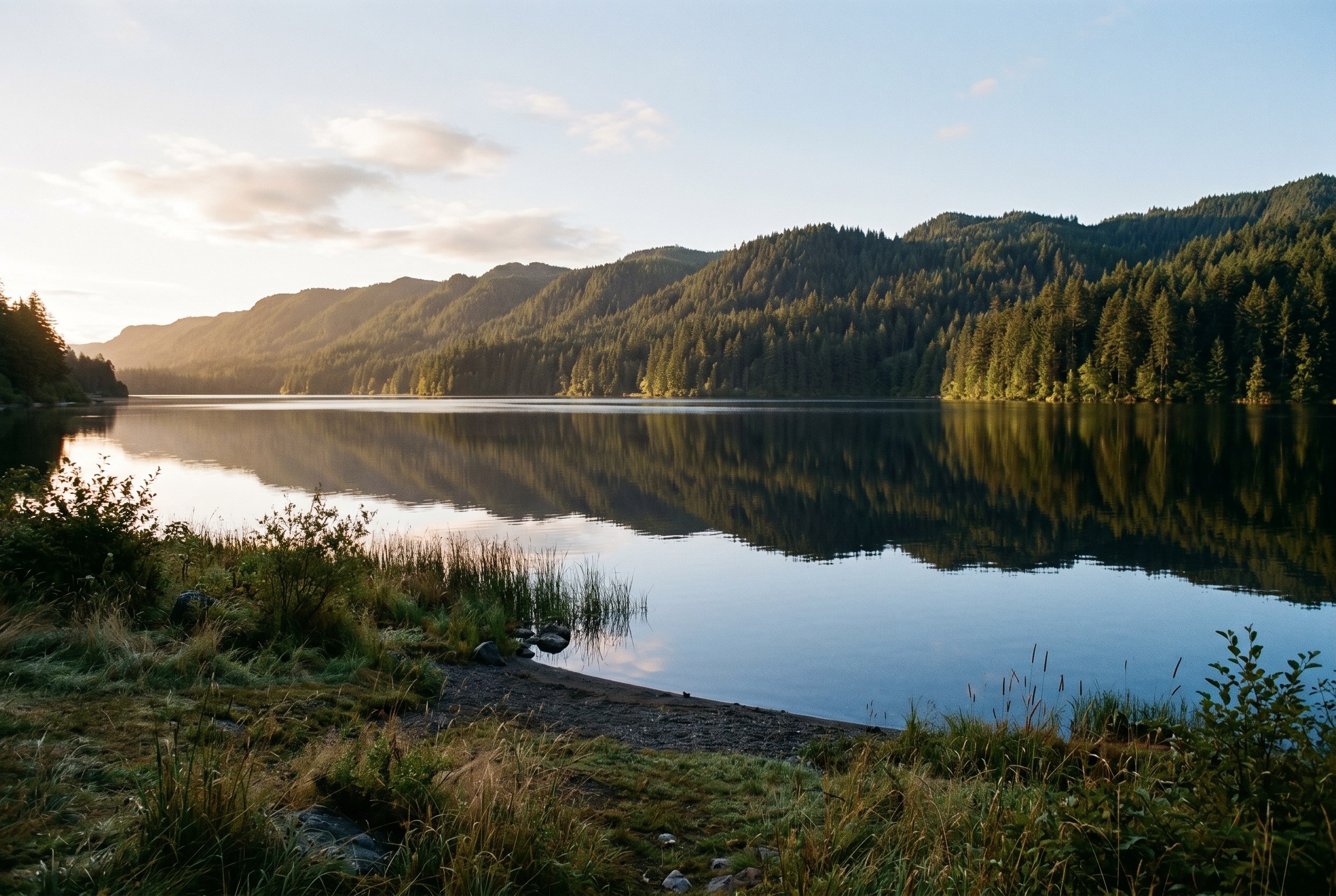
Lake Padden is the park I send almost everyone to first. A 160-acre lake, a flat 2.6-mile loop, swimming, trout, disc golf and miles of forest, all five minutes south of downtown Bellingham.
The basics
Size
745 acres
Established
1972
Typical water temperature
May
60°F
Jun
66°F
Jul
74°F
Aug
75°F
Sep
70°F
If you ask me to name the one park that sells south Bellingham to a buyer, it’s Lake Padden, every time. It sits at 4882 Samish Way in the Samish neighborhood, about five miles south of downtown, and it does a little of everything without trying too hard to be a destination. The lake itself is roughly 160 acres of cold, clear water ringed by a flat gravel loop that runs about 2.6 miles. Around that loop you get a summer swim beach, two fishing docks, a non-motorized boat launch, ball fields, a fenced off-leash dog area, tennis and pickleball lines, a disc golf course tucked into the golf property, and several more miles of forested singletrack climbing up the south side toward Galbraith. The City of Bellingham calls the park itself 745 acres; add the adjacent municipal golf course and the whole property runs right around 1,000 acres. I’ve walked this loop in every season, in the rain, with clients, with my own family, and I want to give you the honest version: what’s genuinely great here, what gets crowded, where parking falls apart on a hot Saturday, and what it means to live close to it. No hype, just the park as it actually is.
Overview and a little history
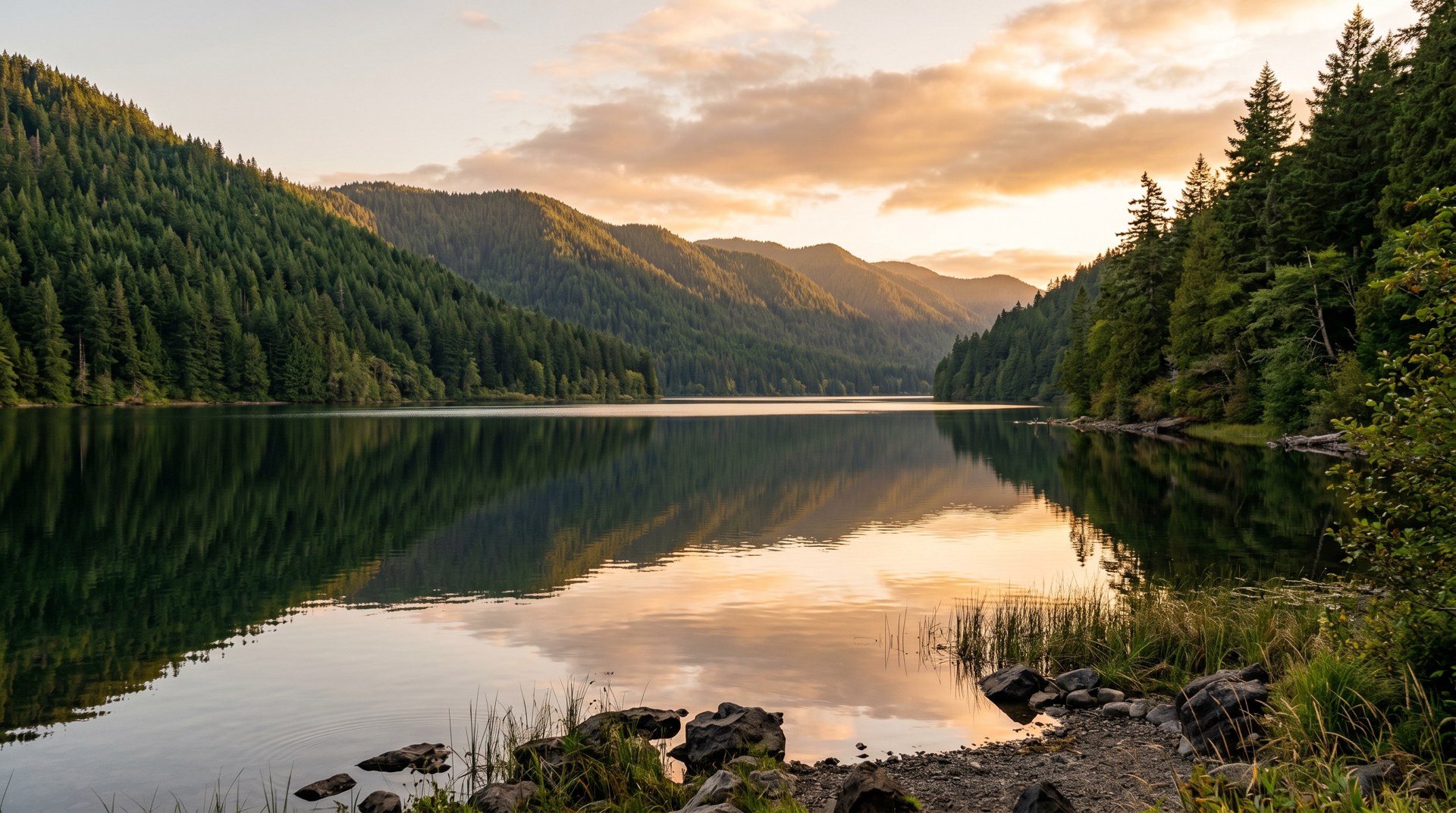
Lake Padden Park is a City of Bellingham park, which matters more than it sounds: it means the city maintains it, sets the hours, and runs the adjoining golf course, so the standards are consistent and the place doesn’t feel neglected. The gates are open daily from 6:00 a.m. to 10:00 p.m. The main entrance and the bulk of the parking, beach, ball fields and shelters sit on the north side off Samish Way.
The lake is named for Michael Padden, a settler who came to the area around 1870 to work the Bellingham Bay coal mine and homesteaded over in Happy Valley. Long before that, the Lummi people used the lake. After Padden died, his heirs deeded water rights to the old town of Fairhaven in 1880, and the City of Bellingham bought the property in 1925 for $165,900. Here’s a detail most people don’t know: Lake Padden supplied drinking water to south Bellingham all the way until 1968. That’s part of why the water is still so clean and why the surrounding watershed stayed undeveloped long enough to become a park.
The modern park came together fast at the end of the 1960s. Voters passed a bond in November 1968 to build both the park and a golf course. The golf course was dedicated July 29, 1971, and on August 30, 1972, an additional 220 acres around the lake were formally dedicated as a new city park. So when you see ‘1972’ as the founding year, that’s the dedication. The combined park-and-golf property today comes to roughly 1,008 acres, which is the figure I lean on when I tell buyers this is the largest single recreation footprint inside the city. The lake sits at about 447 feet of elevation and is around 59 feet deep at its deepest, which is why it stays genuinely cold even in August. None of that is marketing; it’s just a lot of land, water and trail packed into one south-side address.
The lake loop and the forest trails
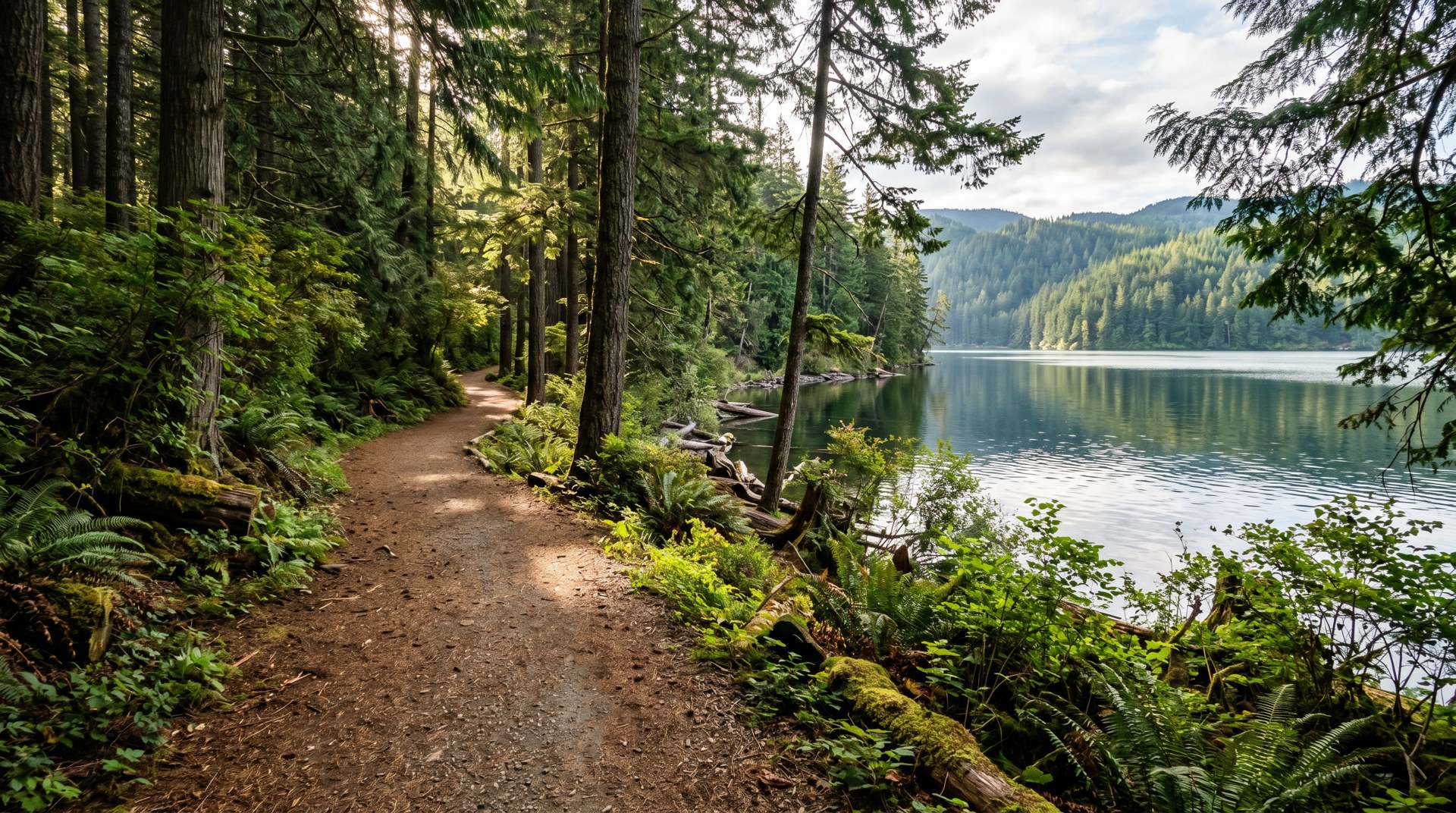
The headline trail is the Lake Padden Loop, and it’s the most-used path in this part of town for good reason. It’s roughly 2.6 miles, mostly flat, mostly smooth gravel, with only about 90 feet of elevation change the whole way around. People compare it to Seattle’s Green Lake loop, and that’s fair on size, but Padden is far less urban: you’re walking under second-growth forest with the water on one side, not past a freeway. It’s the kind of loop a brand-new resident, a stroller, an older parent and a trail runner can all use on the same morning. I’ve closed deals partly because a buyer walked this loop once and decided they wanted to be able to do it before work every day.
What a lot of newcomers miss is everything above the loop. At the southeast end of the lake, smaller singletrack trails break off and climb into the woods on the south side. Depending on how you string them together, that’s something like five additional miles of forested walking, running and riding, and those upper trails connect toward the broader Galbraith Mountain trail system that Bellingham is known for in the mountain-bike world. So you’ve got two completely different experiences sharing one parking lot: the easy, social, flat lakeside loop, and a real workout on dirt with roots, climbs and quiet.
A few honest trail notes:
- The south-side and upper trails are genuinely multi-use, shared by hikers, runners, mountain bikers and horses. Most days everyone gets along, but yield and pay attention, especially around blind corners.
- The lake loop drains and packs well, so it’s usable year-round, but the upper singletrack gets muddy and slick in our wet months. Expect mud roughly November through spring.
- Distances and trail names vary depending on which app or sign you read. The city doesn’t publish an official mileage for every spur, so treat the 2.6-mile loop as solid and the ‘five-plus miles of extra trail’ as a good-faith estimate, not gospel. If you need exact numbers, the trailhead and a GPS app will sort you out.
The swim beach and summer at Padden
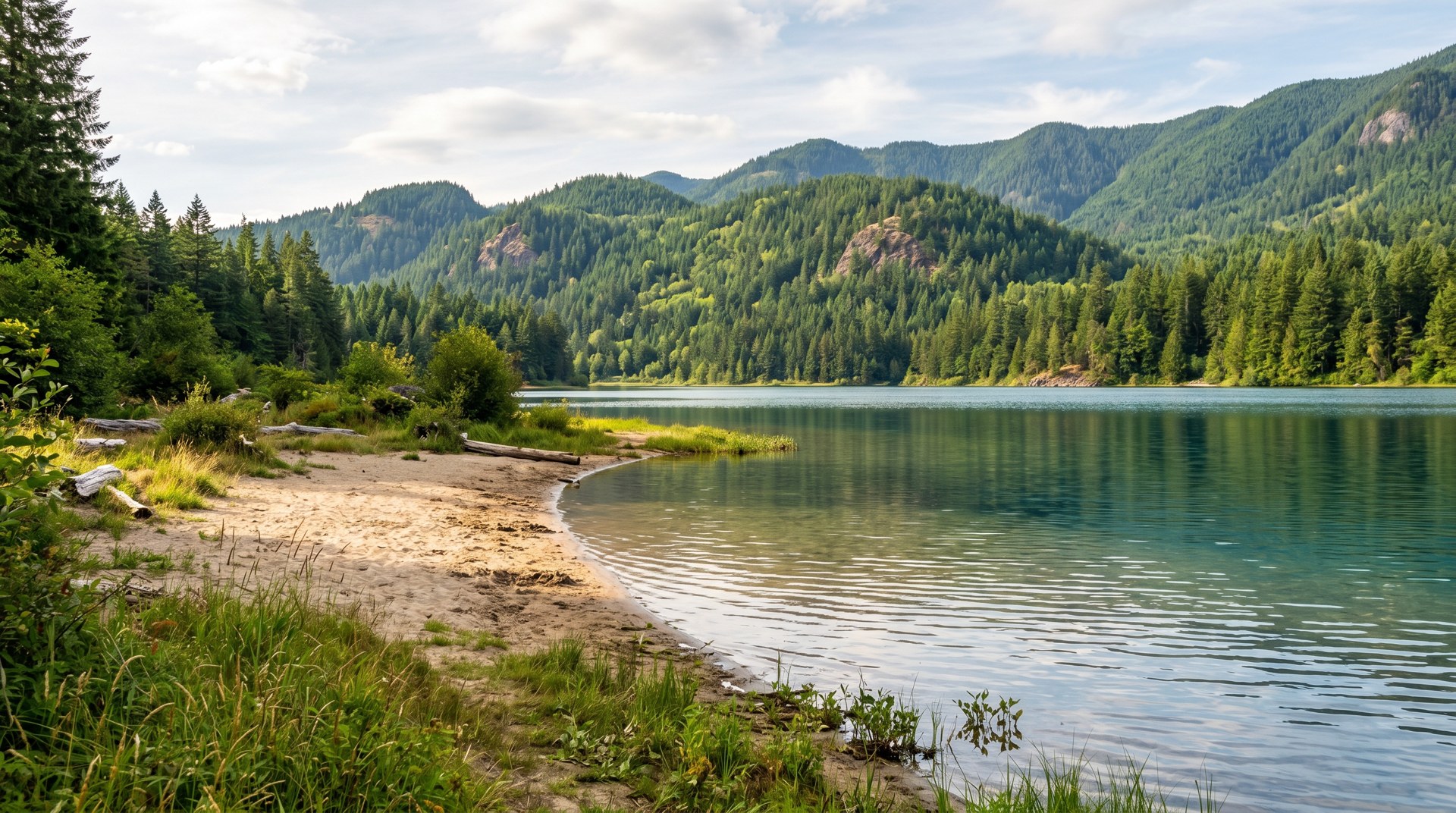
Lake Padden has a real summer swim beach, and on a hot day it is the social center of south Bellingham. The beach sits on the north side near the main parking and day-use area, with a roped swimming zone, grass to spread a blanket on, picnic tables and barbecue grills nearby, and restrooms close at hand. Families park here for the whole afternoon. Because the lake is fed cold and runs deep, the water has a real bite to it well into summer, which honestly makes it more refreshing than the warmer, shallower swim spots in the county.
Now the honest part on safety: I’m not going to give you lifeguard hours or specific swim-season dates, because the city doesn’t publish a reliable, current schedule that I’m willing to stake your kid’s safety on. Some Bellingham beaches are guarded on a seasonal schedule and some aren’t, and that can change year to year and even week to week with staffing. So plan to swim as if there’s no lifeguard, watch your own kids, and if guarded hours matter to you, call Bellingham Parks at (360) 778-7000 before you go and ask specifically about Lake Padden for the current summer. The swim area is generally a warm-weather thing, roughly June through August, but I’d rather you confirm than trust a date I can’t verify.
A couple of real-world summer notes. The water quality is usually excellent, but like every freshwater lake in the Northwest, Padden can occasionally get a toxic-algae (cyanobacteria) advisory in late summer. When that happens the county and city post warnings at the beach and online; take them seriously, especially for dogs, who can get very sick drinking lake water during a bloom. And the obvious one: the first genuinely hot Saturday of the year, this place fills up. More on parking later, because it’s the single biggest ‘manage your expectations’ item for the whole park.
Disc golf and the ball fields
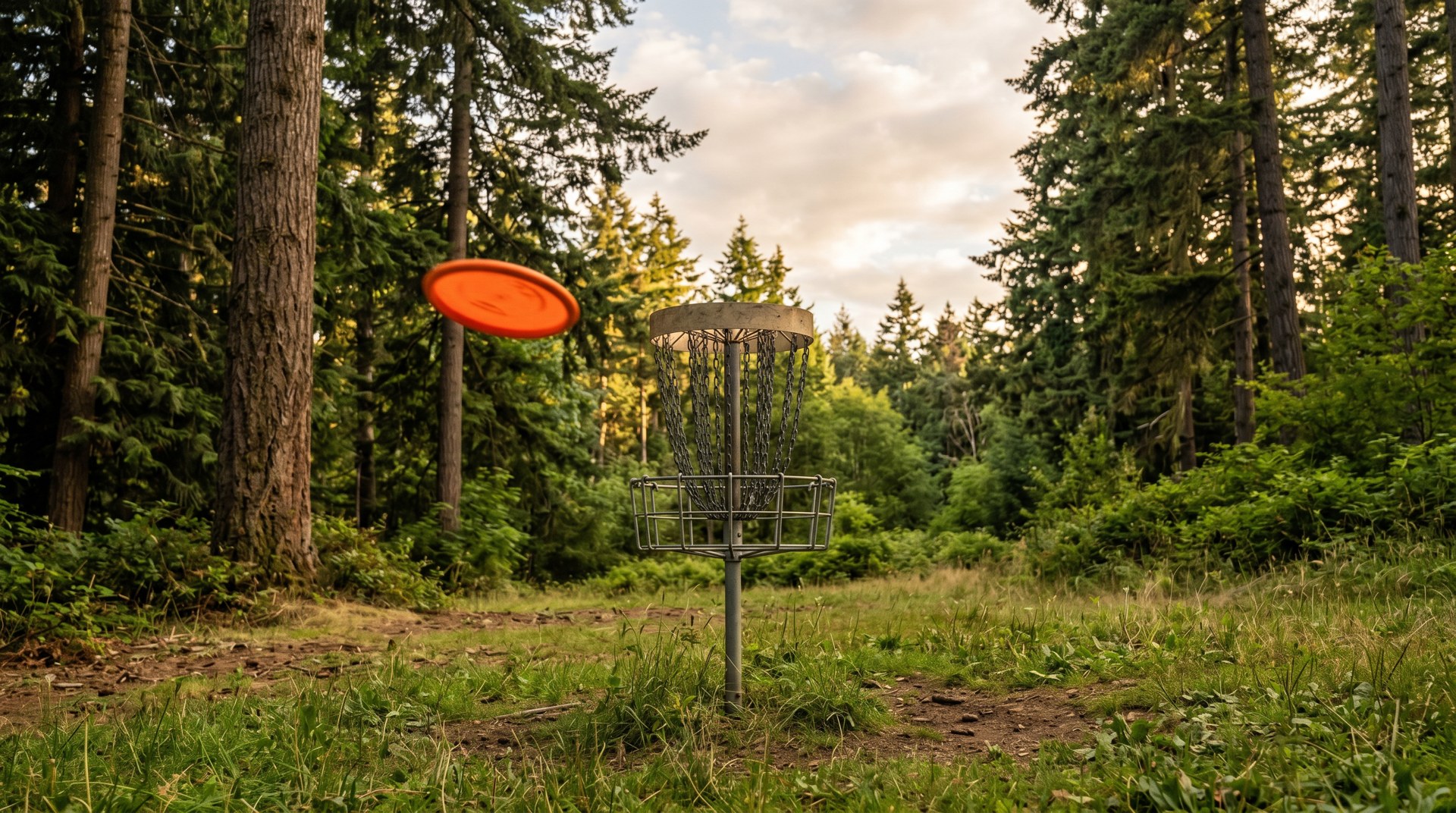
There’s a disc golf course at Lake Padden, and it’s a good one, but it comes with a big asterisk that trips people up, so let me be precise. The course is laid out on the front nine of the municipal golf course, not on a separate field, which means disc golfers and ball golfers share land. To keep them from colliding, the disc course runs on restricted days and times. According to the course operator and the disc-golf community site UDisc, it plays as an 18-hole layout (Par 61, roughly 7,123 feet) with a pay-to-play fee in the neighborhood of $18.50 per round, and in season it’s typically open to disc golf on Sundays and Mondays only, with afternoon-only tee times that get later as the days get longer. I want to flag that the City of Bellingham’s own park page mentions a disc golf course but does not state the hole count, the fee, or the schedule, so before you load the car, check the current golf-course hours and disc-golf days directly. Showing up on a Tuesday expecting to throw is the classic Padden mistake.
The ball fields are simpler and free. The park has multipurpose and softball-style fields on the north/east side that host youth leagues, pickup games and the occasional tournament. There’s also a basketball court in the day-use area. The city lists the fields without giving an exact count on its main page, and league play can tie them up on evenings and weekends, so if you’re planning a specific game, it’s worth confirming availability rather than assuming an open field.
For racquet sports, the park has tennis courts near the west entrance that are lined for pickleball, which is how a lot of Bellingham parks handle the pickleball boom, shared striping rather than dedicated courts. The city doesn’t publish how many courts or how many are lined, so I won’t invent a number. If pickleball is your thing, Cornwall Park is the more serious dedicated-court destination in town; Padden is fine for a casual game but call to confirm court availability if it’s the reason you’re driving over.
Dogs and the off-leash forest
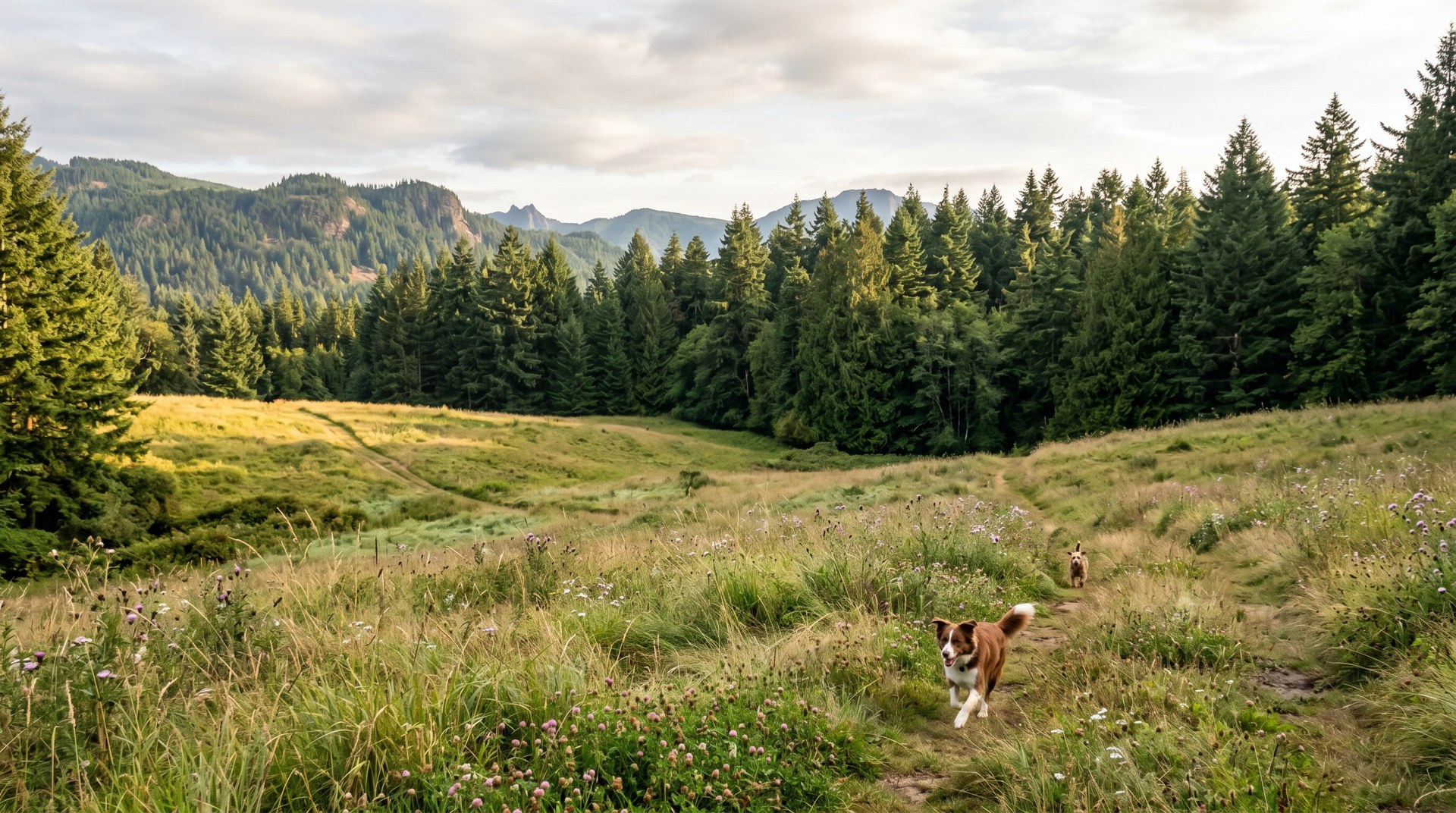
For dog owners, Lake Padden is one of the best setups in the city, and it’s more flexible than the average fenced dog park. There’s a fully fenced off-leash area near the ball fields in the southeastern part of the park, which is your standard secure run for dogs that need a fence. But Padden goes further: the city also designates certain unfenced trails at the east end of the park, between the fenced off-leash area and the Galbraith entry on East Samish, as off-leash, plus a short trail from a parking lot down to a pond that’s specifically set aside for off-leash water exercise and training. That last one is gold for retrievers and any dog that lives to swim.
What this means in practice is that a well-trained, recall-solid dog can get a legitimate off-leash forest walk here, not just laps inside a fenced pen. That’s rare, and it’s a genuine quality-of-life feature for the homes nearby. I’ve had buyers with dogs choose the Samish area specifically because of this.
A few honest ground rules so you don’t get a citation or a bad interaction:
- Off-leash is only legal in the designated areas. The main 2.6-mile lake loop and the day-use beach are leash-on. Plenty of people fudge this; the rule is still the rule, and the loop is busy enough that an off-leash dog can genuinely cause problems with kids, bikes and other dogs.
- City rules require you to carry a leash, keep voice control, clean up every time, and keep dogs that are in heat or showing aggression out of off-leash areas.
- During a summer algae advisory, keep your dog out of the lake and the pond entirely. Cyanobacteria can be fatal to dogs fast. When in doubt, don’t let them drink.
- These boundaries get adjusted from time to time. If you’re a daily off-leash user, glance at the city’s animal-regulations page now and then so you’re current.
The municipal golf course next door
Right next to the park is the Lake Padden Golf Course, a city-owned 18-hole championship layout that sits on roughly 205 acres on the east and south side of the lake. It’s a true full-length course, not a par-3 pitch-and-putt, and it’s one of the more affordable ways to play a quality 18 in Whatcom County because it’s municipal. For a lot of buyers I work with, ‘walkable to a real golf course and a lake loop from the same neighborhood’ is a genuine selling point, especially retirees and anyone who’d otherwise pay private-club money for course access.
The history ties back to the park: the first nine holes were dedicated July 29, 1971, on about 175 acres, and the back nine opened in March 1972, the same window the surrounding park was being created. The course has been under private management since the early 1980s on the city’s behalf, which is common for municipal courses and helps keep it financially stable and well-conditioned.
Two practical things to know. First, the golf course and the disc golf course share the front nine, which is exactly why the disc-golf schedule is so restricted (Sundays and Mondays in season, afternoons only). If you’re a golfer, your tee-time access is the priority most days; if you’re a disc golfer, you’re working around the golf calendar. Second, golf hours, rates and tee times are seasonal and change, so check current info with the course rather than relying on anything you read in a guide, including this one. What I can tell you confidently is that having a championship-length municipal course attached to a swim-and-trail park, inside the city limits, is unusual and it’s part of what makes this corner of Bellingham punch above its weight.
Fishing and getting on the water
Lake Padden is one of the best easy-access fishing lakes in Whatcom County, and you don’t need a boat to do well here. The Washington Department of Fish and Wildlife stocks it heavily: think rainbow trout and kokanee planted in spring, plus coastal cutthroat, and there’s a resident largemouth bass population too. To give you a sense of scale, recent stocking numbers ran north of 21,000 rainbow trout in 2024 and roughly 15,900 trout by mid-April in 2025. Those exact counts vary year to year, but the point stands: this lake gets a lot of fish.
The season follows the standard Washington lowland-lake calendar, opening on the fourth Saturday in April and running through the end of October. Early in the season, right after opening day and the spring plants, is the hot window; the bite slows as fish get caught and as the water warms. A lot of locals overlook fall, but cooler water in September and October can fish really well.
What makes Padden special for fishing is the shore access. It has more public shoreline than just about any lake in the county, and the 2.6-mile loop puts you next to the water for most of its length, with benches and gaps in the trees the whole way around. There are two fishing docks, which also help anglers with mobility needs get out over the water. For boats, there’s a launch, but the rule is firm: non-motorized craft or electric motors only, no gas engines. That keeps the lake quiet and clean, and it’s why you’ll see kayaks, canoes, paddleboards and float tubes rather than ski boats. If you want a calm-water paddle close to town, this is a great one. As always, bring your current Washington fishing license and check WDFW for the year’s specific regulations before you fish.
When to go, and the parking reality
Here’s the section I wish more park write-ups included, because it’s the difference between a great visit and a frustrating one. Lake Padden is wonderful, and on a sunny summer weekend it is genuinely crowded. The day-use lots near the beach are the first to fill. On the first hot Saturday of the year, and most warm weekend afternoons after that, you can circle the main lot, and the overflow fills too. It’s not unusual to see cars parked along the entrance and people walking in. If your plan depends on a beach spot and shade, get there in the morning, not at 1 p.m.
My honest timing advice:
- Weekday mornings and weekday evenings are the sweet spot for the loop. Parking is easy, the path is calm, and you’ll share it mostly with regulars and dog walkers.
- For summer swimming with kids, arrive before late morning to get parking and a decent patch of grass. Bring everything you need; it’s a day-use park, not a concession stand.
- Fall and winter are underrated. The loop drains well and stays usable, the crowds vanish, and the forest is beautiful in the fog. Bring traction if it’s frosty, and expect mud on the upper trails.
- The shoulders of the day, early and late, are also when wildlife is most active around the quieter south side.
A few logistics: there are restrooms in the main day-use area, two picnic shelters that you can reserve through Bellingham Parks for a gathering (reserve ahead in summer, they book up), plus first-come picnic tables and grills. The park is reasonably accessible, with paved and packed surfaces near the day-use core and the lake loop being one of the flatter, more wheel-friendly trails in town, though the upper forest trails are not accessible. And to repeat the one rule that catches everyone: disc golfers, the course is only open certain days and afternoons in season, so confirm before you drive over.
The Samish neighborhood around the park
Lake Padden anchors the Samish neighborhood, on the south side of Bellingham, and the park is a real part of why people want to live here rather than just a nearby amenity. Samish is generally quieter and a bit more spread out than the dense neighborhoods closer to downtown and the university. You get a mix of mid-century homes, established postwar streets, and pockets of newer construction, with the lake and its forest as the backyard for the whole area. Samish Way itself runs as the spine, connecting up toward the WWU/Sehome side of town and out to the I-5 interchange, so commuting north into Bellingham or south toward Skagit County is straightforward.
What I tell buyers about this part of town: you’re trading some of the walk-to-a-coffee-shop urbanism of Fairhaven or the Sunnyland/Columbia core for space, trees and immediate trail-and-lake access. For families, dog owners, runners, anglers and golfers, that’s often exactly the right trade. The proximity to Galbraith Mountain through the park’s upper trails is a serious draw for the mountain-bike crowd, and being five minutes from a swimmable lake is the kind of thing that keeps people in a house for decades.
It’s not all upside, and I’d rather you hear it from me. The summer-weekend traffic and parking pressure I described spill onto the nearby streets on the busiest days. Samish Way has stretches that are more arterial and commercial than charming, so the ‘feel’ varies block to block, and it pays to look at a specific street, not just the neighborhood name. And like everywhere in Bellingham, inventory near a marquee amenity like this tends to move, so the homes closest to the park don’t sit long when they’re priced right.
A local broker’s take
I’ll be straight with you about what living near Lake Padden actually signals. When I show homes in the Samish area, the park is usually the closing argument, not the footnote. A buyer walks the 2.6-mile loop once, watches dogs swimming at the pond, sees the beach and the trout dock and the trail climbing toward Galbraith, and the location starts selling itself. That kind of daily-use amenity tends to support steady demand for the homes nearest it, because the people who want this lifestyle really want it and they stay. As a broker here (Bellwether Real Estate, license #27119), I price and position those homes with the park in mind, but I also coach buyers on the trade-offs: Samish Way is part arterial, the closest streets get summer-weekend overflow, and ‘near Lake Padden’ covers everything from quiet wooded lots to busier through-streets. My job is to match you to the right block, not just the right zip code. If you’re weighing south Bellingham, I’ll walk the loop with you and show you honestly which streets give you the lake-and-trail life without the traffic headaches, and which listings are actually worth competing for. No pressure, just the real picture so you buy the right house the first time.
Good to know
How long is the Lake Padden loop trail?
The main loop around the lake is about 2.6 miles. It’s mostly flat (roughly 90 feet of elevation change) and surfaced in smooth gravel, so it works for walkers, runners and strollers year-round. Additional singletrack trails branch off the southeast end and climb into the south-side forest, adding several more miles of more challenging walking and riding.
Can you swim at Lake Padden?
Yes. There’s a designated summer swim beach on the north side with a roped swimming area, grass, picnic tables and restrooms nearby. The water is cold because the lake is deep and spring-fed. I can’t give you guaranteed lifeguard hours, the city doesn’t publish a reliable current schedule, so plan to swim at your own risk, watch your kids, and check for any summer algae advisories before you get in. Call Bellingham Parks at (360) 778-7000 for current swim-season details.
How many holes is the Lake Padden disc golf course?
The course is laid out on the front nine of the municipal golf course and plays as an 18-hole layout (Par 61) according to the operator and disc-golf community listings, with a pay-to-play fee around $18.50 per round. Important: the City of Bellingham’s own park page mentions the course but doesn’t state the hole count or schedule, and in season it’s typically open to disc golf on Sundays and Mondays only, afternoons. Confirm the current days and fees with the golf course before you go.
Is there an off-leash dog area at Lake Padden?
Yes, and it’s flexible. There’s a fully fenced off-leash area near the ball fields in the southeastern part of the park, plus designated unfenced off-leash trails at the east end toward the Galbraith entry, and a short trail to a pond set aside for off-leash water training. The main lake loop and the swim beach are leash-on. Always carry a leash, keep voice control, clean up, and keep dogs out of the water during any algae advisory.
Can you fish at Lake Padden, and what’s stocked?
Yes, it’s one of the best shore-access fishing lakes in Whatcom County. Washington Fish and Wildlife stocks it with rainbow trout and kokanee in spring plus coastal cutthroat, and there are resident largemouth bass. The season opens the fourth Saturday in April and runs through the end of October. There are two fishing docks and lots of shoreline along the loop. Bring a current Washington fishing license and check WDFW for the year’s regulations.
Can I bring a boat or use a motor on Lake Padden?
There’s a boat launch, but only non-motorized craft or electric motors are allowed, no gas engines. That keeps the lake quiet and clean, so you’ll see kayaks, canoes, paddleboards, float tubes and small electric boats. It’s a great calm-water paddle close to town.
How big is Lake Padden Park?
The City of Bellingham lists the park itself at 745 acres, and the lake is about 160 acres. Add the adjacent 205-acre municipal golf course and the combined property comes to roughly 1,008 acres, which makes it the largest recreation footprint inside the city. The park was dedicated in 1972 and is open daily from 6 a.m. to 10 p.m.
Where is Lake Padden Park and is parking a problem?
It’s at 4882 Samish Way in the Samish neighborhood, about five miles south of downtown Bellingham. Parking is easy on weekday mornings and evenings, but the day-use lots fill on warm summer weekends and the first hot Saturday of the year. If you’re going to swim with kids, arrive in the morning. Fall and winter are quiet and underrated for the loop.
Before you go
Swim-beach water qualityWhatcom CountyFishing this lake (WDFW)WDFWDisc golf course detailsUDiscTrail conditions at this parkWTAOfficial park page & hourscob.orgLooking at homes near here?
The park at the end of the street is part of what you are really buying. If you are weighing a neighborhood near Lake Padden Park, let us talk through which corner of Whatcom County fits the life you are after.