

Bellingham · in memoriam
The Whatcom Creek Pipeline Tragedy
On June 10, 1999, a ruptured gasoline pipeline turned Whatcom Creek into a river of fire and took three young lives. This page remembers them, and the safer world their families built afterward.
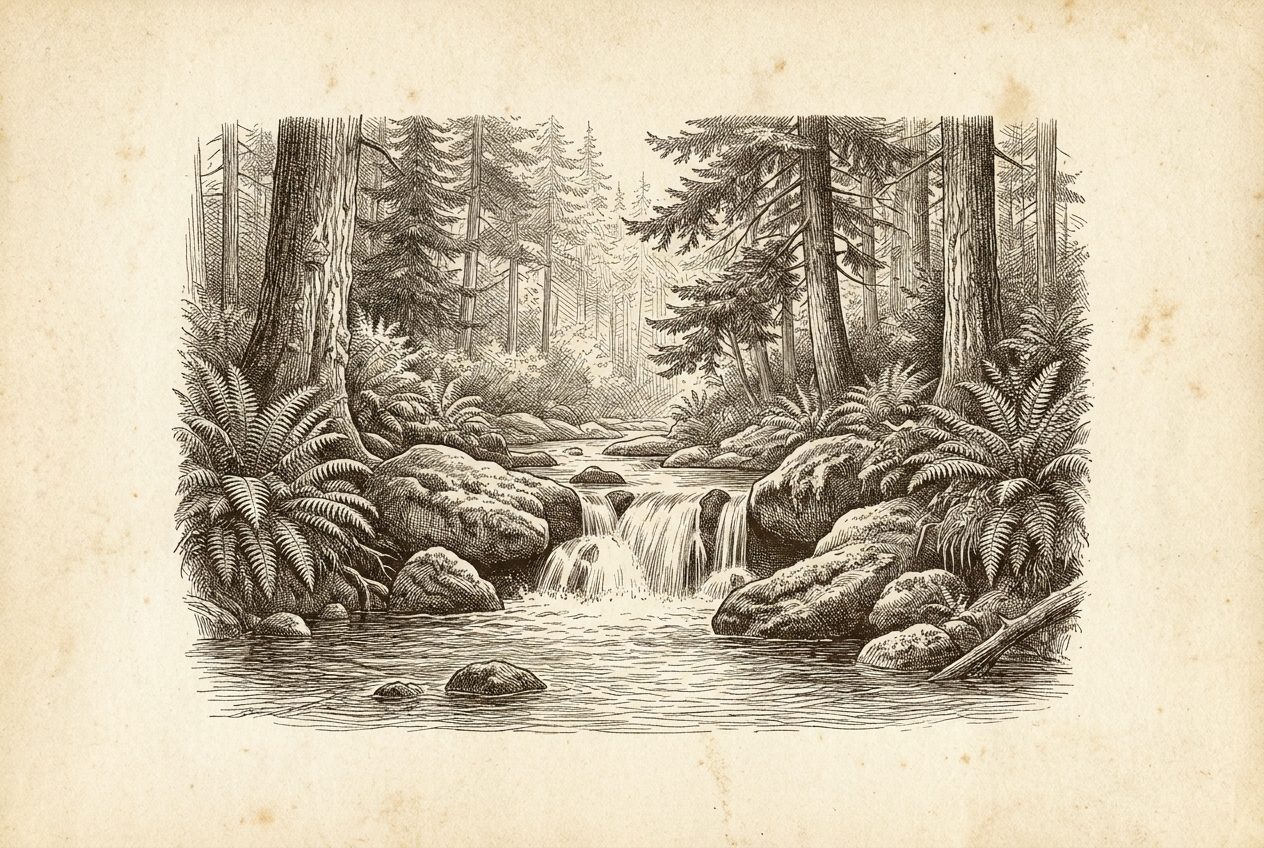
A quiet June afternoon
It was an ordinary early-summer Thursday in Bellingham. School was nearly out. Children were playing along Whatcom Creek where it runs through Whatcom Falls Park, and an 18-year-old named Liam Wood had gone down to the water to fly-fish, as he often did.
Beneath the park, unseen, ran a 16-inch steel pipeline owned by the Olympic Pipe Line Company, carrying gasoline from the refineries near Ferndale south toward Seattle and Portland. At about 3:25 that afternoon, the pipe ruptured. Roughly 237,000 gallons of gasoline poured out and ran down into Hanna Creek and then Whatcom Creek, spreading a heavy, invisible vapor along the water and through the wooded ravine.
The fire on the water
For roughly an hour and a half the gasoline pooled and drifted, unignited. Then, a little after 5 p.m., it found a spark. The creek erupted into a fireball that raced about a mile and a half downstream toward downtown, throwing a column of black smoke 20,000 to 30,000 feet into the sky — high enough to be seen from Anacortes to the edge of British Columbia.
The land itself was scorched; some 26 acres burned, and in the days that followed crews counted more than 100,000 dead fish and other creatures in the ruined creek. But the loss that Bellingham has never stopped carrying was measured in three young lives.
Liam, Stephen, and Wade
Liam Wood was 18, newly graduated, fishing in the creek upstream when the vapors overcame him. He was lost to the fumes in the water before the gasoline ever caught fire.
Stephen Tsiorvas and Wade King were both 10 years old, friends playing together along the creek that afternoon. They were badly burned in the blast and did not survive their injuries.
They were a young man at the start of his life and two boys at the start of theirs. Bellingham says their names plainly, and keeps them.
What went wrong
Federal investigators with the National Transportation Safety Board spent years reconstructing the failure, and they found that no single thing caused it. The pipe had been damaged years earlier, during 1994 excavation work near the city’s water treatment plant, and that weakened spot was never found or repaired.
On the day itself, problems with the company’s control-room computer system left operators unable to read and respond to the pressure building inside the line, and a pressure-relief setup that should have eased that surge did not do its job. Investigators also pointed to gaps in how employees had been trained. A worn place in the steel, a pressure spike no one caught in time, and a system that could not protect itself — together they were enough.
Turning grief into reform
What happened next is the part of this story that Bellingham can hold onto. Rather than let the tragedy fade, the victims’ families and their neighbors organized. A grassroots group called SAFE Bellingham, with a local resident named Carl Weimer among its leaders, began pressing for real change in how the nation watches over its pipelines.
Olympic Pipe Line ultimately faced criminal and civil penalties in a settlement of roughly 112 million dollars, marking the first criminal conviction of a pipeline company under federal pipeline-safety law. In 2003 a federal judge directed that 4 million dollars of those fines endow a new, permanent watchdog. That organization became the Pipeline Safety Trust, headquartered in Bellingham and led by Weimer, and it remains one of the country’s few independent voices for pipeline safety.
Their work reached Washington, D.C. The federal Pipeline Safety Improvement Act of 2002 tightened inspection requirements, strengthened oversight, and gave pipeline communities a stronger footing. Three lives lost on one Bellingham afternoon helped make pipelines across America safer.
The creek comes back
Whatcom Creek did not stay dead. Over years of patient restoration and monitoring, the banks regrew, the water cleared, and the salmon returned to a creek that runs clean again through one of Bellingham’s most-loved parks. Families walk the trails and children play near the falls, much as they always have.
A memorial in the park honors Liam Wood, Stephen Tsiorvas, and Wade King, and on the anniversary the city pauses to remember them. The water moves on, as water does — quieter now, and carrying their names.
At a glance
Common questions
What happened in the Whatcom Creek pipeline explosion?
On June 10, 1999, a gasoline pipeline operated by the Olympic Pipe Line Company ruptured beneath Whatcom Falls Park in Bellingham, releasing roughly 237,000 gallons of gasoline into Hanna and Whatcom creeks. About an hour and a half later the gasoline ignited, sending a fireball about 1.5 miles down the creek. Three young people were killed.
Who were the three people who died?
Liam Wood, 18, was fly-fishing upstream and was overcome by the gasoline fumes before the fire started. Stephen Tsiorvas and Wade King, both 10 years old, were playing along the creek and died of burns from the blast.
What caused the explosion?
Federal investigators found a chain of failures rather than a single cause: the pipe had been damaged during 1994 construction work near the water treatment plant and was never repaired; the company’s control-room computer system failed to alert operators to dangerous pressure; a pressure-relief problem made it worse; and employee training fell short.
What reforms came out of the tragedy?
Bellingham families and citizens, including the SAFE Bellingham group and Carl Weimer, pushed for national change. Their efforts helped pass the federal Pipeline Safety Improvement Act of 2002, and court-directed funds from the settlement established the Bellingham-based Pipeline Safety Trust in 2003, a national pipeline-safety watchdog.
Has Whatcom Creek recovered, and is there a memorial?
Yes. After years of restoration, Whatcom Creek and Whatcom Falls Park have returned to life, with clear water and returning salmon. A memorial in the park honors Liam Wood, Stephen Tsiorvas, and Wade King.
Sources: HistoryLink.org; City of Bellingham (Olympic Pipeline Incident); National Transportation Safety Board pipeline accident report; Pipeline Safety Trust (pstrust.org); Washington State Department of Ecology; Cascadia Daily News and KING 5 reporting.
Back to the Bellingham timelineImage credits
- Illustration