Bellingham · how the bay built the city
The Working Waterfront: Mills, Fish, and Timber on Bellingham Bay
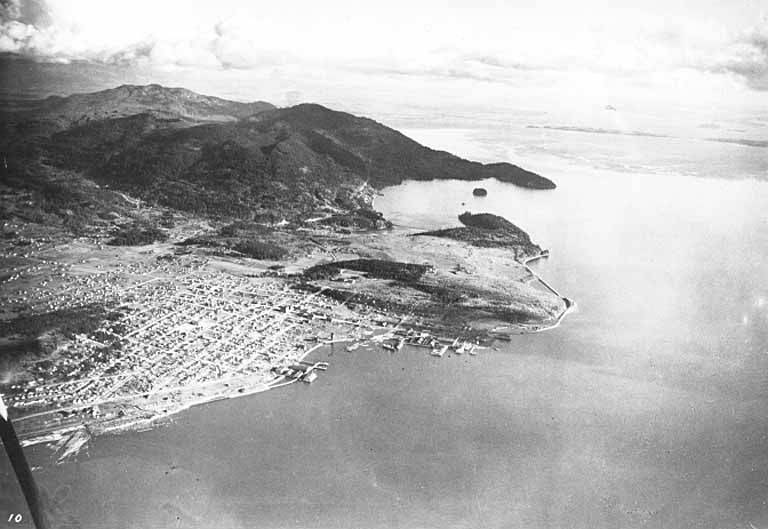
For more than a century and a half, the edge of Bellingham Bay was where the money was made — first in lumber, then in salmon, then in pulp and paper. This is the story of the working waterfront, and how the city is finally getting it back.
The mill that started a city
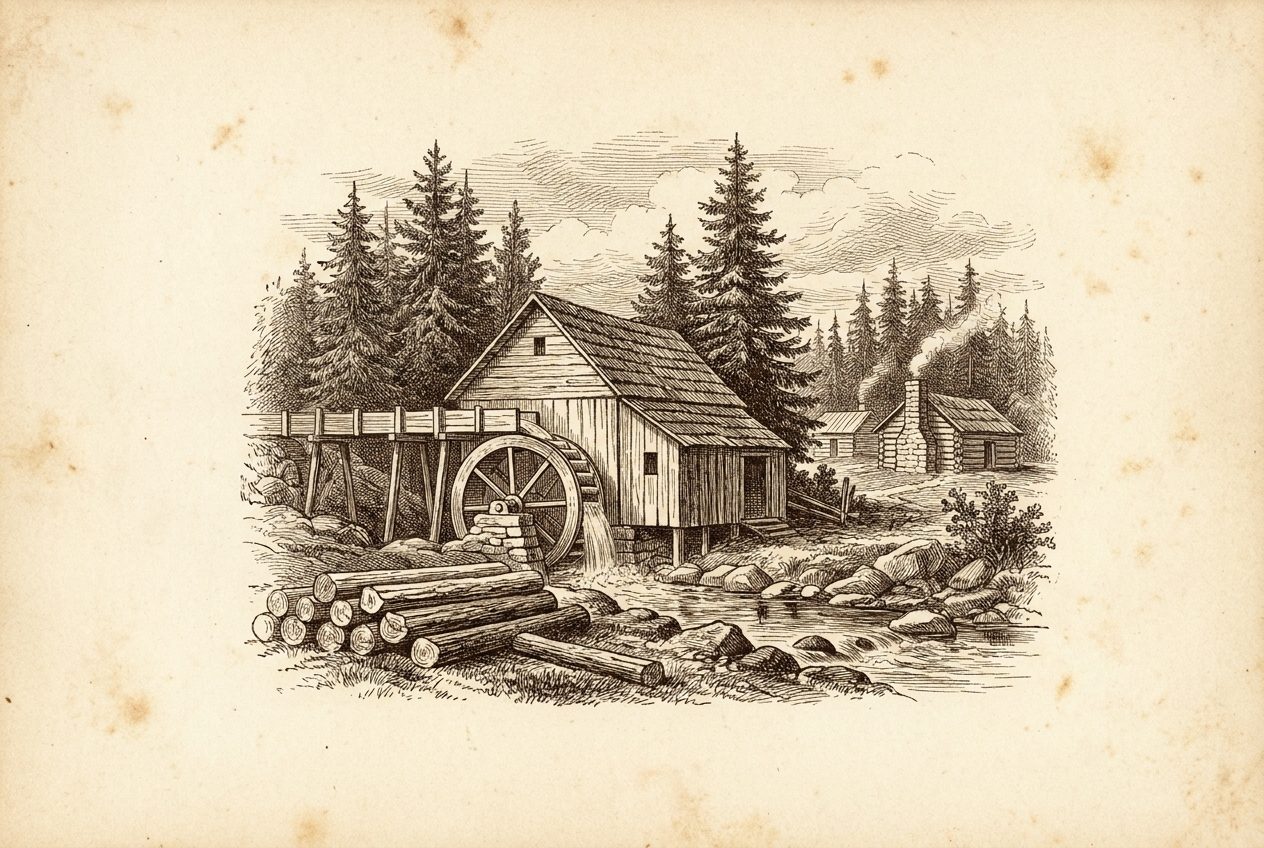
In December 1852, two sea captains named Henry Roeder and Russell Peabody beached their canoe at the mouth of Whatcom Creek and looked at the falls. They were not the first people here — the Lummi had fished and lived on this shore for centuries, and it was Chief Cha-wit-zit who pointed the newcomers to the spot. But Roeder and Peabody saw a millrace. The creek dropped hard enough to turn a wheel, the bay was deep enough for ships, and far to the south San Francisco was burning down and rebuilding itself out of any lumber it could buy.
They built a water-powered sawmill at the falls and started cutting. The Whatcom Mill ran only fitfully through the 1850s and 1860s, and much of its early lumber went north to Victoria rather than south. But the principle was set on day one, and it would govern the next hundred and fifty years: the waterfront was where Bellingham worked. Everything the place would become — lumber town, salmon town, paper town — grew out of that first wheel turning on Whatcom Creek.
Sawdust and shingles
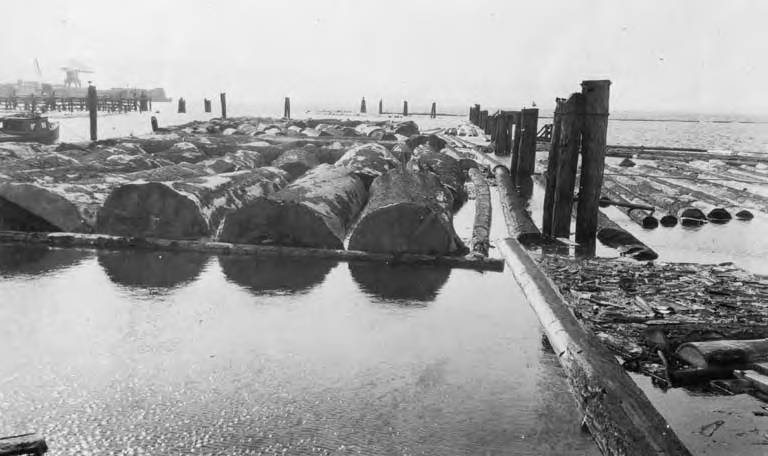
By the turn of the century the trickle had become a flood. The forests around Bellingham Bay held some of the heaviest stands of timber in the country, and the town set about cutting them into lumber and splitting them into shingles at a furious pace. For a stretch Bellingham billed itself as a shingle capital, with mills lining the bay and rail spurs threading back into the hills.
The biggest names belonged to a partnership. Julius Bloedel, J.J. Donovan, and the railroad contractor Peter Larson founded the Lake Whatcom Logging Company in 1898 to harvest the timber around the lake. After Larson’s death in 1913, the operations merged under the name that everyone remembers: the Bloedel-Donovan Lumber Mills. The company ran what became one of the busiest milling operations on the West Coast, floating logs across Lake Whatcom to its mills and shipping finished lumber out through the bay. When the Larson mill finally closed in 1946, Bloedel gave the City a stretch of the old mill grounds for a park and swimming beach — Bloedel-Donovan Park, where families still swim today.
The largest cannery on earth
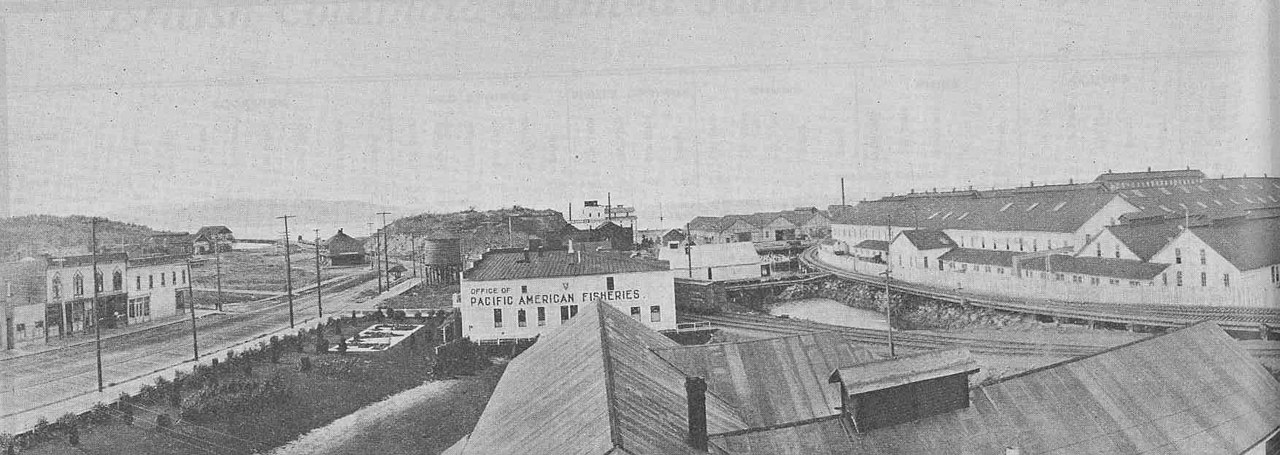
While the mills cut the hills, the bay itself was turned into a fish factory. In 1899 two brothers from Chicago, Frank and E.B. Deming, organized a cluster of plants into the Pacific American Fisheries company and based it in Fairhaven, on the south end of the bay. Over the next four decades it grew into the largest salmon cannery in the world.
PAF did not just can fish — it built the whole enterprise around itself. The company ran a fleet of fishing boats and the shipyard that built them, made its own cans, and operated canneries up and down the coast of Alaska, where the great salmon runs were. At the height of the season its lines could turn out hundreds of thousands of one-pound cans in a single day. The work drew thousands of seasonal workers, including large crews of Chinese, Japanese, and Filipino laborers who did much of the hard cutting and packing. The company canned salmon from 1899 until 1965, and for a generation Fairhaven smelled of fish and ran on its payroll.
A waterfront held in common
As the 1920s opened, the waterfront was booming but uncoordinated — a patchwork of private wharves, mills, and tide flats with no single body planning its growth. Local businessmen and the Chamber of Commerce pushed to fix that by creating a public port district, arguing it would organize the harbor and energize the whole economy.
On September 14, 1920, the question went to a countywide vote, and 77 percent of voters said yes. The Port of Bellingham was born. For the next century it would own and manage much of the public waterfront, the airport, and the marinas — and, as it turned out, it would be the body that led the waterfront’s reinvention three generations later.
The paper century
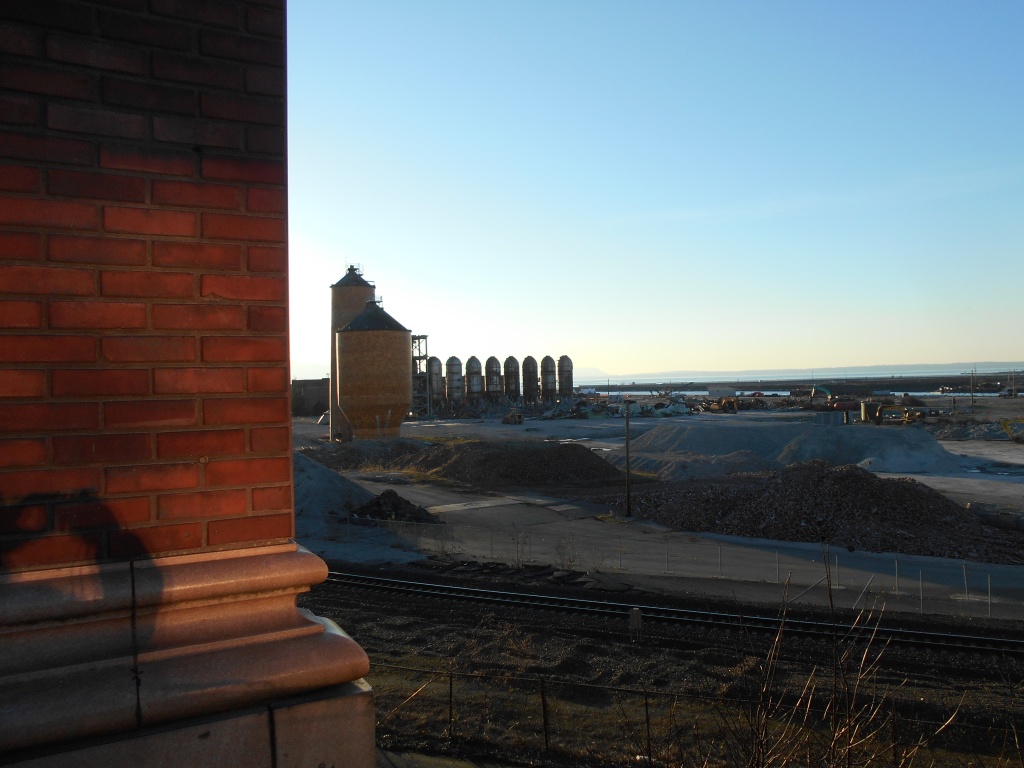
In 1926 a pulp and paper mill opened on the downtown shoreline, just south of Whatcom Waterway, and for the rest of the twentieth century it defined the waterfront. By the 1960s it had been acquired by Georgia-Pacific, which added a chemical plant and expanded it into a sprawling pulp-and-tissue complex. Its stacks and tanks were the first thing you saw of Bellingham from the water, and its whistle ordered the workday for thousands of families.
Markets turned and energy costs climbed, and Georgia-Pacific shut the pulp mill in 2001. In 2005 the company sold 137 acres of waterfront land to the Port of Bellingham, which took on the daunting job of cleaning up a century of industrial contamination. The last mill operations ceased in 2007. After eighty-one years, the paper century was over — and the heart of the working waterfront went quiet, leaving behind acres of concrete, the old digesters, and one enormous steel sphere.
The Acid Ball
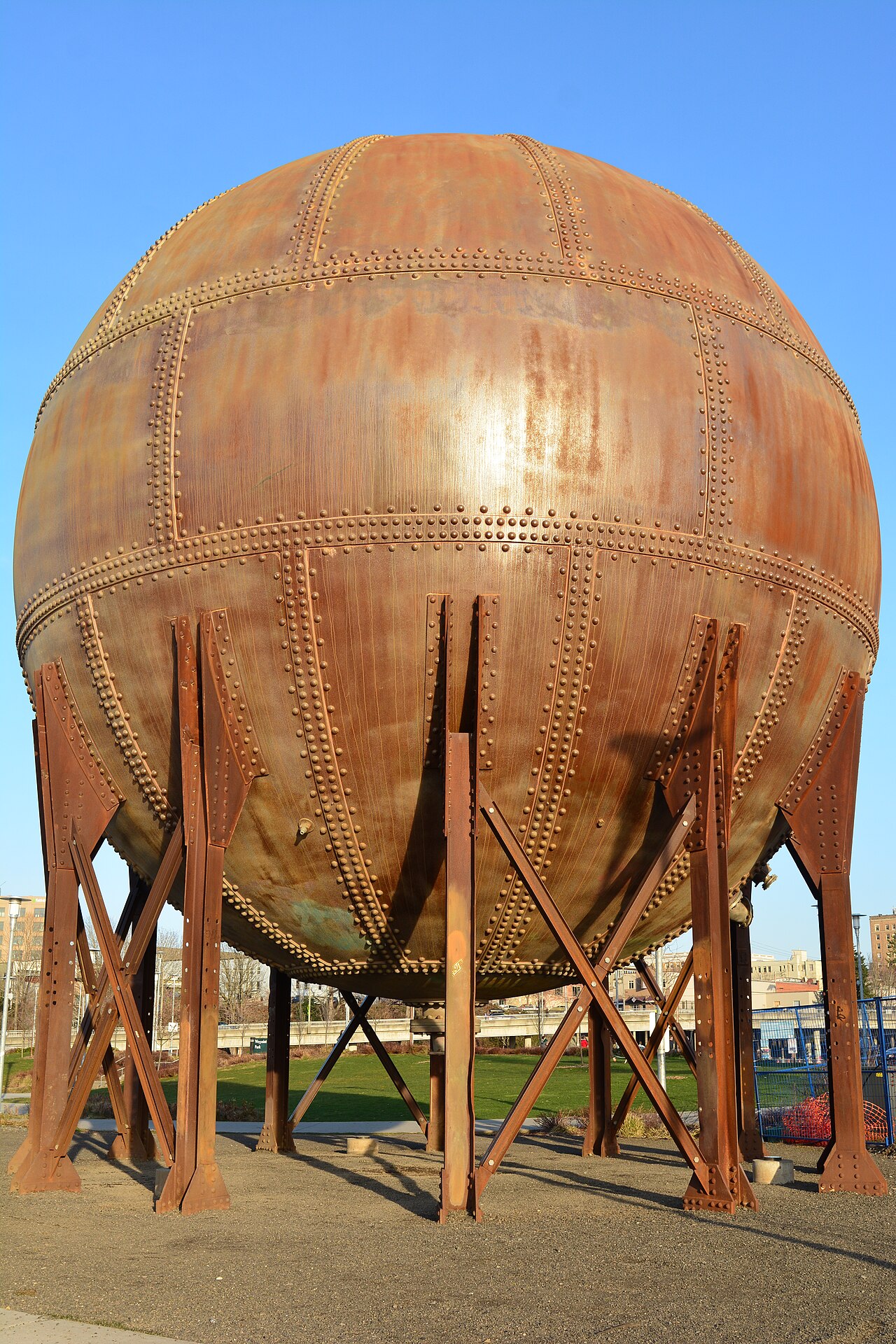
The strangest survivor of the mill is a thing the whole city knows simply as the Acid Ball. Built in 1938, the steel sphere was a pressure-relief vessel in the pulping process, part of the system that cooked wood chips into pulp under heat and sulphurous acid. It stands about 40 feet tall, measures some 30 feet across, and weighs more than 400,000 pounds — by most accounts about 430,000.
When the mill came down, almost everything was hauled away. The Acid Ball stayed. Too heavy and too iconic to scrap, it was kept as a marker of what the waterfront had been. A Seattle design studio coated it in tiny reflective glass beads — the kind used in road paint — so that it catches the daylight and glows under colored light at night. The relic of the acid line became the first piece of public art on the new waterfront.
Getting the bay back
Today the old mill site is being rebuilt as the Waterfront District, a Port-led redevelopment turning 137 acres of former heavy industry into a mixed-use neighborhood of housing, business, parks, and trails — with Western Washington University already building a campus presence on the ground. In 2018 the first piece opened to the public: Waypoint Park, set right on the old mill shoreline, with a sandy beach, a pier, and the salvaged Acid Ball standing over it as a sculpture.
The quiet headline is that, for the first time in well over a century, Bellingham can walk down to its own working waterfront and simply stand at the water. For most of the city’s history that edge was fenced, milled, and canned — private and industrial. That matters to anyone living here now, and to anyone thinking of buying in. The waterfront is no longer a place the city works; it is becoming a place the city lives, and the neighborhoods around it — downtown, Old Town, the South Hill above Fairhaven — are being reshaped by that change in real time.
At a glance
Common questions
Who founded Bellingham’s first mill?
Sea captains Henry Roeder and Russell Peabody built a water-powered sawmill at the falls of Whatcom Creek in December 1852, with guidance from Lummi Chief Cha-wit-zit. That mill is generally regarded as the seed of the city.
Was Bellingham really home to the world’s largest salmon cannery?
Yes. Pacific American Fisheries, organized in Fairhaven in 1899, grew into the largest salmon cannery in the world. It ran its own boats, built its own cans, and operated canneries throughout coastal Alaska before closing in 1965.
What was the Georgia-Pacific mill, and when did it close?
A pulp and paper mill operated on Bellingham’s downtown shoreline from 1926 to 2007, run for its later decades by Georgia-Pacific as a pulp-and-tissue complex. The pulp mill shut in 2001 and the last operations ended in 2007, after the Port of Bellingham bought 137 acres of the site in 2005.
What is the Acid Ball?
It is a steel pressure-relief vessel built in 1938 for the pulp mill, where it was part of the system that cooked wood chips into pulp under heat and acid. Standing about 40 feet tall and weighing more than 400,000 pounds, it was saved when the mill was demolished and turned into public art at Waypoint Park.
Can the public use the waterfront now?
Yes, and increasingly so. The Port of Bellingham is redeveloping the 137-acre former mill site as the Waterfront District. Waypoint Park opened on the old shoreline in 2018 with a beach, a pier, and the Acid Ball — the first time in over a century that residents can freely walk down to their own working waterfront.
Sources: HistoryLink.org, the Port of Bellingham, City of Bellingham, Western Washington University Heritage Resources, WhatcomTalk, Fairhaven History, and The Seattle Times.
Back to the Bellingham timelineImage credits
- Photo by J. Wilbur Sandison; University of Washington Libraries, Public domain. source
- Illustration
- University of Washington Libraries, Special Collections, Public domain. source
- Pacific Fisherman Annual, 1912, Public domain. source
- Photo by Robert Ashworth (CC BY 2.0), CC BY 2.0. source
- Photo by Joe Mabel (CC BY-SA 4.0), CC BY-SA 4.0. source