

BELLINGHAM · WHATCOM COUNTY PARK
Whatcom Falls Park
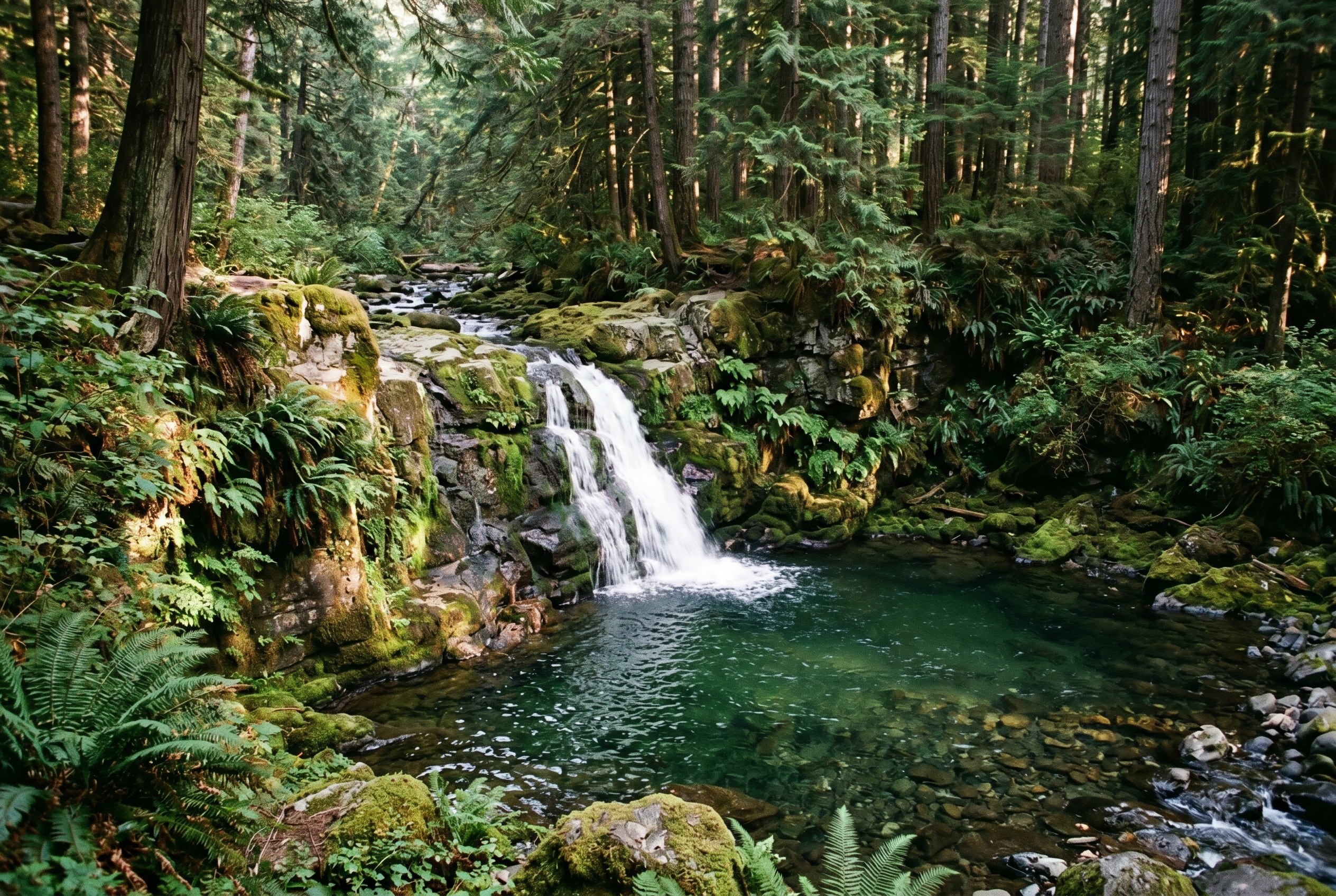
Four sets of waterfalls, a stone bridge older than most of the neighborhood, and miles of fern-lined trail — all of it tucked into the east side of Bellingham, ten minutes from downtown.
The basics
Size
241 acres
I have shown a lot of buyers around the east side of Bellingham, and Whatcom Falls Park is almost always the stop that makes them go quiet for a second. It is 241 acres of second-growth forest wrapped around Whatcom Creek, with four sets of waterfalls, a 1940 stone bridge built by Depression-era work crews, a working trout hatchery, a kids’ fishing pond, and somewhere between three-and-a-half and five miles of trail depending on how you count the spurs. You can be standing at the main falls, leaning on that mossy bridge railing with mist coming up off the rock, less than ten minutes after leaving the City Center. That combination — genuinely wild-feeling and genuinely close in — is rare, and it is a big part of why the surrounding neighborhood holds its value the way it does. This guide is the version I give clients: what is actually here, what is worth your time, where the real trade-offs are (parking, the swimming holes, the steep creek banks), and one honest, painful piece of the park’s history that locals do not gloss over. I am a real estate broker, not a park ranger, so I will flag the handful of facts I could not nail down and point you to the City of Bellingham’s page for anything that might change season to season.
The falls, the creek, and how the park came together
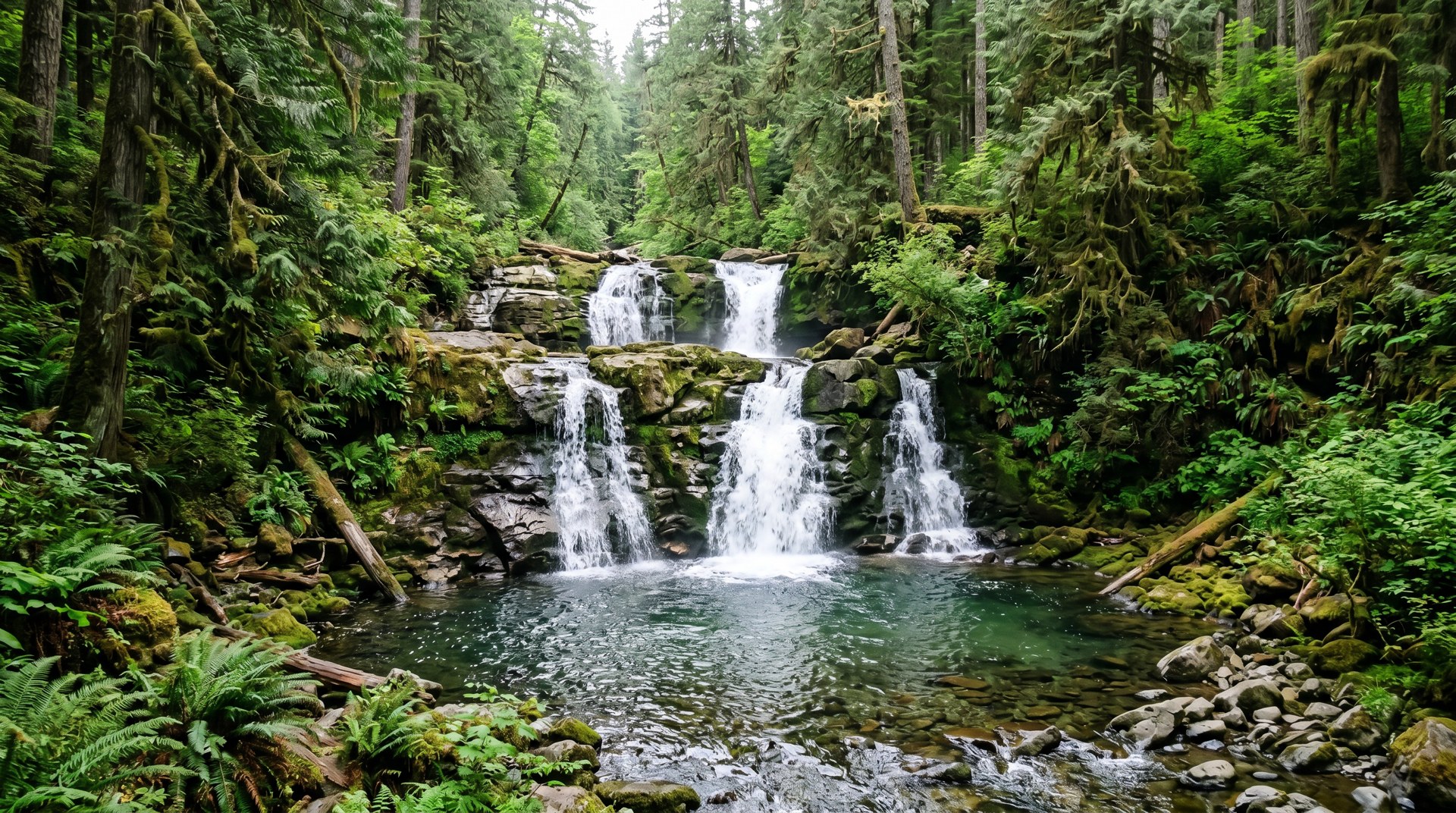
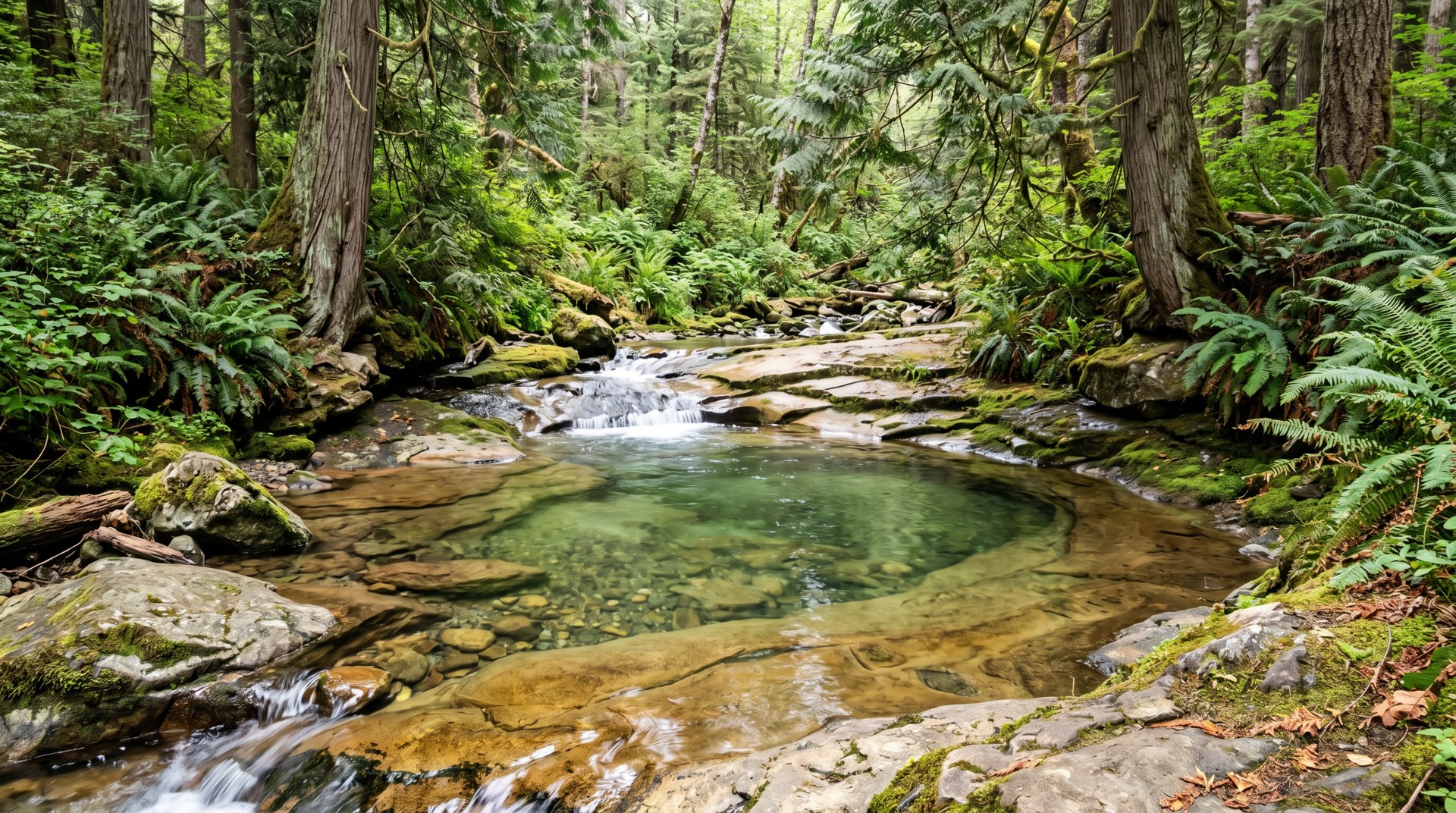
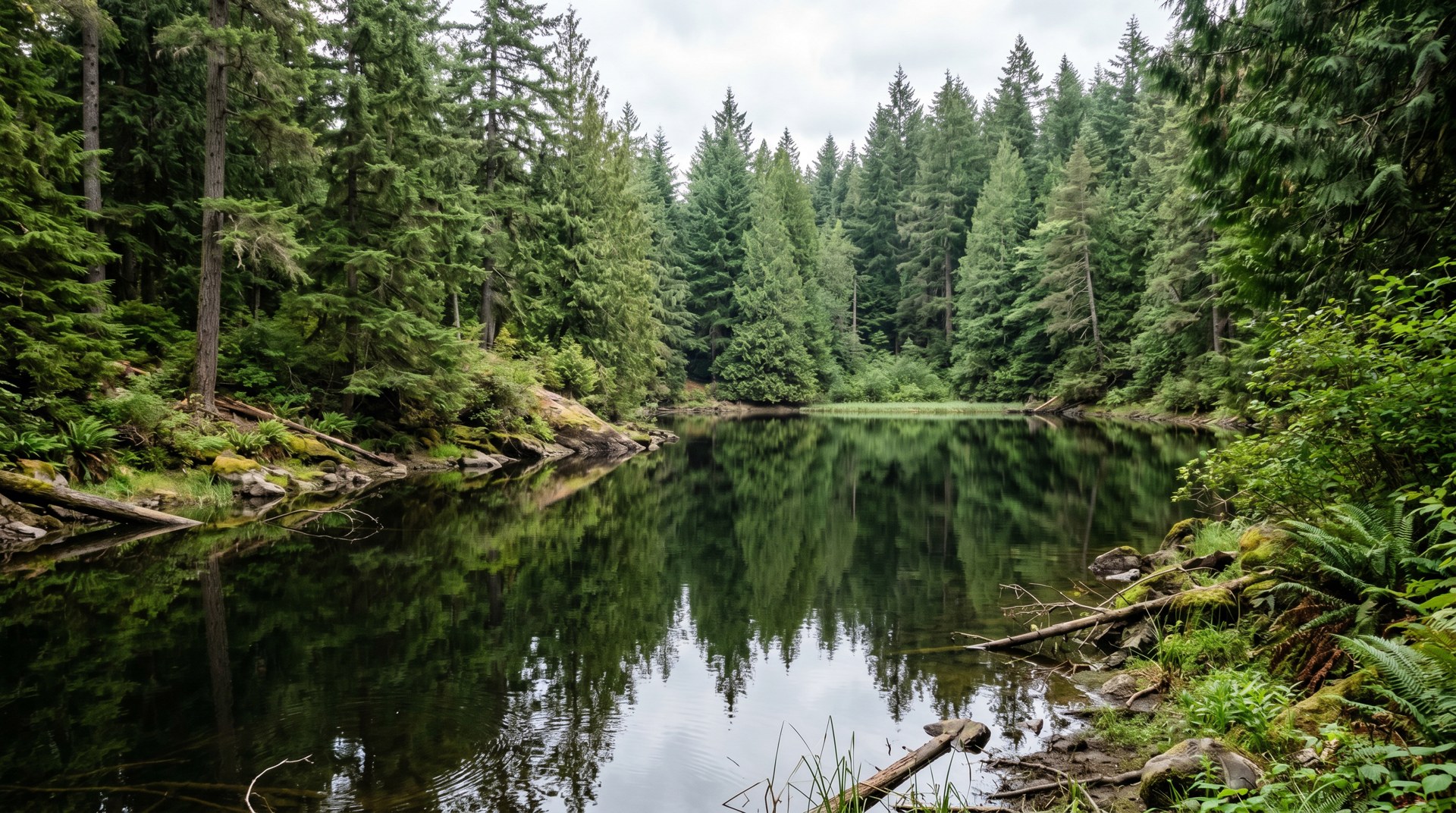
The heart of the park is Whatcom Creek, which runs the whole way from Lake Whatcom down to Bellingham Bay. As it drops through the park it forms four separate sets of waterfalls. The headliner is Whatcom Falls itself — the wide, ledge-stepped cascade you see from the stone bridge, and the one most people mean when they say ‘the falls.’ Upstream and down there are others: Whirlpool Falls, a smaller plunge in the woods that doubles as the park’s best-known swimming hole, plus a middle falls and a lower falls closer to where the creek heads toward Maritime Heritage Park downtown. None of these are towering, roadside-attraction waterfalls. They are intimate — sandstone shelves, dark pools, the kind of moving water you hear before you see. To my eye that is the appeal. You feel like you found something rather than pulled into a viewpoint.
The land has been a city park for a long time. Most accounts trace its founding to around 1908, with the park growing dramatically in the 1930s when New Deal–era projects added the bridge, the hatchery, and a couple hundred acres. I have seen the total stated consistently at 241 acres, which makes it one of the larger parks inside Bellingham proper — second to Lake Padden in the in-city tier, and a different animal entirely: where Padden is built around a swimmable lake and open recreation, Whatcom Falls is built around the creek corridor and the forest. If you are choosing between them for a regular routine, that is the real distinction. Padden is a loop-and-a-lake park; Whatcom Falls is a wander-the-ravine park. Both are excellent. They just scratch different itches, and a lot of east-side residents use both in the same week.
One note on geography that trips up newcomers: the park has two distinct entrances that feel like two different parks until you have walked between them. I will get to that under trails and parking, because it matters for how you actually use the place.
The stone bridge — a piece of Bellingham history you can lean on
If the falls are the park’s heart, the stone bridge is its signature. It was built in 1939–40 by Works Progress Administration crews — the federal New Deal work-relief program that put people to work during the Depression — and it has been carrying foot traffic over Whatcom Creek ever since. The stone is salvaged Chuckanut sandstone, the same warm, tawny rock you see all over historic Bellingham and Fairhaven. The detail that locals love to tell is that the sandstone came from a downtown building that had burned, with the arches recycled into the bridge. I have seen it specifically attributed to the old Pike Building fire of 1939; I would call the building name ‘commonly cited but worth treating as local lore,’ because sources phrase it loosely. What is solid: WPA crews, 1939–40, salvaged Chuckanut sandstone, and the bridge plus its retaining walls are still standing and still in good shape. The Living New Deal project lists it among the documented New Deal sites in Whatcom County, which is a nice bit of provenance for a structure most people just walk across without a second thought.
Why I bring it up to buyers: it is one of those small things that makes a place feel rooted. You are not standing on a poured-concrete pedestrian bridge from 2010. You are standing on something hand-laid by people eighty-plus years ago, over the exact same falls, and it is built like it intends to outlast all of us. The bridge sits only about a hundred yards in from the Silver Beach Road / lower entrance, so it is also the single most accessible ‘wow’ in the park — a short, mostly paved walk from the car to a postcard view. If you have visiting family, mobility limits, or you just want ten minutes of moving water without committing to a hike, this is the spot. It is also, predictably, the most photographed corner of the park, so on a sunny summer weekend you will share that railing. Early morning and the shoulder seasons are quieter and, honestly, prettier — the low light and the moss do better work than midday sun.
The Bellingham Trout Hatchery
Tucked along the creek is a genuine working trout hatchery, and it is one of the most underrated free things to do in the city with kids. The hatchery dates to 1936 — another product of that 1930s push, originally a joint effort involving the state game commission and local sportsmen — and today it is operated by Bellingham Technical College on behalf of the Washington Department of Fish and Wildlife. BTC runs a fisheries program, so the hatchery does double duty as a teaching facility and a production operation, raising trout that get planted into lakes, streams, and ponds around the state.
For a visitor, the draw is simple: you can walk right up to the rearing ponds and raceways and watch thousands of trout finning in the current. Kids hang on the rails. There is no entry fee and no Discover Pass required — it is just part of the park. I always tell families to pair it with the lower playground and the bridge for an easy, low-cost morning, and it is one of the few stops in town where the ‘educational’ part is genuinely fun rather than a chore. The fish you are looking at are not decorative; many of them will end up planted in lakes and ponds across the region, and the smaller ones right here in Derby Pond. That through-line — raised here, caught here, stocked from here — is the kind of thing kids actually remember, and it gives the whole corner of the park a working-farm rhythm rather than a museum hush. A few honest caveats. This is an operating facility, not a polished tourist aquarium, so hours and public access can vary, and there is not always staff out to answer questions; if you are making a special trip, it is worth confirming current visiting hours with the city or the college first. And because it is tied to BTC’s academic calendar, the vibe is more ‘real workplace’ than ‘attraction,’ which I actually think is the charm. You are seeing how fish actually get raised, not a diorama about it. The hatchery also feeds directly into the next thing on the list, which is the reason a lot of Bellingham kids catch their very first fish here.
Derby Pond and a kid’s first fish
Derby Pond is a small, calm pond near the hatchery that is reserved for young anglers — children fourteen and under only. It gets stocked with trout straight from the hatchery, which is exactly why it works: the fish are there, the water is still and shallow-edged, and there is no current or steep drop to fight. For a six-year-old with a bobber, that is the whole ballgame. This is where a huge number of local kids land their first trout, and it removes most of the friction that makes ‘taking the kids fishing’ sound exhausting.
The pond is also the home of Bellingham’s long-running youth fishing derby, which typically lands in early May — often tied to the Mother’s Day weekend. Local groups, including the Northwest Washington Steelheaders, help run it; kids under fourteen fish for free, and there are prizes — tackle boxes, rod-and-reel sets, gift certificates — usually picked in the order kids catch and report their limit. Dates and details shift year to year, so check the current listing before you plan around it, but it is a genuine community fixture and a sweet introduction to the sport. Outside derby weekend, the pond is just a quiet, fishable spot the rest of the season for the under-fourteen crowd. A couple of practical notes: standard state rules apply, and because the pond is specifically a youth resource, adults are there to help and not to fish it. If you are a grown angler looking to wet a line, the creek and the larger Lake Whatcom system are your water, not Derby Pond. As with the rest of the park, I would treat the city’s page and WDFW as the source of truth on any stocking schedule or rule changes.
The trail network — and where it can take you
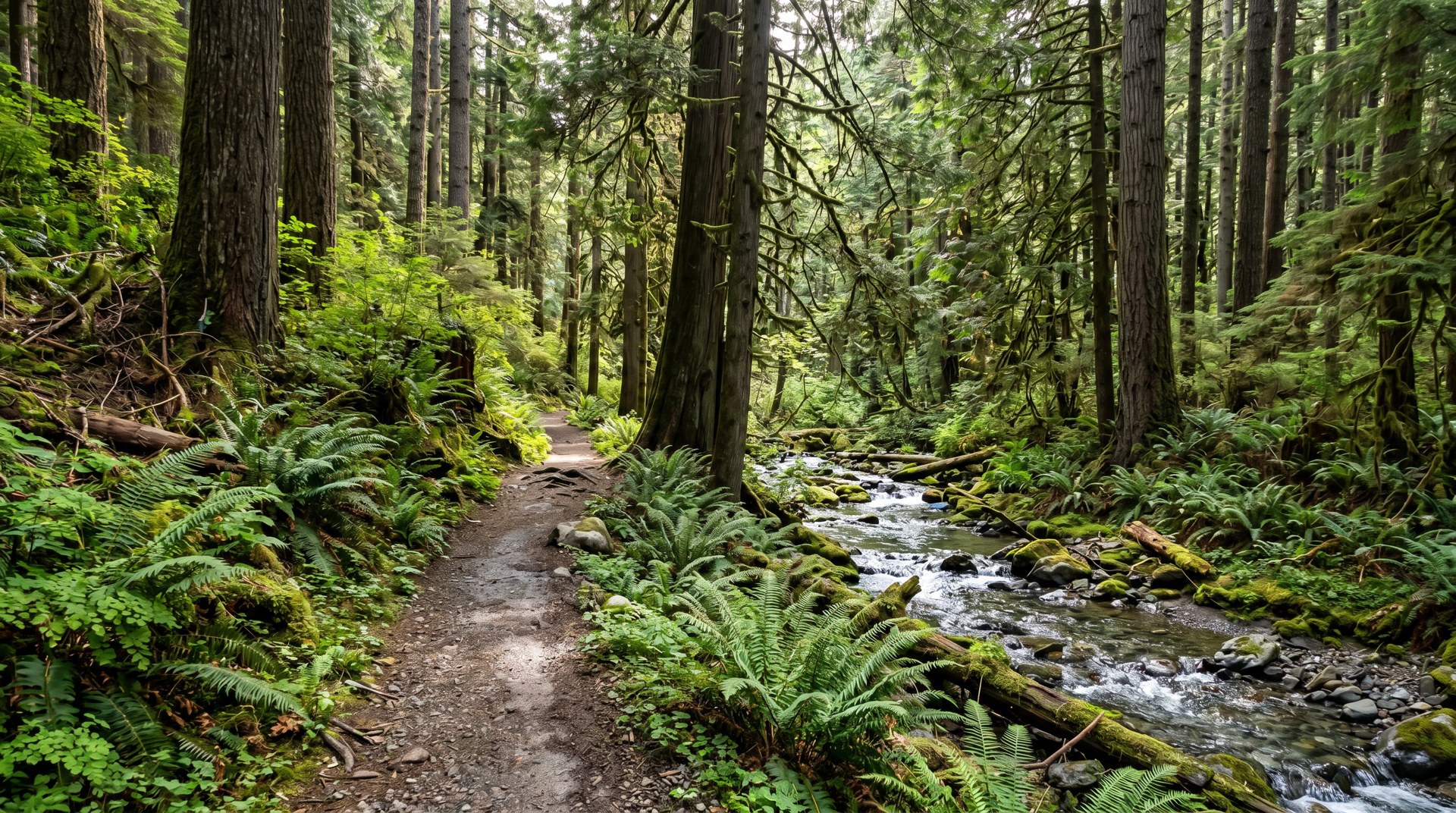
This is the part of the park I use most, and the part most buyers underestimate from the parking lot. Whatcom Falls has, depending on how the spurs get counted, somewhere in the range of three-and-a-half to five-plus miles of trail. (I have seen the city material cite both ‘three and a half miles’ and ‘more than five miles,’ so I will not pretend to a precise number — the honest answer is ‘enough to get genuinely lost for an hour without leaving the park.’) The surfaces range from paved near the falls to wide crushed gravel on the main routes to narrow, rooty, real-forest singletrack down along the creek. You can make a roughly one-mile loop right around the main falls if you just want a short outing, or you can string trails together into a much longer ramble.
The magic is the connections. The Railroad Trail — a wide gravel rail-trail running about 3.6 miles between Memorial Park near I-5 and the Lake Whatcom end of town — ties into the park’s trail system, so Whatcom Falls is not an island. From inside the park you can walk to Bloedel Donovan Park on the shore of Lake Whatcom; one commonly cited segment puts the hatchery-to-Bloedel walk at about 0.6 miles. Routes also run alongside Bayview Cemetery and link toward St. Clair Park and the broader Silver Beach area. In practice that means a Whatcom Falls–adjacent home is plugged into a network where you can walk to a lake beach, a rail-trail, and several other parks without driving. For trail runners, dog walkers, and anyone who wants a daily-movement habit, that connectivity is worth more than any single amenity. One honest trade-off: this is real forest terrain with steep creek banks and some rooty, uneven footing, so it is not all stroller-flat. Stick to the paved and wide-gravel sections near the falls and the upper area if you need easy grades; venture down toward the creek and the side falls if you want the wilder, more technical stuff.
Playgrounds, tennis, and the upper recreation area
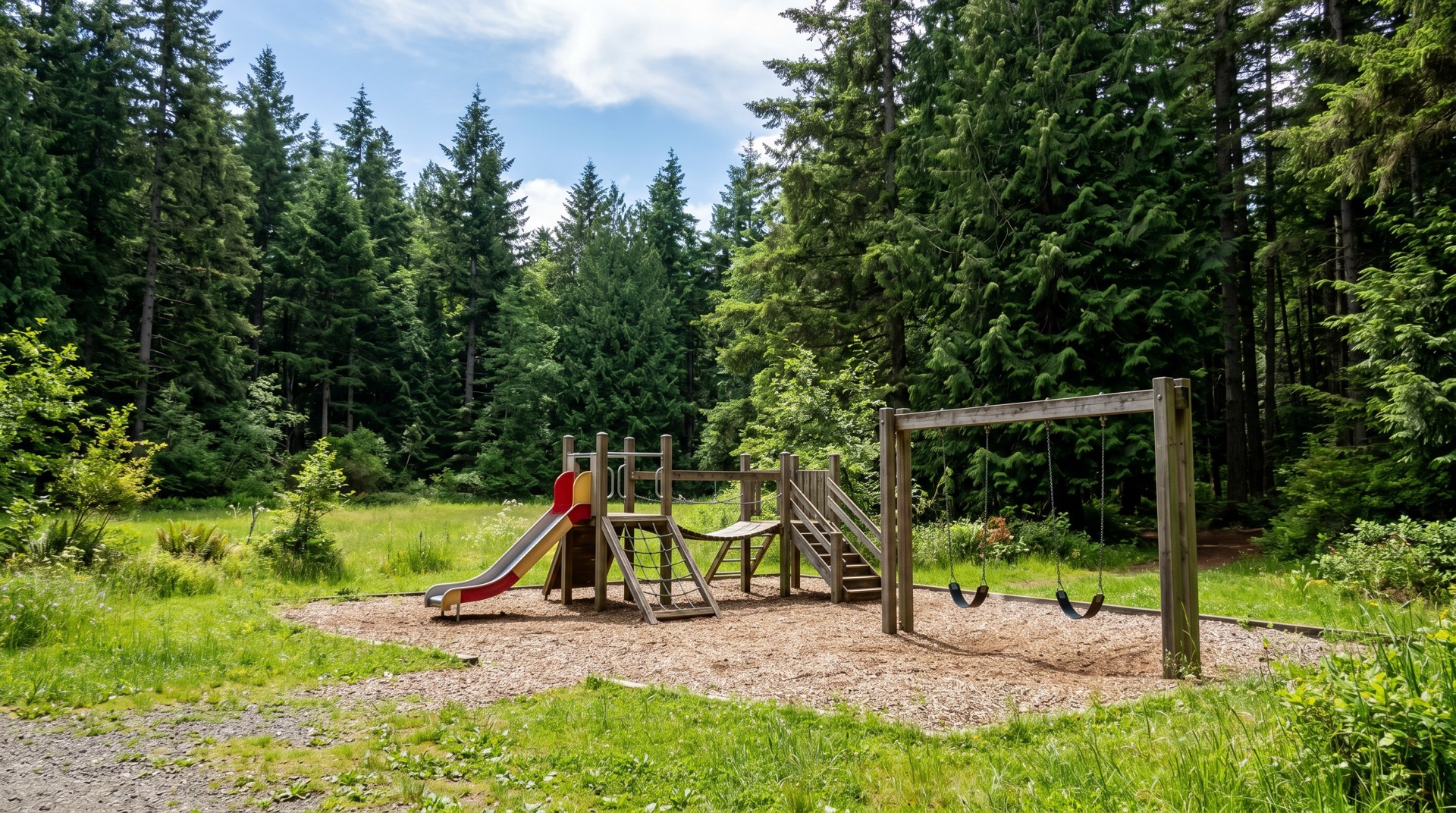
Whatcom Falls is not only a nature park — there is a solid chunk of conventional recreation up top, which is what makes it work as an everyday family park and not just a weekend hike. There are two playgrounds, generally referred to as the upper and lower playgrounds, so you have options depending on which entrance you use. The upper area near the Electric Avenue entrance is the more active hub: a couple of tennis courts (I have seen it described as two, up by the upper lot), an outdoor basketball court, multipurpose athletic fields, and a bike pump track that the local kids on bikes love. The lower area off Silver Beach Road is the gentler, creekside side — the bridge, the falls, the hatchery, Derby Pond, picnic shelters, and the lower playground.
That split is genuinely useful to know. If your priority is ‘tire the kids out on courts, fields, and a pump track,’ aim for the Electric Avenue side. If your priority is ‘short walk to a waterfall, watch fish, easy picnic,’ aim for Silver Beach Road. The park has two picnic shelters that can be reserved through the city’s online reservation system for birthdays and gatherings, plus first-come, first-served picnic tables and barbecue grills scattered around. If you are planning a party, book the shelter ahead in summer — they go quickly, and showing up to find your spot taken is a rough way to start a kid’s birthday. Restrooms and parking are available at both main areas, and the park’s posted hours run from 6 a.m. to 10 p.m. daily, so it works for both an early-morning trail run and an after-dinner stroll to the falls in the long Northwest summer light. For pickleball specifically — a question I get constantly now — I would not point you here; the tennis courts are the racquet option, and the dedicated pickleball scene in Bellingham is more centered on places like Cornwall Park. As always, court counts and amenities can change, so if a specific feature is a dealbreaker for you, confirm it on the City of Bellingham’s Whatcom Falls page before you go.
Swimming holes, steep banks, and the 1999 tragedy locals don’t forget
Two things about this park demand a straight, non-sugarcoated paragraph, because the scenery can lull you. First, the swimming. Whirlpool Falls, north of the waterline area, is the well-known summer swimming hole, and on hot days you will find people in the water there. It is not an official, lifeguarded swim beach — it is a natural pool with rock, current, and cold water, and the banks around the falls are steep and slick. People have been hurt cliff jumping and scrambling on wet sandstone here over the years. I am not going to tell you not to swim; I am going to tell you to treat it like the backcountry water it is. Know the depth before you jump, watch kids closely near every drop, and respect that moss-covered rock above moving water is exactly as dangerous as it looks. Around the middle falls in particular, access is intentionally limited, and that limitation exists for a reason.
That reason is the second thing. On June 10, 1999, the Olympic Pipe Line that ran through the park ruptured and released roughly 237,000 gallons of gasoline into the creek system. It ignited, and a fireball ran about a mile and a half down Whatcom Creek. Three young people were killed: Wade King and Stephen Tsiorvas, both ten years old, and Liam Wood, eighteen, who had been fishing on the creek. Roughly 26 acres of forest burned, including about 16 acres of mature trees inside the park, and well over 100,000 fish and other creek animals died. It is one of the defining events in the city’s modern memory, and it reshaped national pipeline-safety law. Bellingham has spent the decades since restoring the creek, and the community still gathers to remember — there was a 25-year remembrance in 2024. I include this not to be morbid but because it is honest, and because the forest you walk through today is partly a story of recovery. (Separately, the old railroad trestle that long stood in the park was taken down in 2023; the city kept a virtual tour of it.) Knowing the history makes the quiet of the place land a little differently, in a good way.
Living near Whatcom Falls Park: the neighborhood
Now the part that is actually my job. The Whatcom Falls neighborhood sits on the east edge of Bellingham, roughly south of Whatcom Creek, and it is home to a bit over two thousand residents. Lakeway Drive cuts through it, with the park and Bayview Cemetery on one side and most of the housing on the other. The building stock is a real mix: modest ranch-style and ‘minimal traditional’ homes from the 1920s through the 1970s, a wave of traditional homes from the 1990s, and newer Craftsman-style construction in this century. That mix exists partly because this is one of the few in-city areas that has had room for new building, which keeps a steady trickle of newer product flowing into an otherwise established, leafy area.
What buyers are really paying for here is access and feel: a quiet, wooded setting with the park’s trail network essentially out the back door, lake access at Bloedel Donovan a short walk or drive away, a quick shot downtown, and easy reach to Galbraith Mountain for the mountain-bike crowd. That bundle keeps demand firm. To put one number on it — and please treat this as a moment-in-time snapshot, not a forecast — third-party listing sites pegged the neighborhood’s median sale price in early 2026 in the high $800,000s, with homes moving in under a month on average. Prices move, inventory is thin in the more sought-after pockets, and a ‘park-adjacent’ premium is real but uneven block to block. If you want to know what a specific street actually trades for, the honest answer is that it depends on the lot, the era of the house, and how close you really are to the creek corridor — which is exactly the kind of thing I am happy to walk through with you on the actual properties rather than guess at from a median.
A local broker’s take
A quick word on how I use this park with clients, and why. When someone tells me they want to be in Bellingham but they are nervous it will feel too small or too built-up, Whatcom Falls is where I take them. Standing on that stone bridge, you get the thing people move to the Pacific Northwest for — moving water, big trees, cool air — and then you realize downtown is ten minutes away. That is the pitch for the whole east side in one stop. I am not going to oversell the neighborhood. Inventory near the park runs thin, the older housing stock means you should budget for inspections and the occasional dated system, and ‘walkable to the falls’ covers a wide range of actual distances and price points. What I will stand behind is that the location’s fundamentals — trails, lake access, downtown proximity, Galbraith for the bikes — are durable, and durable fundamentals are what protect a home’s value when the market wobbles. If you are weighing Whatcom Falls against Silver Beach, Alabama Hill, or the Samish side by Lake Padden, I can lay out the honest trade-offs of each rather than just point at listings. Genaro Shaffer, Washington broker #27119, NWMLS #105668, Bellwether Real Estate, 11 Bellwether Way Suite 201, Bellingham WA 98225. Reach out and I will meet you at the bridge.
Good to know
How big is Whatcom Falls Park and how many waterfalls are there?
It is a 241-acre City of Bellingham park, and Whatcom Creek forms four separate sets of waterfalls as it passes through, including the main Whatcom Falls and the smaller Whirlpool Falls. The other two sets sit upstream and downstream along the creek.
Where do I park, and which entrance should I use?
There are two main entrances. The Silver Beach Road entrance (off Lakeway Drive) puts you closest to the stone bridge, the main falls, the hatchery, Derby Pond, and the lower playground — best for an easy waterfall walk. The Electric Avenue entrance (1401 Electric Ave) serves the athletic fields, tennis and basketball courts, the bike pump track, and the upper playground. Both have parking and restrooms.
Is the stone bridge really historic?
Yes. It was built in 1939–40 by Works Progress Administration crews using salvaged Chuckanut sandstone, and it is documented as a New Deal–era site. The stone is widely said to have come from a downtown Bellingham building that burned; I would treat the specific building name as well-loved local lore, but the WPA construction and the 1939–40 timeframe are solid.
Can my kids fish at Whatcom Falls Park?
Yes — Derby Pond near the hatchery is reserved for children fourteen and under and is stocked with trout from the on-site hatchery. The park also hosts an annual youth fishing derby, typically in early May, where kids under fourteen fish for free. Check the city’s current listings for dates and any rules, which can change year to year.
Can you swim at Whatcom Falls Park?
People do swim at Whirlpool Falls in summer, but it is a natural swimming hole — not a lifeguarded, official swim beach. The water is cold, the current is real, and the sandstone banks are steep and slippery. Treat it like backcountry water: check depth before entering, supervise kids closely near every drop, and avoid cliff jumping on wet rock. For an official swim beach, nearby Bloedel Donovan on Lake Whatcom is the better call.
Do the trails connect to other parks?
Yes, and that is one of the park’s best features. The trail system ties into the Railroad Trail (a roughly 3.6-mile rail-trail) and connects on foot to Bloedel Donovan Park on Lake Whatcom — a commonly cited hatchery-to-Bloedel segment runs about 0.6 miles — plus routes past Bayview Cemetery toward St. Clair Park and Silver Beach. Total park trail mileage is cited variously between about 3.5 and 5-plus miles.
What happened here in 1999?
On June 10, 1999, the Olympic Pipe Line running through the park ruptured, releasing about 237,000 gallons of gasoline into Whatcom Creek. It ignited, sending a fireball roughly a mile and a half down the creek. Three young people — Wade King and Stephen Tsiorvas, both 10, and 18-year-old Liam Wood — were killed, and the fire burned about 26 acres of forest. The creek has been under restoration ever since, and the community holds remembrances; a 25-year gathering was held in 2024.
Is the Whatcom Falls neighborhood a good place to buy?
It is consistently in demand for its wooded setting, park-and-trail access, lake proximity, and quick downtown reach. Housing ranges from mid-century ranches to newer Craftsman homes, and it is one of the few in-city areas with room for new construction. Early-2026 third-party data put the median sale price in the high $800,000s with fast days-on-market, but that is a snapshot — actual value depends heavily on the specific street, lot, and home. I am glad to walk through current numbers on real properties.
Before you go
Fishing regs & licenseWDFWTrail conditions at this parkWTAOfficial park page & hourscob.orgLooking at homes near here?
The park at the end of the street is part of what you are really buying. If you are weighing a neighborhood near Whatcom Falls Park, let us talk through which corner of Whatcom County fits the life you are after.